
January 27, 2026
Maureen Edobor Publishes Article in the UCLA Law Review
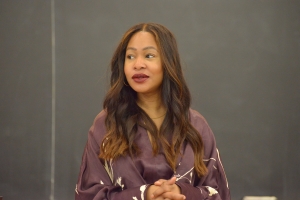
 Professor Maureen Edobor
Washington and Lee law professor Maureen Edobor has published an article in the Texas Law Review. The article, “In Defense of Substantive Due Process,” is a review of the book “The Originalism Trap: How Extremists Stole the Constitution and How We the People Can Take It Back” by Madiba K. Dennie, an attorney, columnist, and professor whose work focuses on fostering an equitable multiracial democracy.
Dennie’s book is a critique of originalism and the ways its application in the judicial sphere is harmful to democracy. She puts forth a new interpretive modality, inclusive constitutionalism, which advances the promise of democracy for all by considering precedent, practicalities, and democratic social movements to avoid sacrificing marginalized communities on the “altar of originalism.”
In her review, Edobor observes that the defense of substantive due process “as a doctrine grounded in the Constitution’s purpose rather than frozen in its past” is central to Dennie’s project. This review builds on Dennie’s critique of originalism by arguing that it is not a neutral interpretive method but a politically constructed strategy shaped by the conservative legal movement through institutions, advocacy networks, and intellectual campaigns. It contends that this movement transformed originalism into a tool susceptible to ideological capture while overlooking historical evidence that the Founders themselves embraced more pragmatic, purposive approaches to constitutional interpretation. The review also defends substantive due process as a legitimate and longstanding feature of constitutional law, rooted in a broad, cross-ideological tradition and tied to evolving understandings of fundamental rights.
“Dennie’s sweeping and incisive defense of substantive due process raises a fundamental question: what better reflects democratic legitimacy—judicial doctrine shaped through decades of engagement between advocates, communities, judges, and lawmakers, or a narrow search through centuries-old texts for fragmented glimpses of ‘original public meaning’ drawn from eras that excluded most people from citizenship, personhood, and power?” writes Edobor.
The full article is available online at the W&L Law Scholarly Commons.
Edobor joined the faculty in 2023. She teaches and writes in constitutional law, election law, and democratic theory, and serves as a Theodore DeLaney Center Fellow focusing on Southern race relations, politics, and culture. Her scholarship examines how constitutional and election law doctrines influence access to democratic participation and shape collective understandings of civic identity.
If you know a W&L faculty member who has done great, accolade-worthy things, tell us about them! Nominate them for an accolade.

You must be logged in to post a comment.