October 16, 2025
Benjamin Backer is the Next Speaker in the Mudd Lecture Series
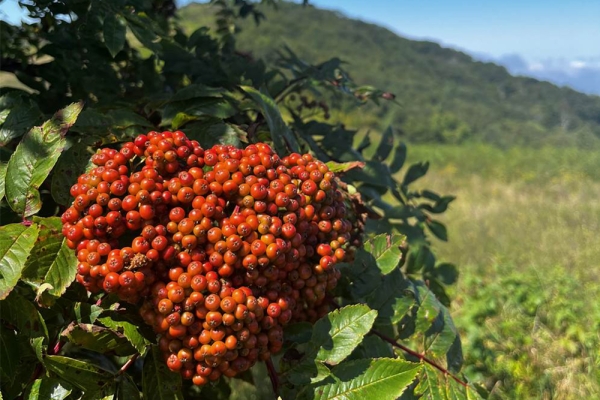
Washington and Lee University’s Mudd Center for Ethics presents a symposium about rewilding and its associated conservation practices of land preservation, restoration and rematriation at 11 a.m. on Feb. 12 in Hillel 101.
The symposium, titled “Rewilding Place: Ethical Considerations of Theory and Practice,” is free and open to the public, and lunch will be provided. The full symposium schedule can be found online.
“This symposium marks a key moment in the Mudd Center’s yearlong focus on land use and environmental impact, inviting the public to explore often overlooked histories of land preservation, restoration and rematriation and to ask who has the power to shape ecological practice and our shared future,” said Melissa Kerin, the director of the Mudd Center. “At a time when environmental policy and politics are increasingly at odds, ‘Rewilding Place’ underscores how community-led, local approaches can chart more sustainable futures, drawing on the distinct perspectives of our participants working across biology, environmental sociology, herbalism and farming and conceptual art.”
Kerin will deliver the opening remarks, and the symposium will feature talks by Shannon Bell, professor of sociology at Virginia Tech; Ruby Daniels, a natural resources specialist with the USDA Natural Resources Conservation Service; Bill Hamilton, the John T. Perry Professor in Research Science at W&L; Leigh Ann Beavers, instructor of art at W&L; and Elise Sheffield, program director at Boxerwood Nature Center & Woodland Garden.
Shannon Bell’s talk is titled “Honoring the Understories of Place: Seeing Beyond the Coalfields Imagery in Central Appalachia.” Bell’s research and teaching focus on the socio-ecological impacts of fossil fuel extraction and transport on rural communities, just energy transitions and forest botanical-based economies and traditions in Appalachia. She is the director and principal investigator of the Forest Botanicals Region Social Ecology Lab, and her work led to the creation of the Forest Botanicals Region Living Monument, which celebrates the historical and present-day relationships a diversity of Appalachian peoples have long held with forest medicines and foods.
Ruby Daniels’ talk, “The Quiet Histories of Rewilding in Afro-Lachia,” will draw on her current work, which explores the tension between preservation and reinvention in Appalachian landscapes, asking how farmers, herbalists and conservation practitioners can participate in ecological and cultural restoration without romanticizing or commodifying place. Based in Beckley, West Virginia, Daniels is the founder of Creasy Jane’s, a small Appalachian farm and botanical studio where she manufactures handcrafted soap, herbal teas and herbal bath products using plants grown on her ancestral land.
Bill Hamilton will discuss “Rewilding the North American West,” using a case study from Yellowstone National Park. Hamilton has been conducting ecosystem research in the park since 2005, extensively studying the effects that grazing herds, particularly bison, may have on the soils and grasslands. He recently co-authored a research article published in Science magazine titled “Yellowstone’s free moving large bison herds provide a glimpse of their past ecosystem function,” which was featured on the journal’s cover and sheds new light on the value of bison recovery efforts in Yellowstone.
Leigh Ann Beavers’ talk is titled “A Messy Aesthetic,” reflecting her career as a multi-media visual artist and activist whose extensive background as a naturalist and natural history educator informs all aspects of her artistic practice. She believes that personal experience with the specificity of any organism ignites appreciation, and that appreciation fosters preservation. Her Whitethorn Project (2015-2024), documenting the flora and fauna of a small island off the western coast of Ireland, has recently expanded to include the Shenandoah Valley.
Elise Sheffield will present on local rewilding practices and opportunities for engagement. As program director for Boxerwood, Sheffield helps the garden achieve its mission to educate and inspire people of all ages to be environmentally responsible stewards of the earth.
For more information and a complete schedule of events, visit the Mudd Center for Ethics’ series webpage.
The Mudd Center was established in 2010 through a gift to the university from award-winning journalist Roger Mudd, a 1950 graduate of W&L. By facilitating collaboration across traditional institutional boundaries, the center aims to encourage a multidisciplinary perspective on ethics informed by both theory and practice. Previous Mudd Center lecture series themes have included “Global Ethics in the 21st Century: Challenges and Opportunities,” “Race and Justice in America,” “The Ethics of Citizenship,” “Markets and Morals,” “Equality and Difference,” “The Ethics of Identity,” “The Ethics of Technology,” “Daily Ethics: How Individual Choices and Habits Express Our Values and Shape Our World, “Beneficence: Practicing and Ethics of Care,” “The Ethics of Design” and “How We Live and Die: Stories, Values and Communities.”

You must be logged in to post a comment.