
July 29, 2025
Meet a 1L: Dustin Bickham ’28L
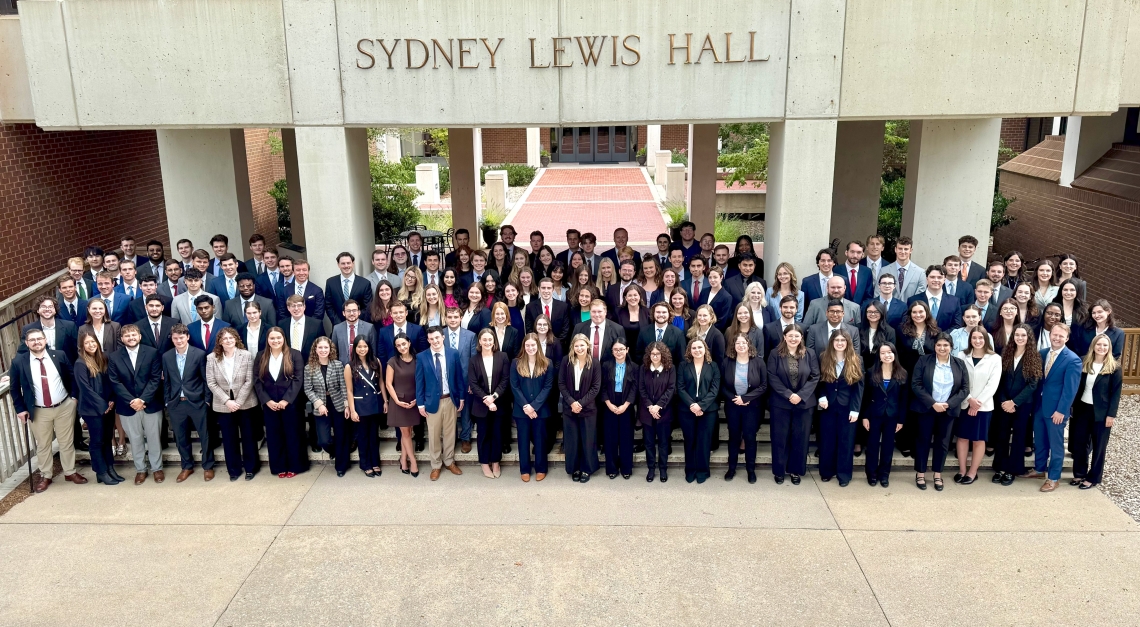 Law Class of 2028
On Monday, August 18, the Washington and Lee University School of Law enrolled 131 students in the Class of 2028.
“We are delighted to welcome an incredibly talented and accomplished law class to the W&L Law community. I look forward to watching them develop into capable lawyers and leaders during the next three years under the guidance of our exceptional faculty,” said Dean Melanie Wilson.
The entering class boasts the strongest academic profile in the history of the law school. The median LSAT score for the class is 167, and the class’s median undergraduate grade point average is 3.75. The members of the class earned undergraduate degrees from 96 different institutions.
Sixty-six percent of the class have a year or more of post-graduate experience before entering law school, working in fields such as business, politics, and the military. Sixty percent of the incoming students either completed a legal internship or have other law-related work experience, and 25 percent have experience working in politics or serving with a political campaign.
Why W&L Law? First year law students share what brought them to Lexington.
The median age of class members is 23, with ages ranging from 21 to 48. The class is 47 percent female, and 24 percent of the class identifies as racially or ethnically diverse. Twelve percent are first-generation college students, and 74 percent are the first in their immediate family to attend law school.
Eleven members of the class already hold graduate degrees from other institutions, and six members served in the military. The class includes six Eagle Scouts and eight members of Phi Beta Kappa.
The first-year students hail from 28 states, the District of Columbia, and four foreign countries, including Canada, France, India, and Thailand. The U.S. state with the greatest representation is Virginia, followed by Florida and North Carolina. Seventy-six percent are from outside Virginia.


You must be logged in to post a comment.