W&L’s Mudd Center Announces 2025-26 Lecture Series “Taking Place: Land Use and Environmental Impact” kicks off Sept. 11 with a keynote address by political scientist Thea Riofrancos.
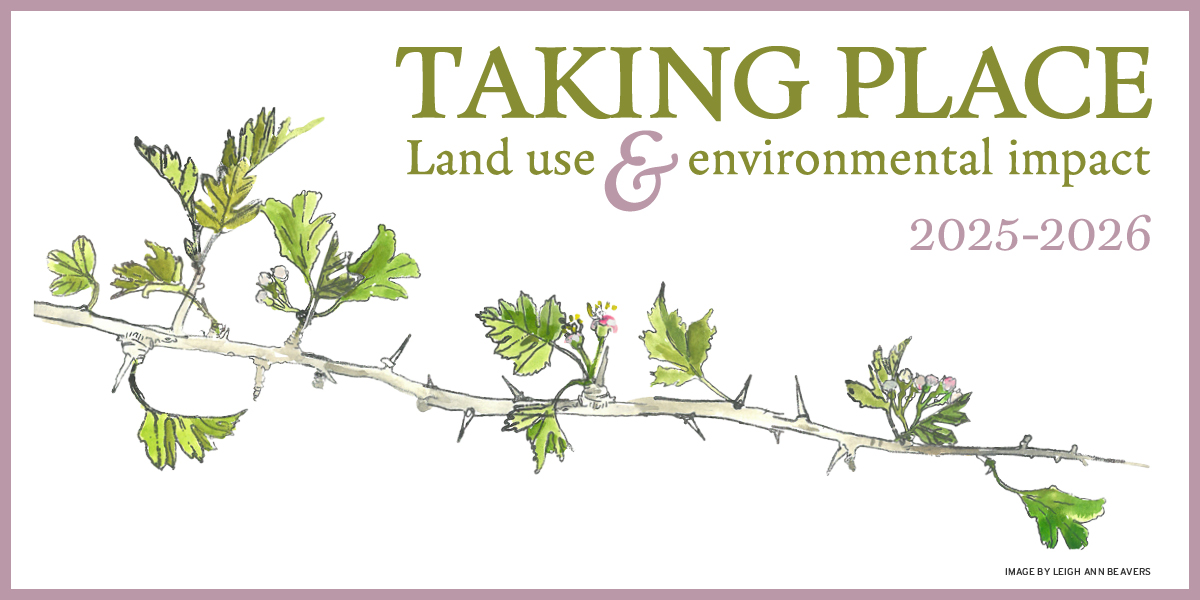
The complex interplay between land use and the environment — particularly issues related to green technologies, biodiversity and health — is at the heart of the Washington and Lee University Roger Mudd Center for Ethics’ 2025-26 series, “Taking Place: Land Use and Environmental Impact.”
Through a public lecture series, symposium, photographic exhibition, documentary viewing and community engagements, the Mudd Center will analyze various meanings of “taking place” and the ethics of how we use and manage the natural environment and land resources.
Central to the series’ investigation are guiding questions that explore environmental ethics and their applications. Can seemingly competing interests and values, such as economic gain and environmental justice, be reconciled? What responsibilities and ethical challenges emerge when humans intervene to restore ecosystems? And, perhaps most importantly, how might we bring conversations about environmental conservation and land use into a non-partisan arena even when there may be deep ideological divisions?
“We’re thrilled about this year’s theme, shaped by student interest, faculty research and the university’s strategic plan, which makes environmental stewardship a top priority,” said Melissa Kerin, the director of the Mudd Center and professor of art history. “Working with campus partners – from the environmental studies program to the Office of Sustainability and Energy Education – and local groups like Boxerwood Educational Association, we’ve put together a program that explores ethical questions around land use as well as emphasizes applied ethical action.”
Learn more about this year’s theme by visiting the Mudd Center website.
The Ethics of Extraction: How “Green” is the Energy Transition?
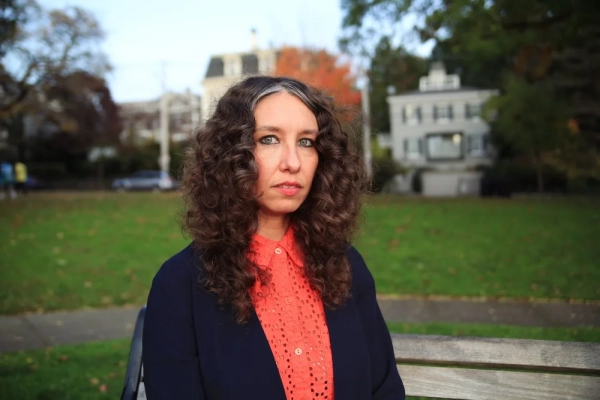
The lecture series kicks off at 5:10 p.m. on Sept. 11 in W&L’s Stackhouse Theater with a keynote address by Thea Riofrancos, associate professor of political science at Providence College. The lecture, “The Ethics of Extraction: How ‘Green’ is the Energy Transition?” is free and open to the public and will also be streamed online.
Riofrancos’ address is presented in conjunction with the W&L Art Museum and Galleries’ exhibit “Taking Place,” with works by Edward Burtynsky, on view in the Reeves Museum of Ceramics’ Elisabeth S. Gottwald Gallery beginning Sept. 3. The opening reception for the exhibit will be held at 6:30 p.m. on Sept. 11, following Riofrancos’ lecture, and is open to the public.
Drawing from her forthcoming book, “Extraction: The Frontiers of Green Capitalism,” Riofrancos will examine “green” technologies dependent on lithium extraction in Chile. Lithium plays a central role in mitigating climate change, but, as Riofrancos will demonstrate, these practices of resource extraction come with deep environmental, human and political consequences. With predictions of an enormous surge in lithium demand, governments and corporations around the world are racing to secure supplies, revealing and reinforcing stark inequalities rooted in the long legacies of colonialism that continue to shape the world’s “extractive frontiers,” the landscapes where raw materials are mined.
“Dr. Riofrancos’ keynote sets the tone for this year: there are no quick fixes – technologies like lithium batteries may ease climate change, but they also bring new challenges in their wake,” said Kerin. “Her talk invites us to think more holistically about how we develop and use green technologies, and her research on lithium mining resonates powerfully with the exhibition ‘Edward Burtynsky: Taking Place’ at the Reeves Museum.
Riofrancos’ research focuses on resource extraction, renewable energy, climate change, the global lithium sector, green technologies, social movements and the Latin American left. She is the author of “Resource Radicals: From Petro-Nationalism to Post-Extractivism in Ecuador” (2020) and the coauthor of “A Planet to Win: Why We Need a Green New Deal” (2019). In addition to her faculty position at Providence College, she is a strategic co-director of the Climate and Community Institute and a fellow at the Transnational Institute.
Riofrancos received her bachelor’s degree from Reed College and her doctorate in political science from the University of Pennsylvania.
For more information and a complete schedule of events, visit the series webpage.
The Mudd Center was established in 2010 through a gift to the university from award-winning journalist Roger Mudd, a 1950 graduate of W&L. By facilitating collaboration across traditional institutional boundaries, the center aims to encourage a multidisciplinary perspective on ethics informed by both theory and practice. Previous Mudd Center lecture series themes have included “Global Ethics in the 21st Century: Challenges and Opportunities,” “Race and Justice in America,” “The Ethics of Citizenship,” “Markets and Morals,” “Equality and Difference,” “The Ethics of Identity,” “The Ethics of Technology,” “Daily Ethics: How Individual Choices and Habits Express Our Values and Shape Our World, “Beneficence: Practicing and Ethics of Care,” “The Ethics of Design” and “How We Live and Die: Stories, Values and Communities.”
Related Stories

You must be logged in to post a comment.