February 26, 2026
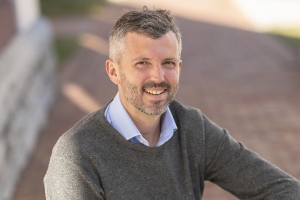
Jon Eastwood to Present Nobel Prize Symposium Talk
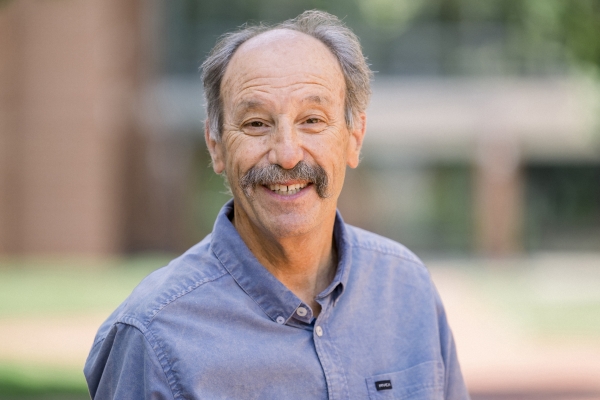 Art Goldsmith, Jackson T. Stephens Professor of Economics
Art Goldsmith, Jackson T. Stephens Professor of Economics at Washington and Lee University, will present on the 2025 Nobel Prize in Economic Sciences awarded to Joel Mokyr, Philippe Aghion and Peter Howitt for explaining innovation-driven economic growth.
Goldsmith’s talk will be held from 11:45 a.m. to 12:45 p.m. on Thursday, April 2, in room 128 of the Harte Center for Teaching and Learning in Leyburn Library. The event is free and open to the public. Snacks and refreshments will be provided.
The 2025 award is split among the three economists, with one half of the 11 million Swedish krona (roughly $1.2 million) prize going to Mokyr and the other half shared jointly between Aghion and Howitt. Together, the three demonstrated how new technology can drive sustained economic growth.
Mokyr suggests that for innovations to succeed one another in a self-generating process, we not only need to know that something works but also need scientific explanations for why, something that was often lacking prior to the Industrial Revolution.
Aghion and Howitt studied the mechanisms behind sustained growth and modeled what is called creative destruction. This is when a new and better product enters the market and displaces older ones. It is creative in its innovation but often destructive to other firms and labor by rendering existing products and production techniques obsolete.
Together, the three Nobel laureates showed how this creative destruction creates conflicts and demonstrated the need for constructive implementation to incentivize continuous innovation.
“Professional economists, including many luminaries, have been seeking a deep understanding of the determinants of sustained economic growth for a long time,” said Goldsmith. “Great progress was made over the past 75 years, and the recipients of the 2026 Nobel Prize in Economics appear to have ‘cracked the code.’ Each is a superb scholar with a wealth of experience exploring this topic and, most importantly, a discerning eye. They simply noticed critical elements and developments that the profession missed.
“During my talk I will provide context for their contribution by discussing the journey leading to the state of knowledge prior to their work,” continued Goldsmith. “Then, I will talk about the insights they offer leading to the prize. Finally, I will briefly mention what is left to sort out for economic growth to foster broad improvements in well-being.”
Mokyr was born in Leiden, the Netherlands, and went on to earn a Ph.D. in economics from Yale University. He also holds a Master of Philosophy in economics from Yale and a Bachelor of Arts in economics and history from the Hebrew University of Jerusalem (Israel). He began his career as an instructor at Yale and moved on to Northwestern University, where he has been a member of the economics faculty for more than five decades. An expert on the economic history of Europe specializing in the period 1750–1914, Mokyr has authored more than 100 articles and books and has served as president of the Economic History Association, among numerous other professional distinctions. Among his many honors, he received the Heineken Prize from the Royal Netherlands Academy of Arts and Sciences in 2006 and the Balzan Prize for Economic History in 2015.
Aghion was born in Paris, receiving a Ph.D. in economics from Harvard University and earning an advanced degree in mathematical economics from Panthéon-Sorbonne University (France). He began his academic career at Massachusetts Institute of Technology and has held appointments at Oxford University (U.K.), University College London (U.K.), Harvard and the London School of Economics and Political Science (U.K.). He was also appointed Chair of Economics as Collège de France. Along with Howitt, he pioneered the Schumpeterian growth paradigm, with much of that work summarized in their joint books “Endogenous Growth Theory” and “The Economics of Growth.” He received the Yrjö Jahnsson Award in 2001 as Europe’s leading economist under 45, and he shared the BBVA Foundation Frontiers of Knowledge Award with Howitt in 2020.
Howitt was born in Guelph, Ontario, Canada, earning a Bachelor of Arts in economics from McGill University (Canada), a Master of Arts in economics from the University of Western Ontario (UWO) and a Ph.D. in economics from Northwestern University. Howitt taught at UWO for 24 years, before holding academic positions at Ohio State University and Brown University. He worked with Aghion to pioneer the Schumpeterian growth paradigm, and the two authored the books “Endogenous Growth Theory” and “The Economics of Growth” together. Howitt served as president of the Canadian Economics Association and was elected a fellow of the Royal Society of Canada in 1992 and of the Econometric Society in 1994. He and Aghion shared the BBVA Foundation Frontiers of Knowledge Award in 2020.
Learn more about all of the 2025 Nobel Prize winners.

You must be logged in to post a comment.