
October 13, 2026
Sven Bernecker is the Next Speaker in the Mudd Lecture Series
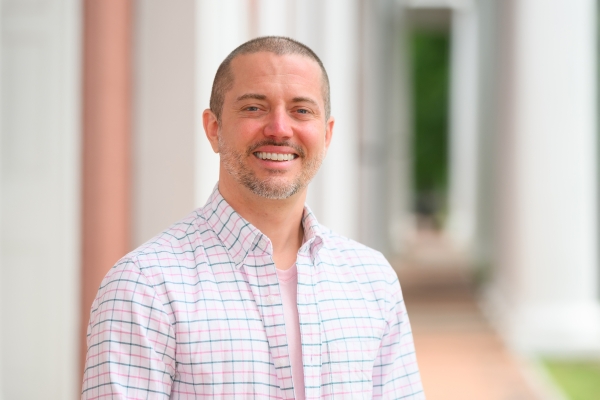 JT Torres, director of the Houston H. Harte Center for Teaching and Learning
 at Washington and Lee University, will deliver a lecture at 5:15 p.m. on Nov. 16 in Room 128 of the Harte Center in Leyburn Library as part of the Roger Mudd Center for Ethics’ series, “Memory, Mind and Morality.”
The lecture, which is free and open to the public, is titled “Remember Me: Ethical Implications of How Griefbots Shape Social Memory.”
Torres’ research draws on ethnography, educational studies and narrativity to investigate social memory and connection. His novella, “Taking Flight,” explores ancestral relationships through memory and ritual, and his recent co-authored book, “How to Use Writing for Teaching and Learning,” is informed by his research regarding the ways students write themselves into a disciplinary identity. Torres approaches literacy as a critical process, relying on culturally sustaining practices that frame reading and writing as acts of agency and social engagement. In his 2021 co-authored book, “Situated Narratives and Sacred Dance,” he explores the ways in which oral literacy practices sustain the social memory of Arará communities in Cuba.
In his talk, Torres will explore questions of memory and how we honor lost loved ones through acts of remembrance. Since memory is never the exact replication of past experiences, the stories we tell about those we lost are creative acts with ethical implications. Torres will draw on his own research to examine what happens when these stories become products in the form of griefbots, and what happens to our identity when technology replaces social memory. Torres’ talk also connects to the university’s First-Year Read Discussion on Kazuo Ishiguro’s ‘Klara and the Sun,’ inviting participants to think more broadly about how AI is changing human relationships, memory and our understanding of loss.
“Given JT Torres’ expertise in memory studies, artificial intelligence and community, the Mudd Center thought he would be an ideal person to help us explore the growing phenomenon of deathbots and griefbots and what they mean for memory and ethics,” said Melissa Kerin, director of the Mudd Center and professor of art history. “These are not hypothetical technologies, but increasingly accessible AI services that allow people – often for a fee — to create digital avatars of loved ones who have died. These technologies not only shape how people experience and navigate grief, but also capitalize on it, raising important questions about how we remember, mourn and maintain connections with those who are no longer with us.”
The Mudd Center’s collaboration with Torres also includes a memory altar, where people will be invited to contribute an offering or memento following Torres’ talk and reflect on belonging, loss, connection and grief. These shared acts of remembrance create a participatory public art project that will become a layered, collective, living expression of shared memories.
Torres joined the W&L faculty in 2024 after serving as director of the Center for Teaching and Learning at Quinnipiac University. He earned a Bachelor of Arts in English from the University of Central Florida, a Master of Fine Arts in creative writing from Georgia College and a Ph.D. in educational psychology from Washington State University.
For more information and a complete schedule of events, visit the Mudd Center for Ethics’ series webpage.
The Mudd Center was established in 2010 through a gift to the university from award-winning journalist Roger Mudd, a 1950 graduate of W&L. By facilitating collaboration across traditional institutional boundaries, the center aims to encourage a multidisciplinary perspective on ethics informed by both theory and practice. Previous Mudd Center lecture series themes have included “Global Ethics in the 21st Century: Challenges and Opportunities,” “Race and Justice in America,” “The Ethics of Citizenship,” “Markets and Morals,” “Equality and Difference,” “The Ethics of Identity,” “The Ethics of Technology,” “Daily Ethics: How Individual Choices and Habits Express Our Values and Shape Our World,” “Beneficence: Practicing and Ethics of Care,” “The Ethics of Design,” “How We Live and Die: Stories, Values and Communities” and “Taking Place: Land Use and Environmental Ethics.”



You must be logged in to post a comment.