January 6, 2026
Mengying Liu to Present Nobel Prize Symposium Talk
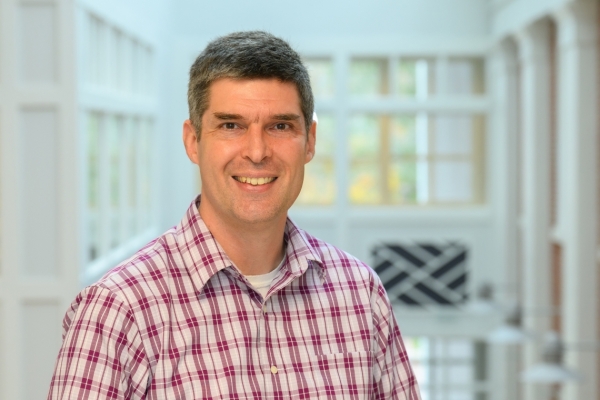 Kyle Friend, associate professor of chemistry and biochemistry
Kyle Friend, associate professor of chemistry and biochemistry at Washington and Lee University, will present on the 2025 Nobel Prize in physiology or medicine awarded to Mary E. Brunkow, Fred Ramsdell and Shimon Sakaguchi for their discoveries concerning peripheral immune tolerance.
Friend’s talk will be held from 11:45 a.m. to 12:45 p.m. on Thursday, Feb. 5, in room 128 of the Harte Center for Teaching and Learning, located in Leyburn Library. The event is free and open to the public. Snacks and refreshments will be provided.
“How the immune system separates self from non-self is one of the most important questions in immunology,” said Friend. “This year’s Nobel laureates identified T cells that keep other immune cells in check throughout the body.”
Brunkow, Ramsdell and Sakaguchi each had a hand in discovering the mechanism by which the immune system is prevented from attacking the body’s own tissues. Sakaguchi made the first pivotal breakthrough in 1995 when he identified a previously unknown class of immune cells, later named regulatory T cells, which protect the body from autoimmune diseases. This discovery challenged the prevailing belief that immune tolerance was solely achieved through the elimination of harmful cells in the thymus.
In 2001, Brunkow and Ramsdell made their key contribution by discovering that a specific mouse strain’s vulnerability to autoimmune diseases was caused by a mutation in a gene, further demonstrating that mutations in the human equivalent of this gene cause a severe autoimmune disorder. In 2003, Sakaguchi unified these findings by proving that the gene governs the development of the regulatory T cells he had identified years earlier. These cells function as the immune system’s security guards, monitoring other immune cells to ensure they do not attack the body’s own tissues. Together, these discoveries launched the field of peripheral tolerance research and have spurred the development of promising medical treatments for cancer, autoimmune diseases and organ transplantation, several of which are now in clinical trials.
Brunkow was born in Portland, Oregon, earning a B.S. in molecular and cellular biology from the University of Washington and a M.S. and Ph.D. in molecular biology from Princeton University. Following postdoctoral research at the Samuel Lunenfeld Research Institute in Toronto, she joined Darwin Molecular Corporation, a gene-discovery biotechnology startup, where she worked alongside Ramsdell and conducted the groundbreaking research. After Darwin’s acquisition and eventual closure, Brunkow pursued consulting and science writing before joining the Institute for Systems Biology in Seattle where she currently serves as Senior Program Manager in the Hood Lab.
Ramsdell was born in Elmhurst, Illinois and he went on to earn a B.S. in biochemistry and cell biology from the University of California, San Diego and a Ph.D. in microbiology and immunology from the University of California, Los Angeles. Following a fellowship at the National Institutes of Health, Ramsdell joined the biopharmaceutical company Immunex, where his research focused on T cell activation and tolerance. He then joined Darwin in 1994 where he established an immunology program and worked alongside Brunkow to conduct their groundbreaking research. After Darwin, Ramsdell held positions at ZymoGenetics and Novo Nordisk before serving as Chief Scientific Officer at the Parker Institute for Cancer Immunotherapy. He currently serves as Scientific Advisory Board Chair at Sonoma Biotherapeutics, a company he co-founded.
Sakaguchi was born in Nagahama, Shiga, Japan, receiving an M.D. and Ph.D. from Kyoto University (Japan), where he trained as a pathologist and immunologist. Following postdoctoral studies at Johns Hopkins University and Stanford University, he served as an assistant professor at the Scripps Research Institute before returning to Japan in 1991. After holding positions at RIKEN, Japan’s largest comprehensive research institution, and the Tokyo Metropolitan Institute of Gerontology, Sakaguchi became professor and chair of experimental pathology at Kyoto University’s Institute for Frontier Medical Sciences, where he currently serves as distinguished professor at the Immunology Frontier Research Center.
Learn more about all of the 2025 Nobel Prize winners.

You must be logged in to post a comment.