
January 19, 2026
Maureen Edobor Publishes Article in the California Law Review
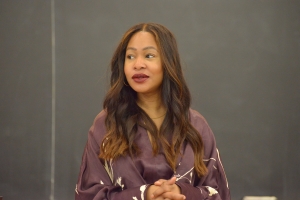
 Professor Maureen Edobor
Washington and Lee law professor Maureen Edobor has published an essay in the Minnesota Law Review. The essay, “The Unmaking of Section Two,” examines how recent judicial decisions reflecting a commitment to “colorblind constitutionalism” are undermining the protections against racial vote dilution enshrined in Section 2 of the Voting Rights Act.
In the essay, Edobor traces the Fifteenth Amendment’s original design and Congress’s expansive enforcement authority to argue that Section 2 exists within a constitutional tradition that authorized race-conscious, prophylactic legislation to dismantle entrenched systems of political exclusion.
“The Essay then shows how the Supreme Court’s modern redistricting cases, beginning with Shaw v. Reno, have displaced that tradition by importing Fourteenth Amendment anticlassification principles into a domain governed by the Fifteenth Amendment. This doctrinal shift has produced a structural contradiction: The evidentiary showing that compels a remedial district under Section 2 increasingly supplies the factual predicate for a constitutional challenge to that very remedy.
“Examining Allen v. Milligan alongside the Court’s recent decision in Louisiana v. Callais, the Essay demonstrates that Section 2 has officially been unmade. Callais recasts compliance with Section 2 as constitutionally suspect while declining to grapple with the statute’s remedial origins or purpose. In doing so, the Court collapses the Fifteenth Amendment into a colorblind vision of the Fourteenth and misidentifies the relevant constitutional conflict as one between Section 2 and the Constitution itself, rather than the internal tension the Court has created between Congress’s Fifteenth Amendment enforcement authority and its own anticlassification jurisprudence,” writes Edobor.
The full essay is available online through the W&L Scholarly Commons.
Edobor joined the faculty in 2023. She teaches and writes in constitutional law, election law, and democratic theory, and serves as a Theodore DeLaney Center Fellow focusing on Southern race relations, politics, and culture. Her scholarship examines how constitutional and election law doctrines influence access to democratic participation and shape collective understandings of civic identity. Her recent article in the University of Pennsylvania Journal of Constitutional Law examined the U.S. Supreme Court case Brnovich v. Democratic National Convention, where the Court’s narrow interpretation of Section 2 of the VRA made it more difficult to challenge discriminatory voting laws.
If you know a W&L faculty member who has done great, accolade-worthy things, tell us about them! Nominate them for an accolade.

You must be logged in to post a comment.