
March 11, 2026
Office Space: Mark Drumbl

Bentley Professor of Chemistry Erich Uffelman’s office in the Science Center is a treasure trove of memories accumulated throughout a 32-year career at W&L. Some of those treasures are gifts from students, some are from his many travels for conferences and research, and some are collections thoughtfully acquired over time.
Uffelman received his B.S. from Bucknell University and his Ph.D. from California Institute of Technology, joining W&L’s faculty in 1993 and serving as the head of the Chemistry and Biochemistry Department from 2019 through 2023. His work utilizes chemistry and technology to examine artworks and cultural artifacts, and he teaches various courses in chemistry and art conservation, including Technical Analysis of 17th-Century Dutch Paintings, a popular interdisciplinary Spring Term abroad course in the Netherlands that is currently W&L’s longest-running Spring Term abroad offering. In this edition of our “Office Space” series, Uffelman discusses some of his favorite paintings along with other items of note in his workspace.
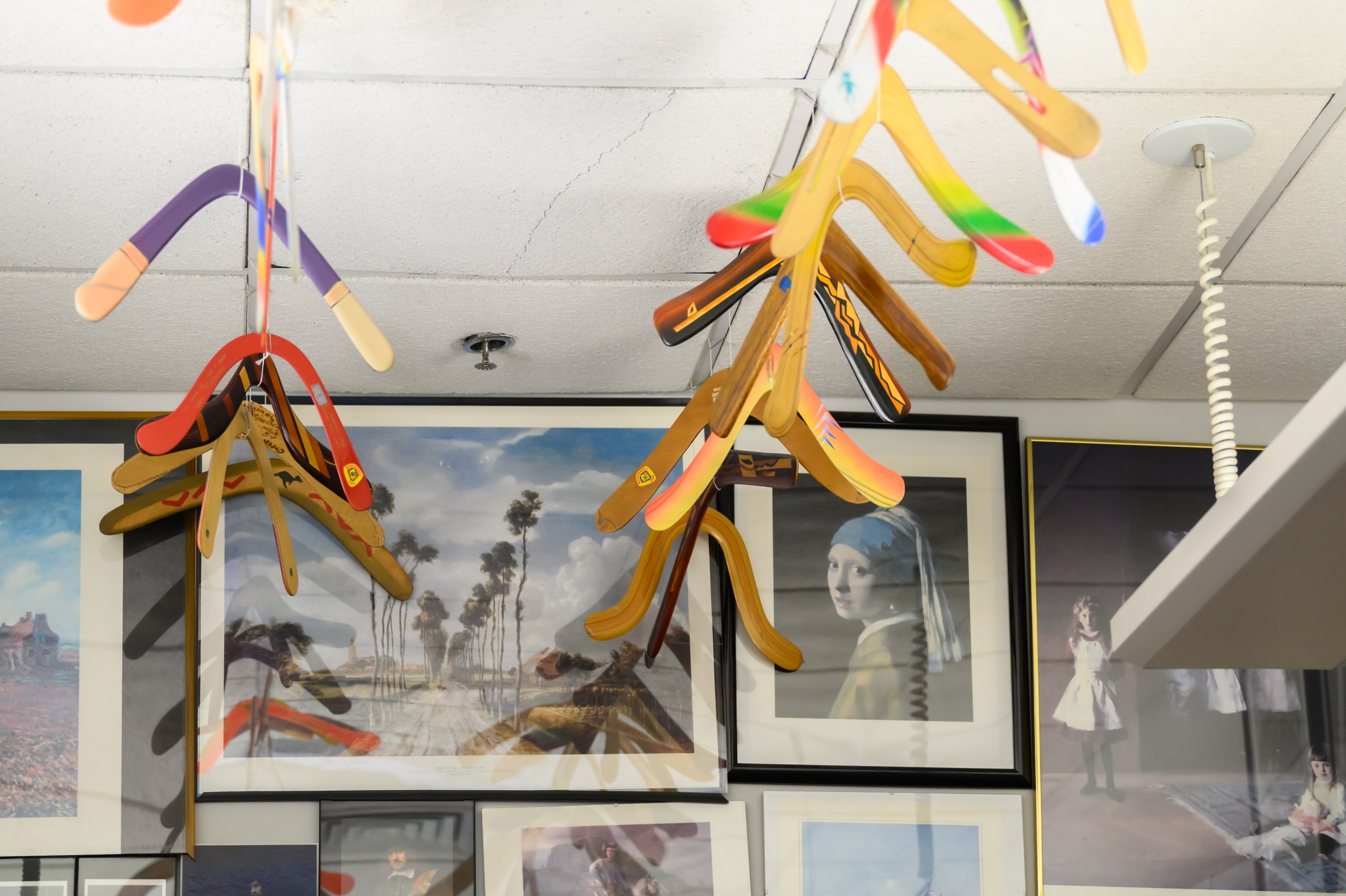
BOOMERANG COLLECTION
In eighth grade, we had a woodshop project, and, years before, my parents had gotten a 1969 World Book Encyclopedia. I read it constantly, and one day I looked up boomerangs. The entry mentioned a Scientific American article from the 1960s about boomerang flight. My dad, who was an English professor, took me to his college library to dig it up on microfilm, and there was a plan in the article for how to make a boomerang. What I didn’t realize until much later was that it was not a very good plan. Combine that with the wrong kind of plywood and my less-than-stellar woodworking skills, and the result was a boomerang that flew and curved but was wildly inaccurate.
Anyway, fast-forward to my second year at Caltech. After finishing doctoral candidacy, the unofficial rule was that you could take a day or two off. I was wandering, a little brain-dead, through the campus bookstore when I spotted a book called “The Boomerang Book.” It had a wooden boomerang strapped to the cover. I thought, “What the heck?” and bought it. I taught myself to throw that boomerang, and in the back of the book was an address where you could order more. So, I got a second one, which, ironically, is still one of the best boomerangs I own. In fact, I still have both of them.
I was walking across the Caltech campus with my two boomerangs when this guy came up to me and asked, “Where did you get those?” I told him, and he said, “Well, I’m a member of the United States Boomerang Association. If you give me your name and address, I’ll tell you how to get more.” And I thought, “Either there really is such a thing as the United States Boomerang Association or this guy is a homicidal maniac,” so I gave him my work address. Sure enough, two days later, a packet showed up in campus mail with boomerang information and mail-order addresses. That’s when I started collecting. Most of the boomerangs I own are from my grad school days, but I’ve added another 20 or 30 since coming to W&L.
I throw them once or twice a month in the summer. I used to throw them more regularly. In my heyday, I had 77 consecutive catches. But, you know, the world record is, 2,251.
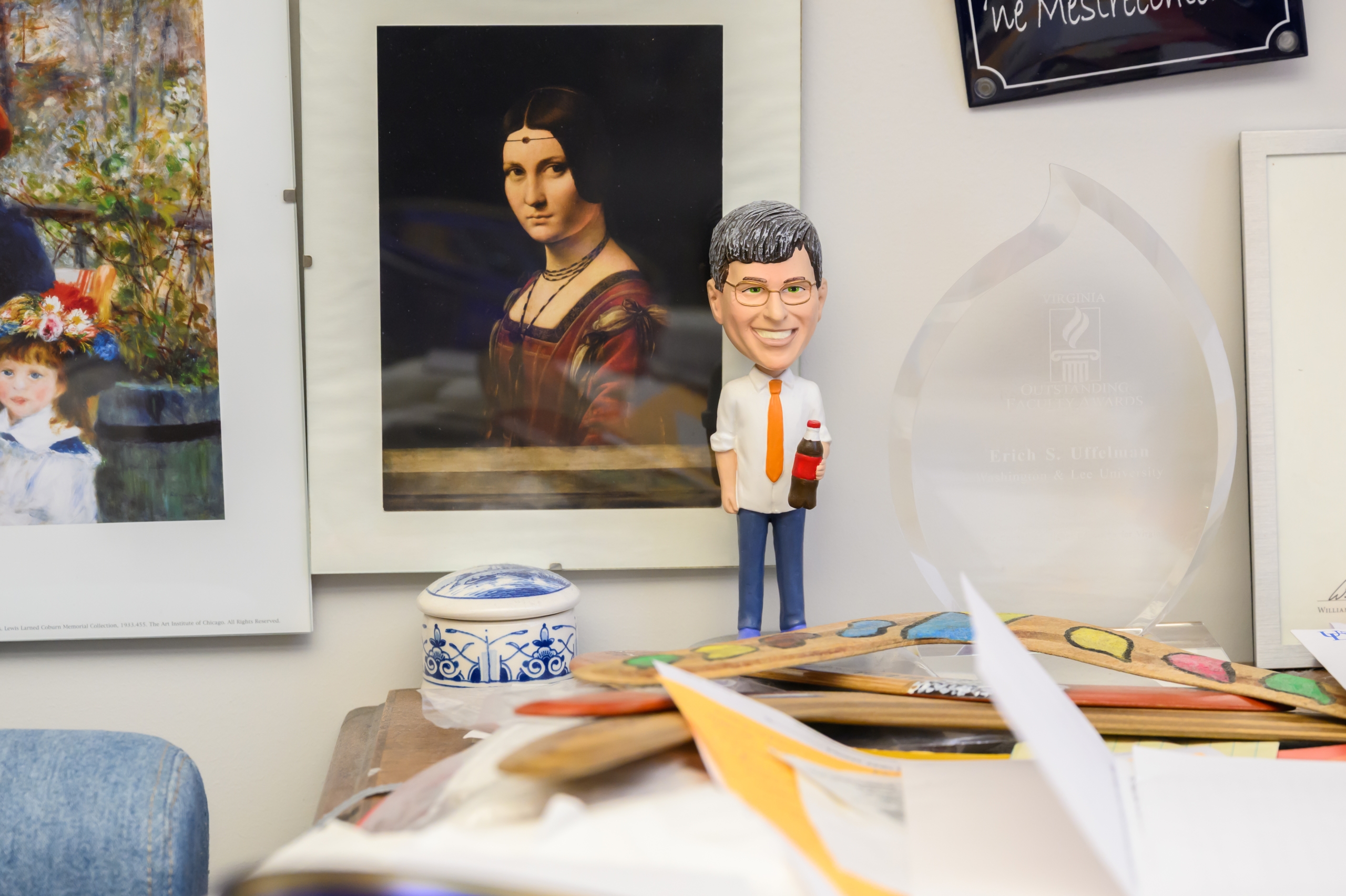
BOBBLEHEAD
The bobblehead is a gift from a former student. Nailed it! When I was younger and a little less gray, the bobblehead looked disturbingly like me. I always would walk around with a Coke, and then there’s the fact that my shirt comes untucked after 20 minutes of lecture.
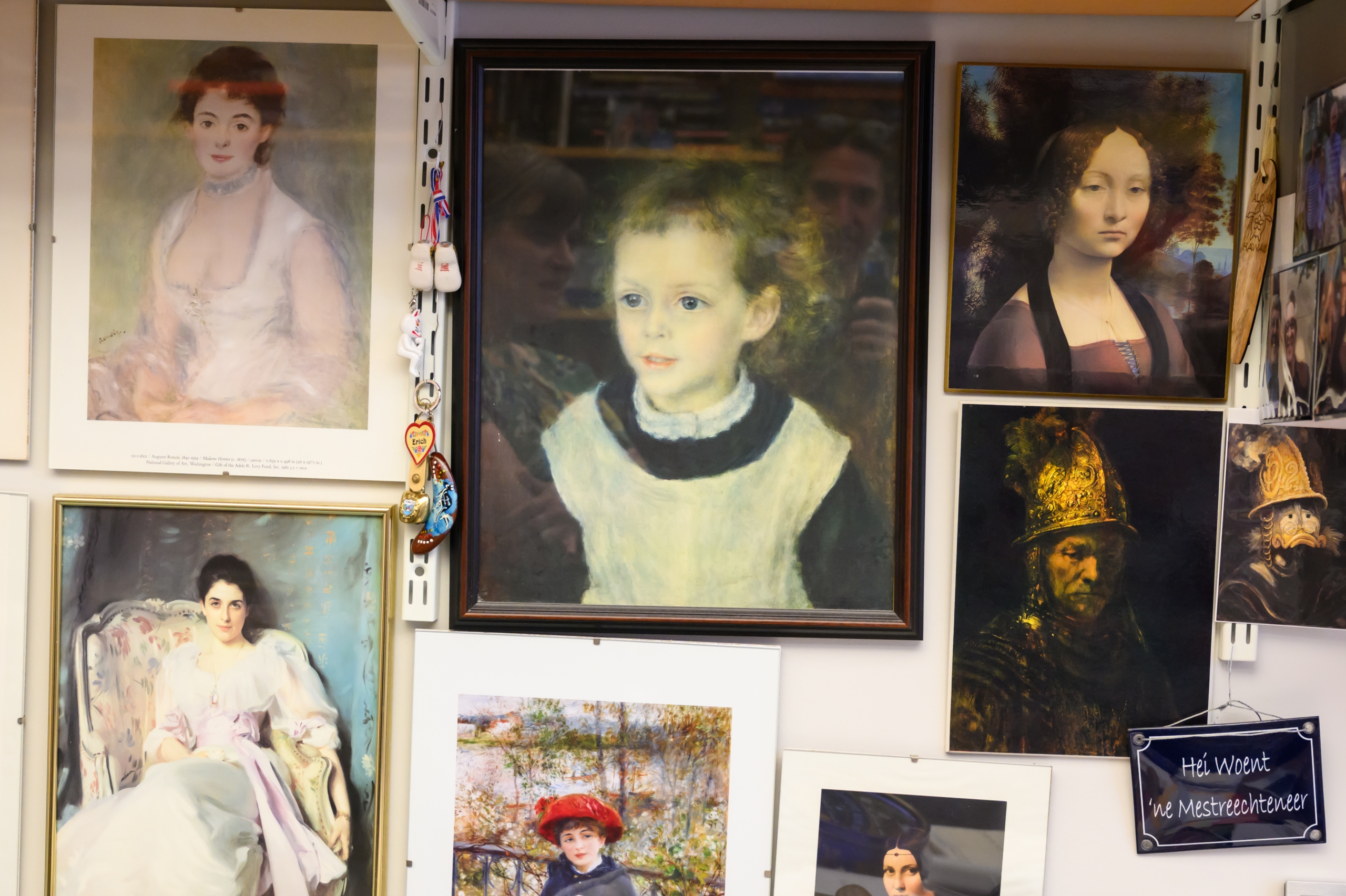
PAINTING OF MARGOT BERARD
This is Renoir’s painting of Margot Bérard, who was about 5 years old. She had just finished a lesson with her German tutor in the garden, and apparently he had upset her because she came running in, crying. At the time, Renoir was early in his career and staying with Margot’s father, Paul Bérard, a wealthy banker and patron. When Margot came running in, Renoir told her, “If you stop crying, I’ll paint your picture.” And that’s how this portrait came to be. I loved both the painting and the story behind it.
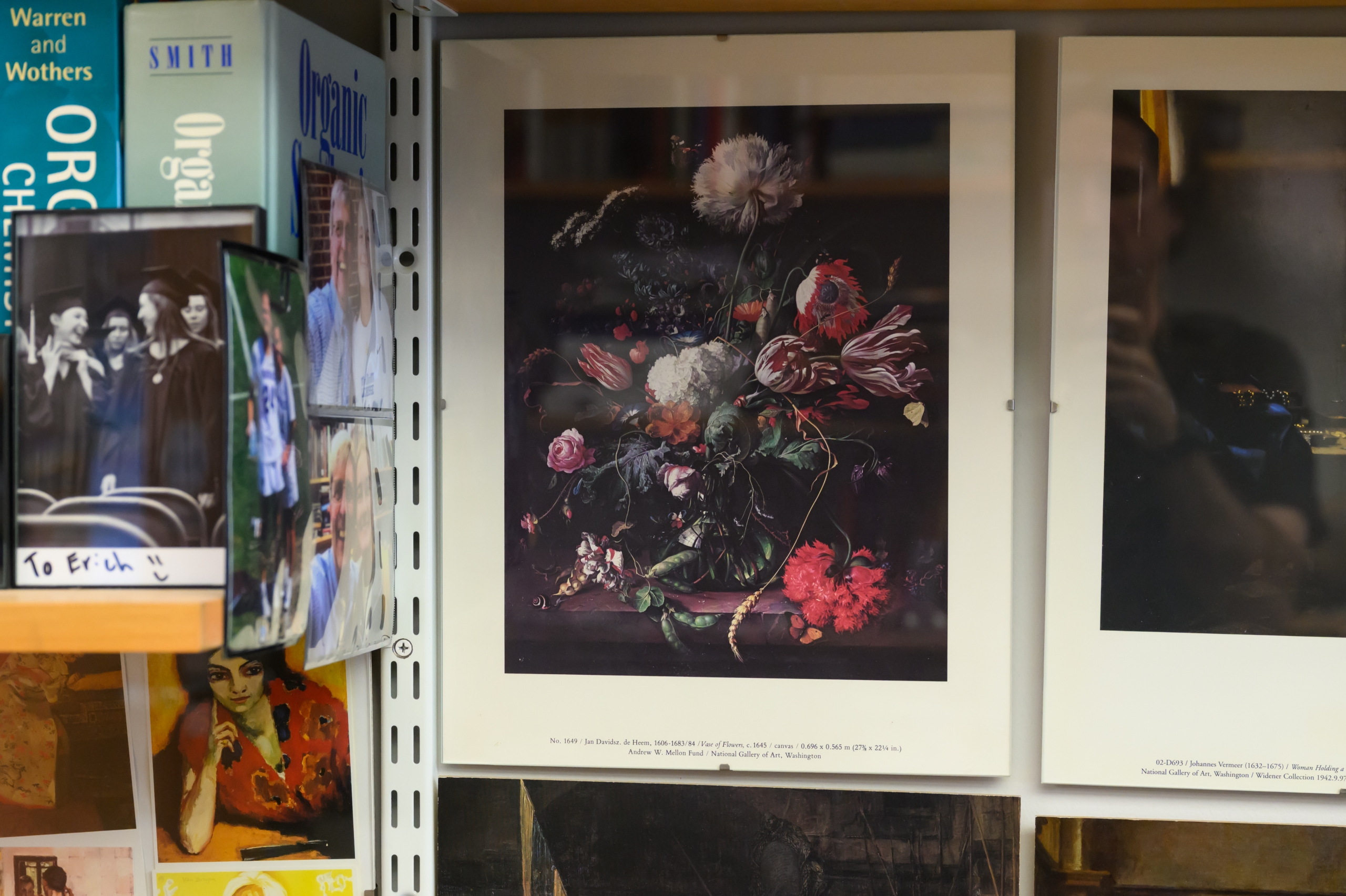
JAN DAVIDSZ. DE HEEM PAINTING
I was at the National Gallery of Art when I was about 18, during the fall of my first year at Bucknell, and I overheard a curator talking about this painting and realized that, up until that moment, I had understood nothing about it. It’s a work by Jan Davidsz. de Heem. At first glance, it looks like nothing more than a beautiful bouquet of flowers. But when you look closely at the botany, you realize the flowers don’t bloom at the same time of year, and even if they could, they wouldn’t all open at the same time of day. In other words, this wasn’t something the artist could have painted directly from life.
If you look carefully at the vase, you can see the reflection of a window — but it’s shaped like a cross. Below the light of the cross, the flowers are wilting. There are insects with dark connotations. And there’s a salamander, symbolizing the fires of hell. Above the light of the cross, the flowers are healthy, and if you look even closer, a caterpillar is climbing a white blossom, on its way to becoming a butterfly. Suddenly, what seems like a simple still life reveals itself as a religious painting. De Heem was a Catholic working in a Calvinist context where certain religious imagery was considered idolatrous. It’s a wonderful example of how a modern viewer might think at first, “Wow, a beautiful vase of flowers,” but it is actually a religious painting.
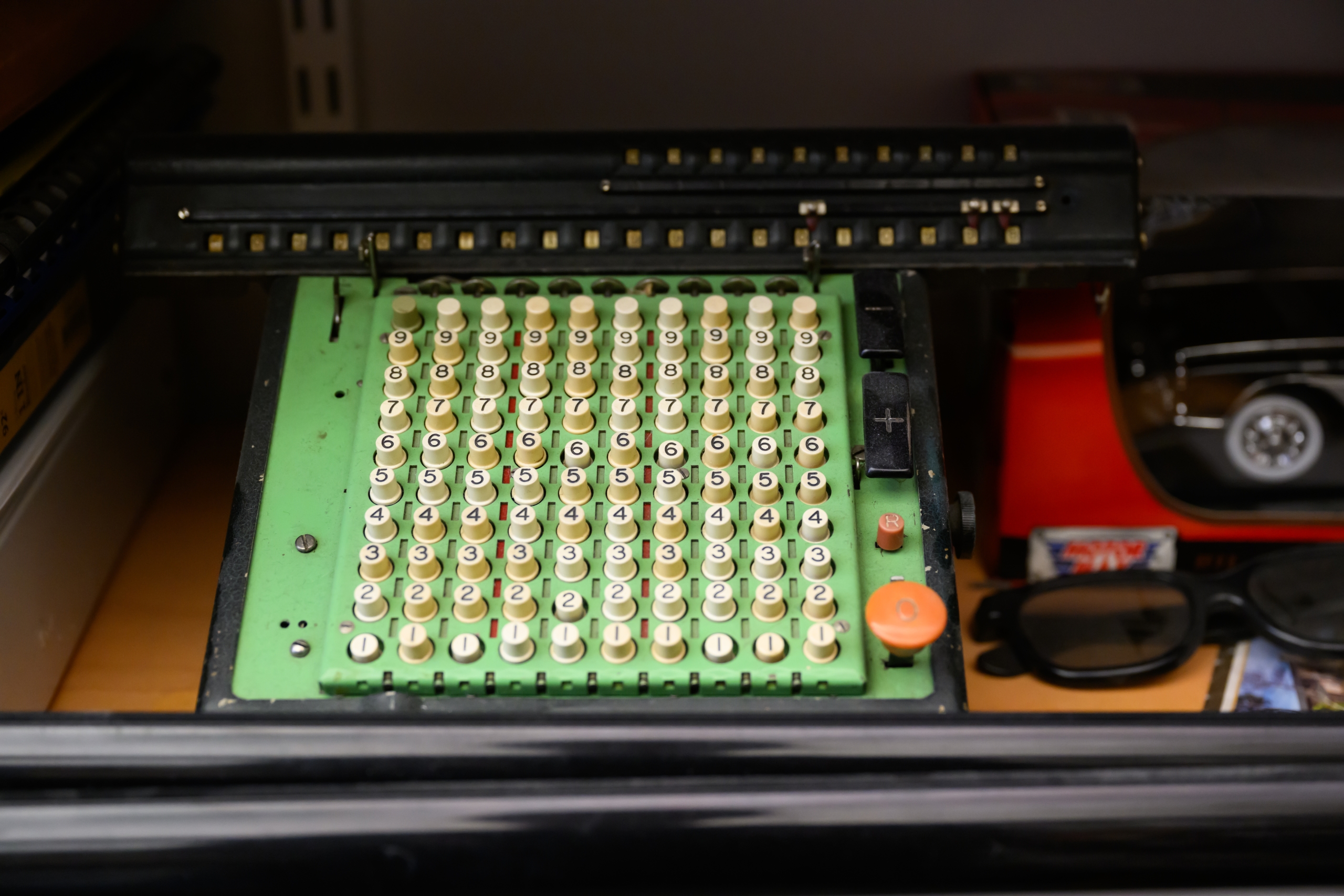
MECHANICAL CALCULATOR
I bought this because it reminds me of an electronic calculator my grandfather had. As a kid, I thought it was the coolest thing. He kept it in the basement, and when you punched numbers and pressed the buttons, the mechanical gears would whir and clatter, the carriage would shift, and then the numbers would scroll up to give you an answer.
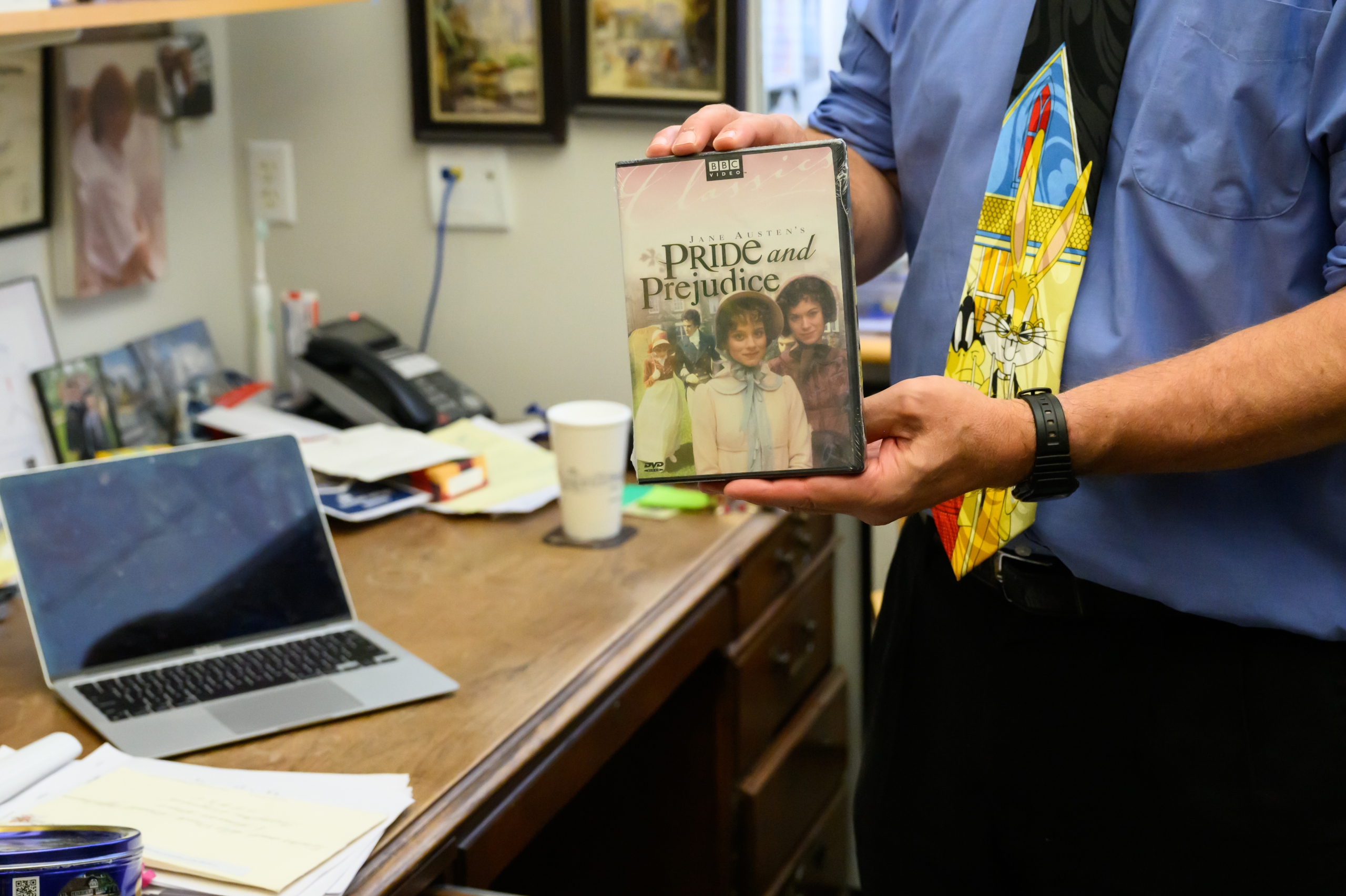
PRIDE AND PREJUDICE
I’ve got a few different copies of “Pride and Prejudice” here and a couple at home. The best “Pride and Prejudice” screen adaptation is the 1980 BBC version. It is the one that’s most faithful to the novel — they use word-for-word chunks of Jane Austen’s actual text. And I think Elizabeth Garvie is the perfect Elizabeth Bennet. Nobody has done Elizabeth Bennet as well as Elizabeth Garvie, in my opinion.
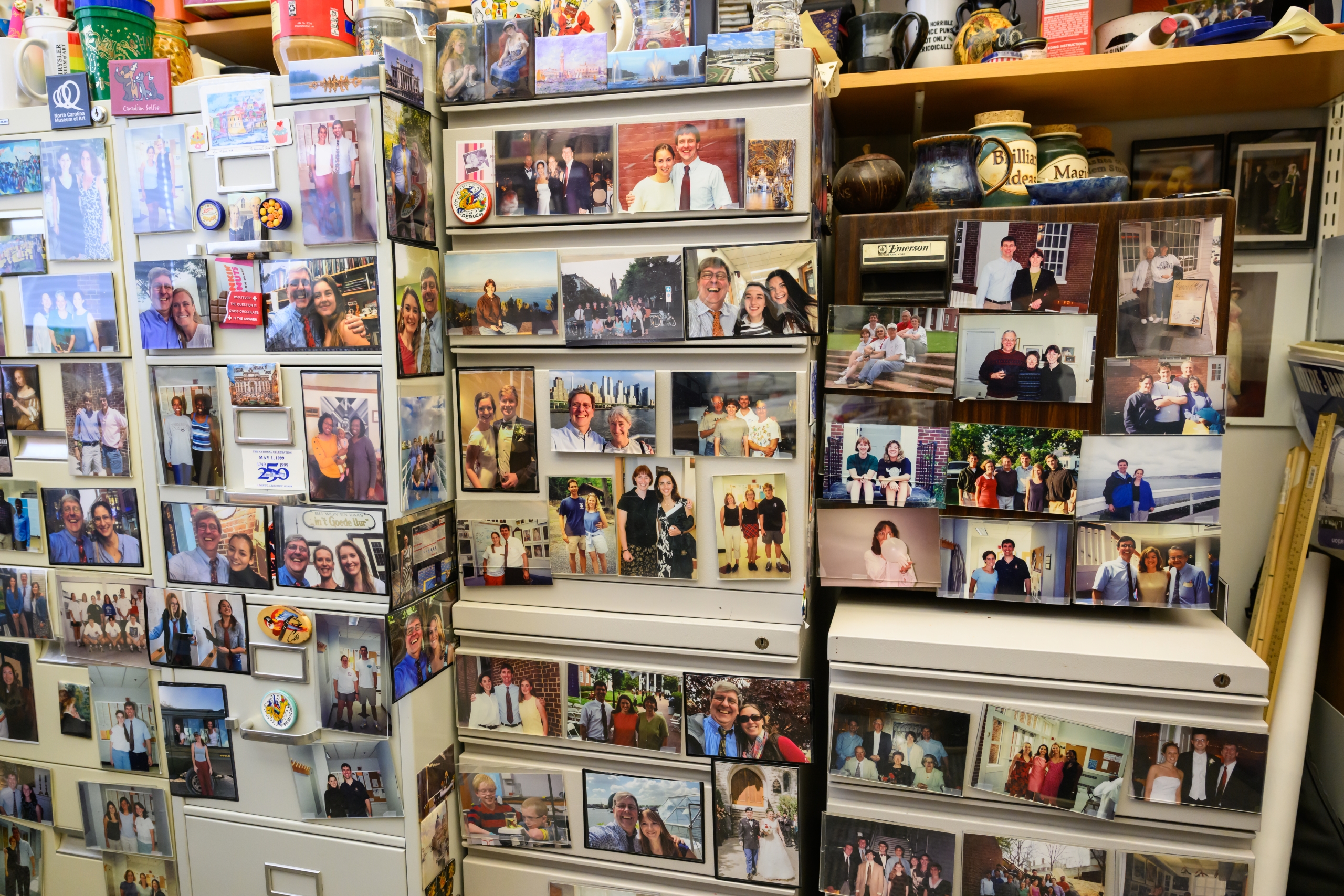
WALL OF PHOTOS
What’s really hilarious now is I’ve now had students who are the children of former students. Of course, I have many more photos in my office than can be shown in one picture. I started at W&L when everyone was still using film cameras, and sometimes I would put one of the prints up in my office. Then everyone went digital, and I have thousands of photos that are digitally stored. After the pandemic ended, I decided I wanted to put more photos up again. So, there is an unfortunate large temporal gap in the former students displayed. All of the photos I have up in my office and my lab and the ones that I have saved digitally help me not miss my wife and family and former students quite so much when I am not with them.


You must be logged in to post a comment.