May 15, 2026
Intellectual Scaffolding
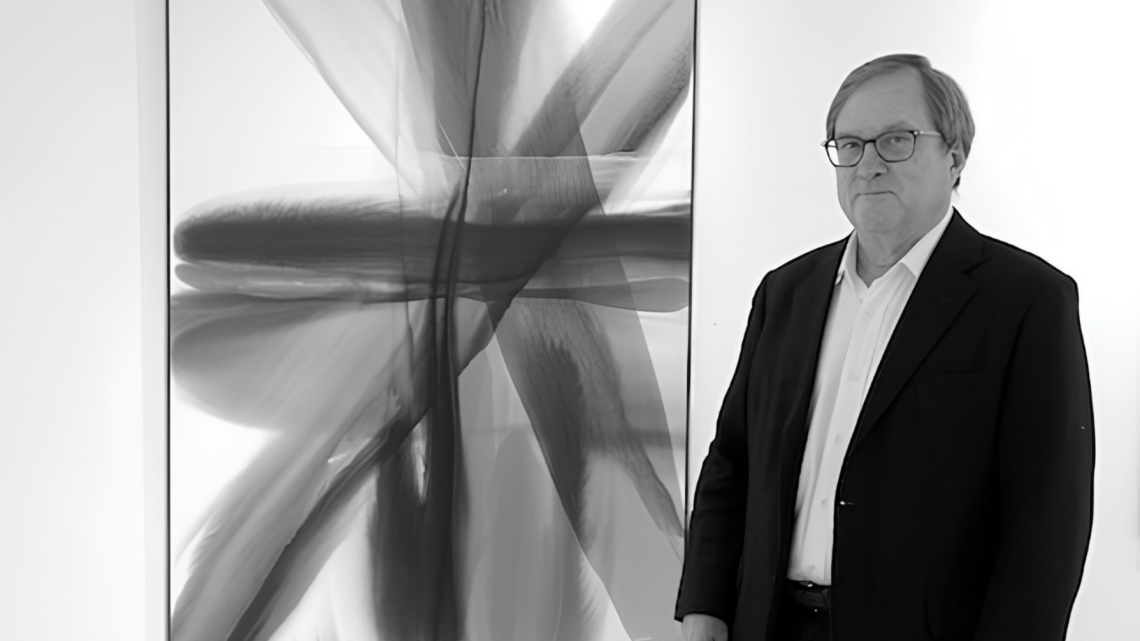
“Never giving up and being steadfast in good and bad times is the only true option in any profession — and in life.”
~ Hollis Taggart ’71
When asked what guidance he would give current Washington and Lee University students who are embarking on their own professional paths, Hollis Taggart ’71 encouraged them to find what brings them joy and to stick with it.
“At this stage in my life and career, my best advice is to follow your heart and your instincts, even when doing so may feel terrifying or non-traditional,” Taggart said. “If you find something you love doing, it is a blessing, and following your own voice, and feeling gratified by that work regardless of the ups and downs, is a rare opportunity.”
Taggart draws on his own past with this guidance, having practiced law for two years after graduating from Tulane University School of Law in 1974 before making the unconventional leap to the art industry in 1977. He opened his own gallery in Los Angeles in 1979 and — after several iterations and locations — has been operating the Hollis Taggart Gallery in its current location in New York City’s Chelsea neighborhood since 2015.
Discovering His Passion
Taggart discovered his passion for art almost by chance while at W&L, where he majored in commerce. Taking advantage of W&L’s liberal arts curriculum, he began to balance his rigorous business classes with different electives and discovered art history. Taking an art history class became “one of the most fortuitous decisions [he] made at W&L,” as he decided to minor in the subject.
Taggart’s interest in art and art history continued through his first years as a practicing attorney following his graduation from Tulane. He frequented a gallery located in New Orleans’ French Quarter to both browse and purchase art, and owner Kurt E. Schon began to introduce Taggart to the art world.
“I was far more engaged emotionally with the art world than with practicing law,” Taggart said. “Schon could see I was ripe for becoming a potential salesperson in his gallery, and he suggested I take a one-month leave of absence from the law firm and spend time in his gallery, where he could show me all the inside secrets of the gallery business. At the end of the month, I was totally hooked.”
Taggart opened his first gallery with his business partner, Carl Jorgensen, in 1979 in Los Angeles. The Taggart & Jorgensen Gallery moved to the Georgetown neighborhood of Washington, D.C., in 1983 and expanded into a second space located down the street in 1990. Taggart bought out Jorgensen in 1993, created Hollis Taggart Galleries, Inc., and opened a gallery in New York City in 1994. Taggart consolidated gallery operations in NYC in 1996 and moved to the current Chelsea location in 2015.
“We have survived by staying the course and staying true to who we are. In the end, the quality of the art will always prevail.”
Opening the first Manhattan location was a risk, with business slowing at the Georgetown gallery as an economic recession threatened the art market. However, Taggart learned that his profession is not for the faint of heart; it requires a commitment to pursuing quality art and not allowing yourself to get pulled by the tides of trends. He knew he needed to make a change if he wanted his business to continue, and the gallery not only survived the move to New York but found success as the recession ended.
“During uncertain times, there is a tendency to chase after current trends, but we have never changed our basic business model,” Taggart said. “Our emphasis has always been on scholarship and rigorous due diligence and academic approaches to historical American art. We have survived by staying the course and staying true to who we are. In the end, the quality of the art will always prevail.”
After consolidating his business operations, Taggart renewed his gallery’s mission to “present new ideas about American art history and fill in gaps that have never been fully examined.” He had always emphasized an academic angle in his galleries and began showing exhibits that moved chronologically through the American art movements of modernism (1905-1930) and abstract expressionism (1940-1950). Taggart also held scholarly shows that explored the evolution from modernism to abstract expressionism, drawing the attention of The New York Times and building his reputation in the art world. His commitment to shaping the discourse around American art and its history has created a niche for his gallery.
Taggart’s business model has also long included producing major art publications, with strong academic content on the subject being examined. In-house Ph.D. staff members as well as independent scholars contribute this content, and the gallery frequently collaborates with museums by sending them the gallery exhibitions with the accompanying catalogs to display.
“This collaboration between galleries and museums is one of the proudest legacies of our gallery,” Taggart said. “Unfortunately, this type of collaboration has become less available in recent years because of a concern about mixing commercial galleries with museum institutions. I personally feel this is an invalid concern, as both the gallery and the museum have the same goal to showcase new areas of American art that have yet to be fully examined.”
A Tradition of Honor
Taggart’s art history background has prominently shaped his work, and he routinely draws on his business education to guide decisions about the gallery and uses his legal knowledge to create and review his own contracts. But, perhaps most importantly, Taggart has continued to carry with him W&L’s culture of honor and community, which he found to be a fundamental part of the W&L experience.
“The values of politeness, respect, decorum and formality never leave a Washington and Lee student,” Taggart said. “The university has naturally changed and evolved since my time there, but I am glad to still carry those traditions forward in my life and my profession.”
“The values of politeness, respect, decorum and formality never leave a Washington and Lee student.” – Hollis Taggart ’71
These values helped shape Taggart’s experience in the professional art world, as it is a business built on trust, relationships and commitment. By maintaining a high professional standard, Taggart secured his reputation in the industry.
“The art world is a small and specialized business,” Taggart said. “You are only as good as your word, and there are no ‘shortcuts’ or ‘quick money’ in this industry. It is a long-term business, built on trust and consistency. That we have endured every imaginable up and down through the decades gives people confidence that we must doing something right.”
Taggart’s steadfastness in his work and the gallery’s mission presents a model for W&L students to follow as they take the first steps down their own career paths. His journey demonstrates the value of choosing a career that you can enjoy while remaining true to your own values and interests, even through the inevitable twists and turns.
“Never giving up and being steadfast in good and bad times is the only true option in any profession — and in life,” Taggart said. “Find your own path, the one that brings you joy and satisfaction, and stick with it through thick and thin. This has been my lesson in my own business, and I am grateful to have been able to follow my instincts.”