
W&L Completes Renovations to University Chapel University Chapel welcomes visitors to its updated galleries beginning June 24.
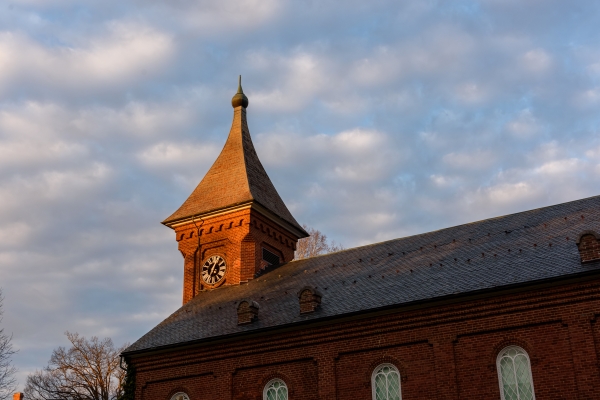 Photo by Ryan Doty ’26
Update: University Chapel and Galleries will reopen to visitors at 10 a.m. on Wednesday, June 24, 2026.
Washington and Lee University is preparing to welcome visitors back to University Chapel this spring following an extensive renovation that has modernized its infrastructure, improved its safety and updated its gallery spaces into a cohesive, accessible and educational experience focused on the building’s history.
The Chapel closed in October 2025 to undergo two simultaneous projects: the modernization of the building’s HVAC and fire and life safety systems, and a renovation of its gallery and museum spaces. The auditorium is expected to temporarily reopen for Alumni Weekend events on April 30 – May 3. Exterior restorations to the masonry, roof and flashing will continue into early summer, and the full facility, including the refurbished galleries on both levels, will reopen to the public in June.
The gallery renovation represents the first comprehensive update to the chapel’s exhibit spaces since 2007. The renovation of the Chapel is an important step in the Board of Trustees’ commitment to accurately documenting the contributions of Washington and Lee’s namesakes, expanding the university’s presentations of its history in service of its educational mission, and maintaining and preserving the Chapel for generations to come.
Work is also underway to create a new Institutional History Museum, as called for in the university’s strategic plan, which will complement the existing gallery spaces in University Chapel and Washington Hall and serve as a resource for the W&L community and the broader public.
“The Chapel is not only a National Historic Landmark, but also one of the university’s most important community spaces,” said Bill Payne ‘88, chair of the Board of Trustees’ Resources Committee and co-chair of the university’s Museum Working Group. “This project allows us to care for it in two essential ways: by investing in the aesthetics, quality and safety of the building itself and by strengthening how we interpret the history connected to it. The renewed galleries are the first major step in the Board’s long-term commitment to tell and contextualize our history more fully, which will culminate in the Institutional History Museum. Together, these spaces will help visitors understand both the story of the Chapel and the broader history of the university.”
The updated galleries were designed by the Institutional History Museum and Galleries staff with support from the working group, which includes W&L faculty, staff, trustees and alumni, and museum consultants from Solid Light, Inc. The goal of the exhibits is to present a thorough and fact-based history of the building, a story that has never been told in a comprehensive exhibit.
When the Chapel reopens fully in June, visitors will be able to enter from both the lower-level galleries and the upper-level auditorium. Attendants and security staff will be present at both entrances. The university plans to hire additional staff to support museum operations and facilitate conversation with visitors. Tours will remain free, with hours of operation from 10 a.m. to 5 p.m. Wednesday through Saturday. University Chapel welcomed nearly 22,000 visitors in the year before it closed for renovations.
Galleries Q&A with Matt Davis, Director of W&L’s Institutional History Museum and Galleries:
Q: What can a visitor expect from the overall gallery renovation?
A: The renovated chapel will offer visitors a richer and more layered experience across both levels of the building, with new panels, interactive displays, tactile activities and digital stations woven throughout the spaces. Visitors will also enjoy new artifacts from the university’s collection that have not been previously exhibited, while others will be cycled out to avoid damage from long-term display, in accordance with standard museum practices.
A notable addition to the renovated galleries is an expanded educational component. Interactive stations throughout the building will include hands-on activities, video content and exhibits designed to engage a range of audiences and age groups. The Institutional History Museum and Galleries team has been particularly thoughtful about creating educational opportunities for student visitors from kindergarten through high school. The new exhibition includes a focused educational through line that meets Virginia’s K-12 educational standards. Additionally, the renovations and newly installed galleries will support the community’s tourism industry, welcoming visitors to campus from all over the world.
Q: What will visitors find on the main level?
A: On the main level, the auditorium will feature signage providing historical context for the space. These panels will tell the story of the chapel’s construction, its designation as a National Historic Landmark, its architectural features and how the space has served the university across more than a century and a half. The panels are designed to be easily removed when the auditorium is in use, transforming it from a museum space to a gathering space.
In the anteroom where the Recumbent Lee statue is located, additional panels will tell the history of that space, from the 1870 addition to the Chapel, to why the statue was commissioned, how it was created, and how the room has changed over time.
Q: What will visitors find on the lower level?
The centerpiece of the lower level is “Foundations and Frameworks,” a new exhibit in the large gallery that traces the Chapel’s history from President Robert E. Lee’s original concept to its construction and the present day. Lee designed the Chapel to support the institution’s needs and his educational philosophy, which included shaping the next generation of Christian gentlemen and modernizing the curriculum by adding a law school, journalism, engineering, natural science and modern languages. The exhibit explores those origins, how the Chapel has been used over more than 150 years and how it has evolved alongside the university and the nation. Visitors will encounter new panels, historic photographs and a narrative arc that traces the building’s original purpose as a campus gathering space, its transformation into a grave site and memorial following Lee’s death, successive renovations and its role in campus life today.
The new exhibit is designed to help people understand why University Chapel is important to W&L’s campus and as a National Historic Landmark. For the university, it is a venue for prominent speakers, the site of students’ Honor System orientation, and the backdrop for their convocation and commencement ceremonies. For the W&L community, it is often a gathering location for alumni weekends and wedding ceremonies. For the country, National Historic Landmarks are important resources that help the public reflect on the nation’s broader history.
In addition to “Foundations and Frameworks,” the “Setting the Stage” gallery will reopen with a slightly updated design, showcasing portraits and artifacts that decorated the chapel’s stage during its earliest years and documenting changes to the auditorium over time.
Q: How has the Lee Family Mausoleum been updated?
A: The Lee Family Mausoleum will feature new wall panels detailing the history of the space alongside a timeline of those interred there, complemented by a new digital interactive station. Visitors will be able to select individual names on a digital panel and read biographies of each person in the mausoleum, providing context for who they were and how they were connected to the Lee family.
Q: How has Lee’s office been updated?
A: Lee’s office will remain largely as it has been, preserving the original furniture and historical pieces that have defined the space since 1870. The renovation includes modifications to improve ADA accessibility, addressing a longstanding bottleneck that made it difficult for group tours to move through the area. Updated panels will help tell the story of Lee’s presidency at Washington College, his role as an educator and administrator and the traditions and institutional foundations he established during that period.
The focal point will be the last five years of Lee’s life. The exhibit will begin to showcase who Lee was to Washington College, focusing on Lee the educator and his time on campus, including what he achieved in that room and the decisions he made there. The forthcoming Institutional History Museum will provide an opportunity to tell the much broader story of the university and its namesakes.
Related Stories

You must be logged in to post a comment.