Washington and Lee Receives Grant from the Teagle Foundation The planning grant will create a shared first-year humanities experience and expand pathways through the curriculum.
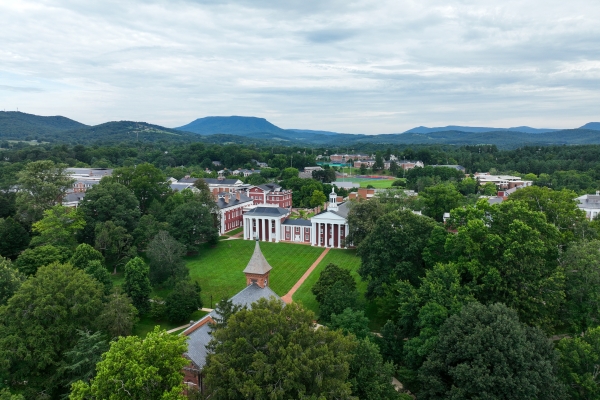
Washington and Lee University has received a $25,000 planning grant from the Teagle Foundation to expand and strengthen the humanities across its undergraduate curriculum.
The grant comes through Teagle’s Cornerstone: Learning for Living initiative, which aims to elevate the visibility and relevance of the humanities in general education to promote a sense of community among students and faculty.
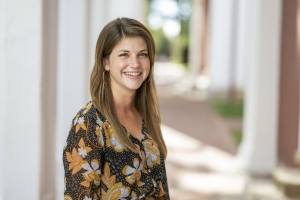
Leading the university’s efforts in reshaping the focus on humanities will be Genelle Gertz, associate dean of strategic initiatives and the Thomas H. Broadus Jr. Professor of English, and Paul Gregory, professor of philosophy and director of general education. Together, they will serve as co-principal investigators and will work extensively with faculty leaders from various departments on defining and shaping the programs.
The Cornerstone grant will support two faculty cohorts during the current academic year led by Gertz; Emmett Buckley, visiting assistant professor of English; Erin Taylor, associate professor of philosophy; and Leticia Fernández-Fontecha, visiting assistant professor of history.
The first cohort will develop First-Year Seminar (FYS) Connections, a new first-year seminar model designed to give entering students a shared intellectual experience grounded in transformative humanities texts. Faculty members from across the university will collaborate to develop a shared, evolving body of transformative texts in literature, philosophy, history and religion — works that have shaped human thought, public life and cultural understanding. The result will be a richer, shared foundation for discussion and reflection. Seminars based on transformative texts will be ready by Fall Term 2027.
“Through FYS Connections, we hope to give first-year students a shared encounter with transformative texts and enduring questions,” said Gertz. “The humanities are the bedrock of a liberal arts education, helping students understand their place in history, recognize how to separate arguments from opinion and develop tools for answering the major ethical questions of our time. Paul Gregory and I are excited about how Teagle funding will support faculty in designing new courses to emphasize the role and value of the humanities for all.”
The second cohort will work to design courses grounded in the medical humanities, several of which will also debut by Fall Term 2027. These medical humanities courses will help create a pathway through general education that grounds students’ preprofessional interests in the humanities. The cohort will also develop curricular plans for offering a minor in the medical humanities. Both cohorts will participate in workshops led by specialists and other Teagle grantees to design syllabi and assignments.
“Among my top priorities as dean is ensuring the arts and humanities remain the cornerstone of a liberal arts education at W&L,” said Paul Youngman ’87, P’21, P’27, dean of the College and professor of German. “I’m proud of Associate Dean Gertz and her team for securing this Teagle Foundation planning grant. It represents an important next step in advancing the humanities at W&L and affirming their essential role in our students’ future success.”
After using the Cornerstone planning grant to develop and pilot courses during the 2026-27 academic year, the university is expected to apply for an additional Teagle Foundation grant of up to $250,000 to implement the new programming officially during the 2027-28 academic year.
“The Teagle Foundation planning grant will allow the university to infuse the Cornerstone philosophy into our first-year seminars, foregrounding humanities-rich inquiry, integrative learning and purposeful reflection for all entering students,” said Lena Hill, provost and professor of English. “Our partnership with the Teagle Foundation will help us pilot and refine the Cornerstone approach, and we are both grateful for and enthusiastic about this opportunity.”
Established in 1944 by Walter C. Teagle, longtime president and chairman of the board of Standard Oil Company (now Exxon Mobil), the Teagle Foundation works to support and strengthen liberal arts education. The foundation aims to serve as a catalyst for the improvement of teaching and learning in the arts and sciences while addressing issues of financial sustainability and accountability in higher education.
Related Stories

You must be logged in to post a comment.