March 23, 2026
Closing Statement
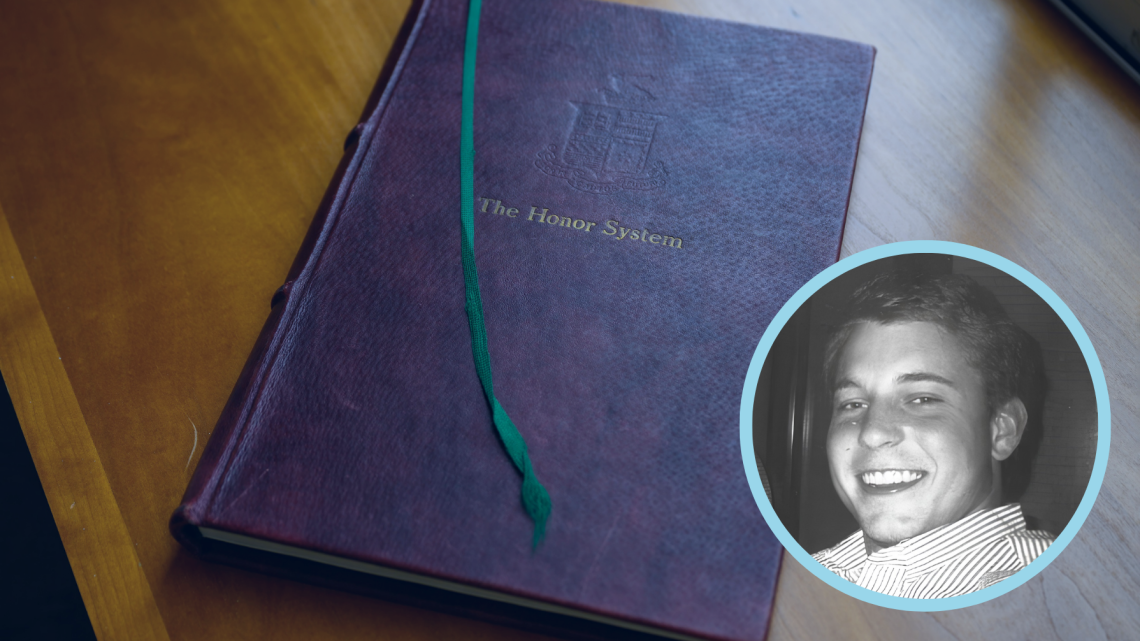
For Washington and Lee University students, the Honor System is more than a set of expectations to live by throughout their four years on campus — it is a symbol of the values of trust, honor and integrity graduates develop and carry throughout their lives. Some W&L students choose to steward and spread these principles to the next generation of college students.
The S. Cullum Owings Jr. Fellowship was established in 2003 to honor the memory of Cullum Owings ’03, who was struck and killed by a truck on his way back to campus with his brother, Pierce Owings ’06, after Thanksgiving in 2002.
The Owings family decided to honor Cullum’s memory through this fellowship that supports the principles of honor and integrity by which he lived and which are so central to W&L. A business major and member of the Sigma Alpha Epsilon fraternity, Cullum’s community-focused and outgoing personality left a lasting mark on everyone he met.
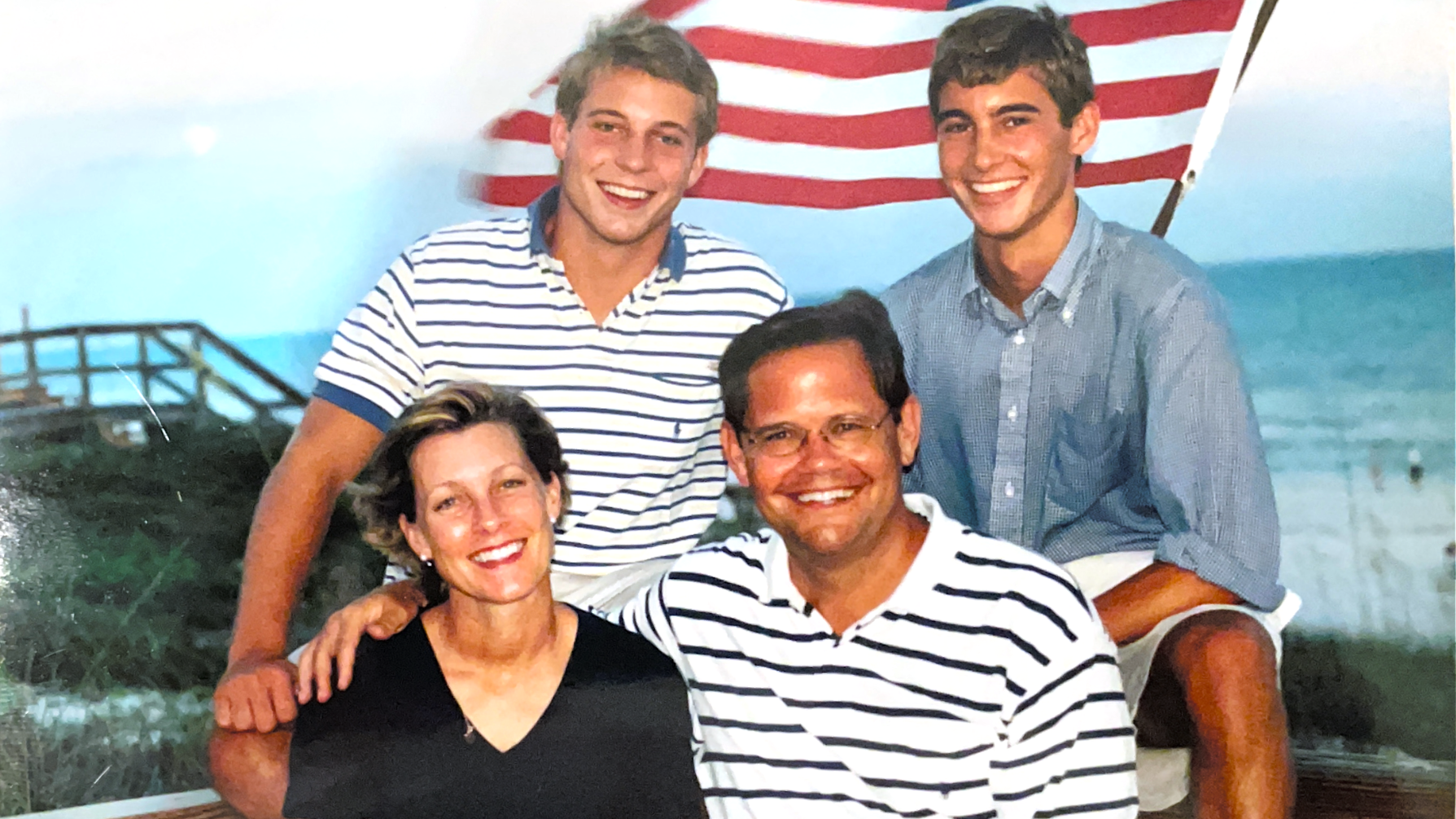 Cullum Owings ’03 and Pierce Owings ’06 with their parents, Susan and Steve Owings P’03, P’06.
The fellowship enables Washington and Lee students to travel to secondary schools to speak about the importance of honor and the Honor System at W&L. Initially administrated under the Class of 1960 Institute for Honor, the fellowship covered travel and programming costs for one W&L junior or senior, as well as a small tuition grant. In 2013, the Class of 2003 chose to support the fellowship on the occasion of its 10th reunion, raising enough money to support two fellows each academic year.
Senior Advisor to University Advancement Beau Dudley ’74, ’79L directs the Owings Fellowship program.
“I never met Cullum, but I have gotten to know a lot of people who knew this special young person,” said Dudley. “It is inspiring that this fellowship arose from the worst kind of tragedy. Now, 24 years after his death, we have an impactful program that is helping high school kids talk with each other and get their values squared away. The Owings are wonderful people, and it is a privilege to work with them.”
“High school students are the future, and a lot of those habits are built from an early age,” Pierce Owings said. “Growing up in a place where students feel like they can trust and learn from each other is a key element for forming good relationships.”
“High school students are the future, and a lot of those habits are built from an early age. Growing up in a place where students feel like they can trust and learn from each other is a key element for forming good relationships.” – Pierce Owings ‘06
Now, more than 20 years into the program, the fellowship supports three fellows each year. Ben Hulsey ’26 and Max Patterson ’26 served as fellows the past two years; they were joined by Sai Chebrolu ’26 for 2025-26.
The fellows visit three to four secondary schools each academic year to give a presentation on honor and the importance it holds within a community, and to facilitate discussions with students. During the last academic year, the fellows visited Shady Side Academy in Pittsburgh, Pennsylvania, Atlanta Classical Academy in Atlanta, the Hun School in Princeton, New Jersey, and the Landon School in Bethesda, Maryland. Most schools have a connection to W&L, but Dudley said schools have started to reach out independently.
In addition to presenting on W&L’s Honor System, the fellows talk about the importance of building a community of trust and prominent examples of breaches of honor in the professional world. Many of the schools have an honor code in place, allowing the visit to serve as a “refresher course” on honor and an opportunity to address any pressing problems.
The fellows stress that honor goes beyond academic integrity — it touches every part of life and should be a consideration in every decision the students make.
“Carrying the mentality to do the right thing in the real world starts from an early age,” said Elizabeth Grist ’22, who was a fellow during her junior and senior years.
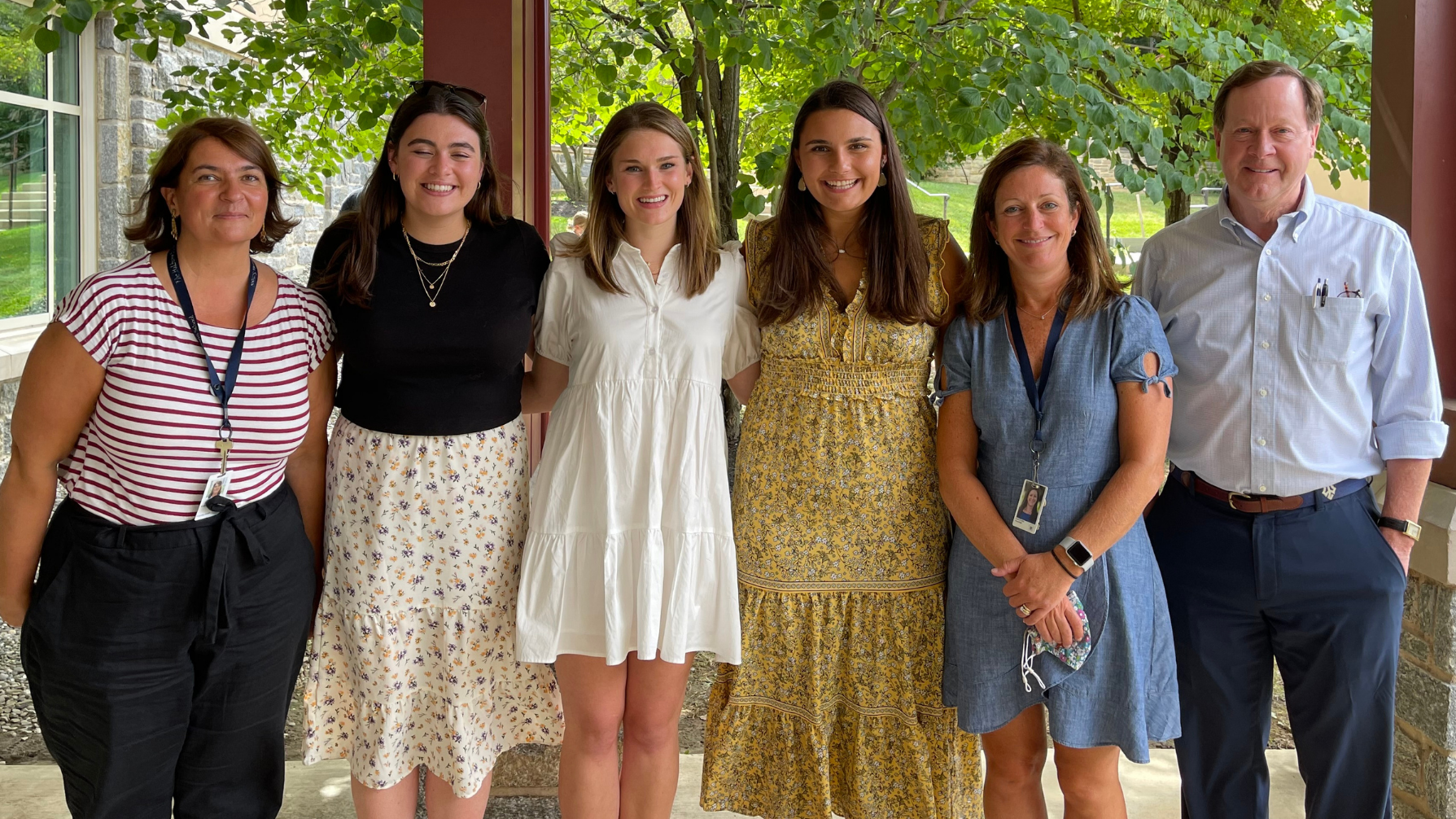 S. Cullum Owings Jr. Fellowship members spoke at The Baldwin School in Bryn Mawr, Pennsylvania in 2021. Left to right: Elisabeth Seliverstoff, dean of students at The Baldwin School, Makenzie Walter ’22, Elizabeth Grist ’22, Rebecca Hagigh ’23, Christie Reed, head of upper school at The Baldwin School and Beau Dudley ’74, ’79L, senior advisor to university advancement at Washington and Lee University.
The fellows then hold small group discussions about honor and integrity with select students. While many schools choose to have members of their honor council or student government participate, others select a randomized group of students from across the school. Over the past several years, the fellows have found their discussions naturally shifting toward artificial intelligence and its implications on honor and integrity.
To ensure the students are comfortable speaking freely, Dudley holds a separate discussion with administrators and some teachers.
“Because they knew we had just been in similar shoes to theirs, it allowed us to connect with them and have conversations that were probably harder for their teachers and administrators to get to,” Harrison Tucker ’13, a former Owings Fellow, said. The fellows facilitate the discussions but allow the students to guide the direction of the conversation.
After the visit, Dudley and the fellows draft a report about their discussions. If the students or administrators expressed deep underlying concerns with the school’s honor code or how it is being applied, the fellows make recommendations rooted in their conversations.
While many students are concerned about academic integrity and plagiarism, the fellows situate the conversation in the broader importance of maintaining honor and integrity in all areas of their lives.
“It’s so important to build habits of trust,” Patterson said. “Being a trustworthy person, trusting others and developing a community built on trust as early as you can allows those values to become fundamental and intrinsic to you by the time you get to college and into the workforce.”
“We have conversations about how important it is to build your own set of morals and ethics,” Chebrolu said. “It’s important to be so confident in yourself that you won’t be tempted to leave them because of external pressures.”
Many Owings Fellows have experience in some capacity with the Honor System on campus — either serving on the Executive Committee or as hearing advisors — but it is not a requirement. Each spring, Cullum’s parents, Susan and Steve; Pierce Owings; the existing fellows and Dudley interview candidates for the next year, ultimately selecting the students who care most deeply about the Honor System and who will best represent it when they speak to students.
“Our family feels so fortunate that Beau Dudley took an interest in the fellowship,” Pierce Owings said. “His leadership has been a gift to us, the applicants and all the fellows — marked not just by his immense talent and network, but by the warmth, humility and care he displays in all his interactions with others.”
For Mason Grist ’18, who served on the Executive Committee in addition to being an Owings Fellow, the Honor System is more than a privilege afforded to W&L students — it’s a responsibility.
“We live in a communal society, and at its core, that’s what the Honor System is designed to promote,” he said. “It’s about creating an environment where you can trust and respect someone without question because they’ve committed to the same core principles of honor and integrity as you.”
“It’s about creating an environment where you can trust and respect someone without question because they’ve committed to the same core principles of honor and integrity as you.” – Mason Grist ‘18
For many W&L students, the fellowship becomes a formative leadership and learning experience. Facilitating discussions with the high school students often reveals questions about honor and ethics they hadn’t previously considered.
“Being able to explain the Honor System to somebody else has made me think more about it and who we are as a community,” said Hulsey, who is pursuing a career in education.
After more than 20 years, the fellowship remains a powerful way to support Cullum’s legacy and spread the values of honor and integrity central to Washington and Lee. Last year, the fellowship held a reunion in Washington, D.C., for alumni of the program.
“I told alumni at the reunion that I felt like I saw a little bit of Cullum in all of them,” Pierce Owings said. “Cullum had a gift for connecting with people, and each of the candidates we’ve had has been good at connecting with younger people.”
With all three fellows graduating this year, there will be a new group for the 2026-2027 academic year: Gibson Ward ’27, Hannah Grace Kornberg ’27 and Nimisha Mikkineni ’27.
“The fellowship made me realize how interconnected the world is, and that makes building trust all the more important,” Chebrolu said.
“The fellowship made me realize how interconnected the world is, and that makes building trust all the more important.” – Sai Chebrolu ‘26

You must be logged in to post a comment.