February 6, 2026
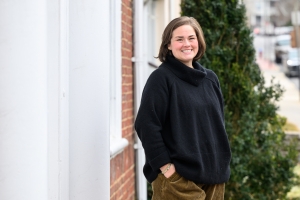
Marisa Charley Awarded the Spring 2026 Civic Engagement Mini-Grant
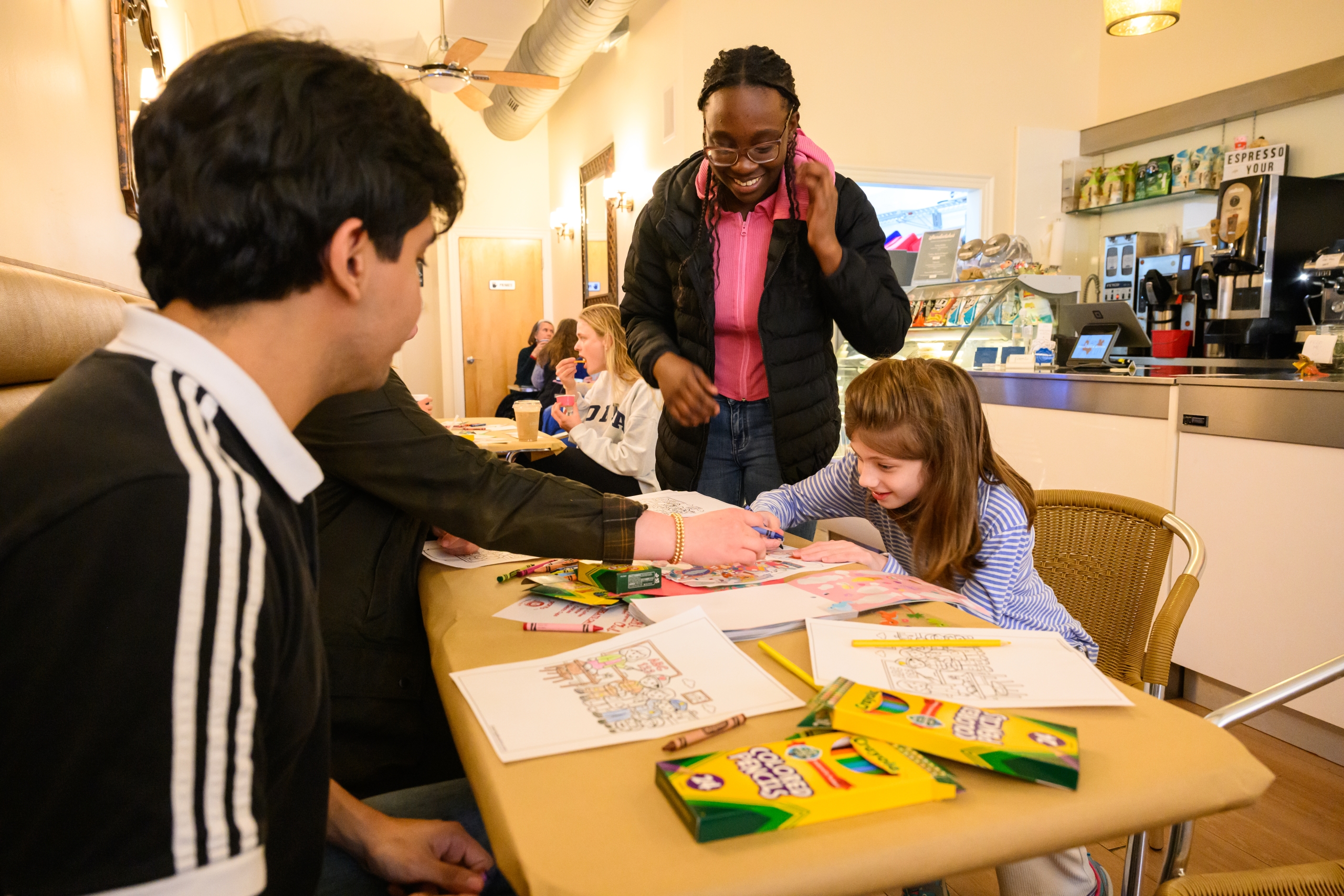 POV202 students mingle with community attendees of their Civic Health Club event at Pronto on Feb. 18.
“I’ve realized that I can’t just stand by and let community happen. I have to be an active participant and an active facilitator of it.”
~ Ovella Huddleston ’29
Pronto, a coffee shop on Main Street in Lexington, Virginia, attracted a larger crowd than usual for a rainy Wednesday afternoon in February. W&L students spread art supplies, stickers and other giveaways on tables covered in craft paper, waving people over as they came in the door to take a seat, mingle and engage in what their professor — Marisa Charley, instructor of poverty studies, Bonner Program director and associate director of the Shepherd Program — calls “civic magic.”
The gathering was the beginning of a series of events that represented the culminating project of POV 202: Respect, Community, & the Civic Life, a Shepherd Program course. For the Winter Term class, Charley asked students to design and facilitate what she calls “civic health clubs” — casual, creative events that bring strangers together to talk about the place in which they live and talk directly to the people they live alongside. In addition to the event at Pronto, Charley’s class partnered with Leaf and Lore, a co-op bookstore in downtown Buena Vista, Virginia, and Rockbridge Barbell, a gym in Lexington that offers personal training and group classes. Students worked throughout the term in small teams to partner with each venue and shape an event around a civic question such as belonging or loneliness. Each event offered hands-on activities such as potting plants or creating small art projects along with free refreshments and food. Participants were encouraged to talk informally, and students were tasked with event setup and cleanup as well as welcoming attendees.
Ovella Huddleston ’29, a classics major and poverty and human capability studies minor from Fort Collins, Colorado, said the planning and execution of each civic health club event provided valuable lessons.
“I’ve realized that I can’t just stand by and let community happen,” she says. “I have to be an active participant and an active facilitator of it. This class has given me the tools to do that.”
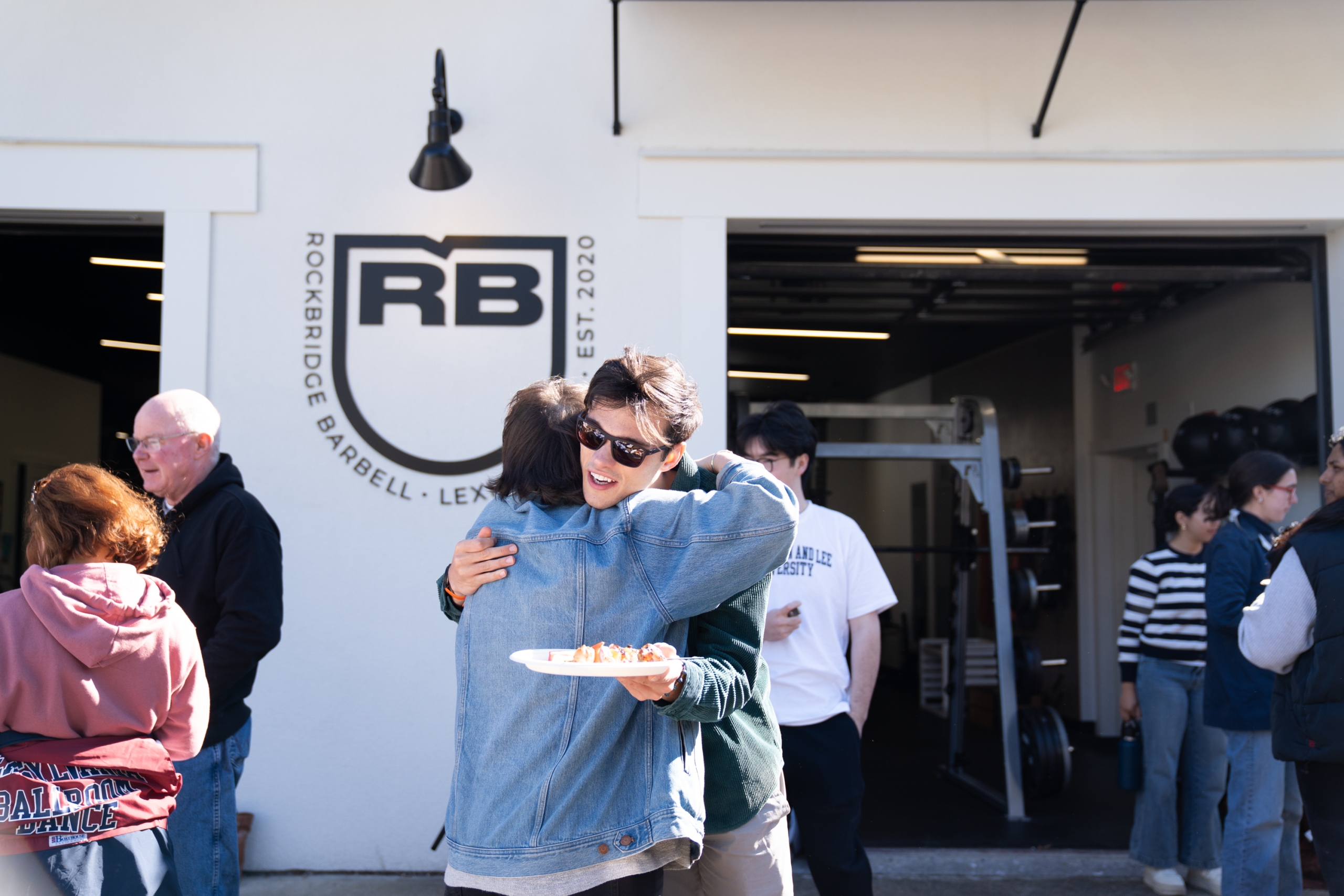
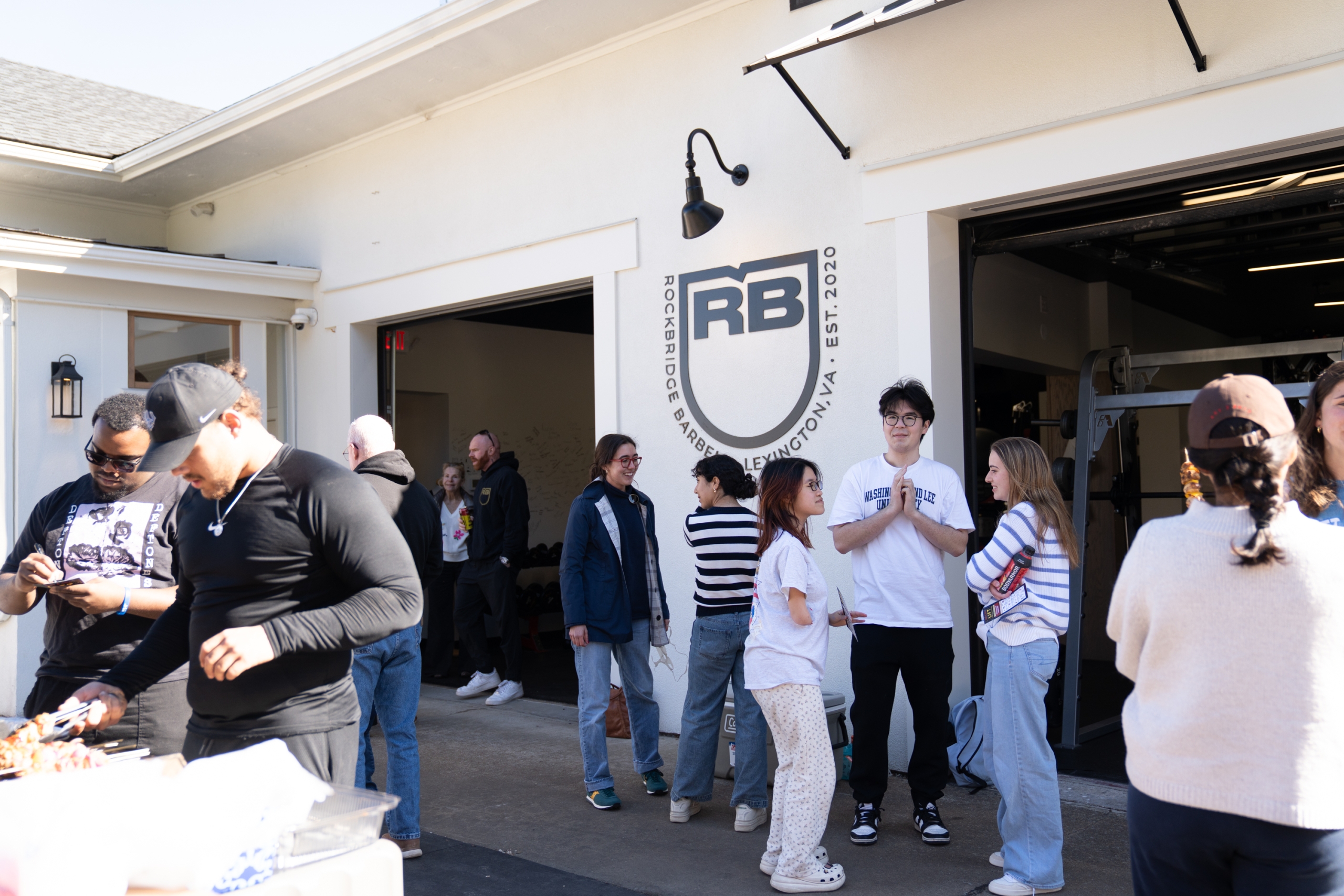 Civic Health Club convened at Rockbridge Barbell in downtown Lexington on March 28.
She says she also noticed something similar in the people who showed up. In a small town, she notes, loneliness often looks different than it does in a city.
“Because it’s so small, those people you’ve known forever, you continue to stay with that one group,” Huddleston says. “This is an opportunity to grow that.”
Natalie Ochieng ’29, a biology major and poverty and human capability studies minor from Nairobi, Kenya, was excited for this course to build on the foundations she learned in her introductory poverty and human capability studies course during her first semester at W&L.
“Taking POV 101 was one of the most transformative and enriching experiences for me here at Washington and Lee,” she says. “It helped me truly understand what poverty is and gave me a strong foundation for thinking about its impact. Moving into POV 202, I was excited for a more hands-on experience. As someone who deeply cares not only about poverty but also its causes and consequences, I saw this class as an opportunity to learn how to better understand community needs and how I can help meet those needs, even as a student.”
Ochieng says the course taught her how to practice civic engagement, often through simply having the courage to take the first step.
“Partnering with Pronto was especially eye-opening for me,” she says. “When we were planning our first civic health partnership, one of our biggest fears was whether people would even show up. However, once we put that worry aside and moved forward, we were amazed by the response. People left their workplaces and set aside school responsibilities just to come and connect with their community. That experience showed me that while it is not always easy to encourage civic engagement, creating intentional opportunities can go a long way.”
Meredith Benincasa, Pronto’s co-owner, says the ethos of the course aligns with her vision for the business as a place where the community can gather.
“Without people coming together, how can you begin to have any kind of discussion or just hear the other side or different views?” she asks. “If we always stay isolated, we don’t really get anywhere.”
The course’s organizing model derives from an organization called Warm Cookies of the Revolution, a Denver-based nonprofit founded in 2012 by civic engagement expert Evan Weissman. Weissman contends that just as people go to the gym for their physical health, a religious community for their spiritual health or a therapist’s office for their mental health, communities should encourage spaces where people can gather to promote civic health. Charley says that while she was excited to introduce students to the civic health club portion of the class, the classroom discussions yielded the most surprising moments of the course for her.
“I expected the civic health club component to be rich and dynamic,” she says. “I didn’t realize that students would so quickly identify postures and behaviors they want to change in themselves, in their own lives and in the ways they’ll be designing future communities.”
 Students potted plants and greeted attendees at Civic Health Club’s event at Leaf and Lore in Buena Vista on April 4.
Part of that shift, she believes, came from trusting students with real responsibility in the event-planning process and having them form meaningful relationships with the community partners.
“Students had to practice both sides of reciprocity,” Charley says, “not just offering help, but asking for it. Through that, what I heard through the students’ reflections was: ‘I am capable of developing my own safety net and creating a community around myself that represents my values.’”
Jen Carpenter, co-owner of Leaf and Lore who also serves as executive director of Main Street Buena Vista, said working alongside the students has given her a new sense of hope.
“When you look at the news, you might feel uneasy about the future,” she says, “but working with W&L students, I have so much confidence and faith in the future.”
Geena Ravelo Cepero ’27, an English major with minors in poverty and human capabilities studies and Latin American and Caribbean studies from Las Vegas, was one of two student teaching assistants who helped Charley shaped the course as it unfolded over the course of Winter Term. Ravelo Cepero says that working with Charley was an opportunity to put theory into practice.
“She showed us that civic life is not just something we study or discuss in theory but something that unfolds in real time through small, intentional moments of inclusion, openness and care,” Ravelo Cepero says.
Kat Repka ’26, a Bonner intern from St. Petersburg, Florida, double majoring in art history and sociology and anthropology and minoring in poverty and human capability studies, also served as a teaching assistant for the course alongside Ravelo Cepero. She says the opportunity to facilitate discussion and provide input on creative projects was one of her most meaningful experiences on campus.
“It has been a highlight of my college career to work with Professor Charley and Geena in making this version of POV 202 a reality,” she says.
Charley says that her goal in creating the class was to show students what civic joy looks like, rather than lecture them about civic duty.
“They start to recognize it and reproduce it on their own,” she says. “Once you see the magic, it’s a different thing.”
If you know any W&L who would be great profile subjects, tell us about them! Nominate them for a web profile.

You must be logged in to post a comment.