October 22, 2025
Tom McClain to Present Nobel Prize Symposium Talk
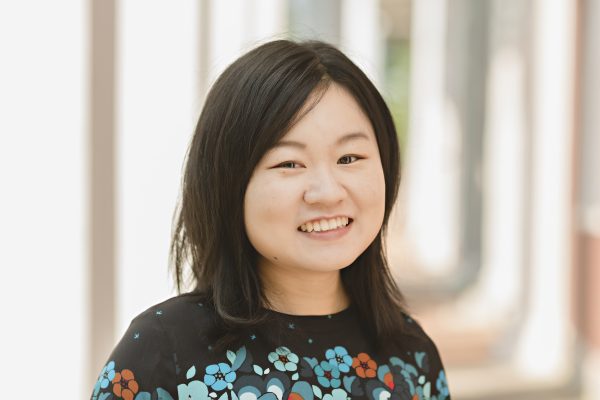 Mengying Liu, assistant professor of engineering
Mengying Liu, assistant professor of engineering at Washington and Lee University, will present on the 2025 Nobel Prize in chemistry awarded to Susumu Kitagawa, Richard Robson and Omar M. Yaghi for the development of metal-organic frameworks (MOFs).
Liu’s talk will be held from 11:45 a.m. to 12:45 p.m. on Thursday, Jan. 15, in room 128 of the Harte Center for Teaching and Learning, located in Leyburn Library. The event is free and open to the public. Snacks and refreshments will be provided.
The work of the three chemists pioneered the development of MOFs, a revolutionary class of porous materials. These innovative molecular constructions use metal ions as cornerstones linked by organic molecules to form polymers containing large cavities, creating materials with extraordinarily high surface areas — some comparable to an entire soccer field. The work began in 1989 when Robson first created diamond-like porous structures using copper ions and organic molecules, though these early constructions were unstable. Between 1992 and 2003, Kitagawa and Yaghi independently made breakthrough discoveries that provided a stable foundation for the field: Kitagawa demonstrated that gases could flow in and out of these structures and predicted their flexibility, while Yaghi created highly stable MOFs that could be modified through rational design to achieve specific properties.
“When I was applying to graduate schools, I seriously considered working on metal-organic frameworks — they’re like chemistry’s Lego bricks, where you snap together metal nodes and organic linkers to design materials with exactly the properties you need,” said Liu. “This is chemistry at its most creative and most consequential. Let’s celebrate together how these Nobel laureates, together with other scientists in this field, turned these molecular building blocks into materials that could capture carbon dioxide from our atmosphere, purify our water and store clean fuels.”
Kitagawa was born in Kyoto, Japan, in 1951 and attended Kyoto University (Japan), where he received a bachelor’s degree and doctorate in hydrocarbon chemistry. After earning his Ph.D., Kitagawa began an academic career as an assistant professor, lecturer and associate professor at Kindai University (Japan). He later taught at Tokyo Metropolitan University (Japan) before returning to Kyoto University as a professor of inorganic functional chemistry. He co-founded the Institute for Integrated Cell-Material Sciences at Kyoto University, serving as founding deputy director and later as director. In 2024, he was appointed executive vice-president for research promotion at Kyoto University. He is a fellow of the Royal Society and a member of the Japan Academy.
Robson was born in 1937 in Glusburn, West Yorkshire (U.K.), and attended Brasenose College, Oxford (U.K.), where he earned a bachelor’s degree and doctorate in chemistry. He conducted postdoctoral research at the California Institute of Technology and Stanford University before accepting a lectureship in chemistry at the University of Melbourne in 1966, where he spent the remainder of his career. Robson is a fellow of both the Australian Academy of Science and the Royal Society, and he received the Burrows Award from the Royal Australian Chemical Institute.
Yaghi was born in Amman, Jordan, in 1965 and moved to the U.S. at the age of 15. He initially attended Hudson Valley Community College and later earned a bachelor’s degree in chemistry from the State University of New York at Albany. He went on to receive a Ph.D. in chemistry from the University of Illinois Urbana-Champaign. Yaghi completed a National Science Foundation postdoctoral fellowship at Harvard University and then served as a faculty member at Arizona State University, the University of Michigan, the University of California, Los Angeles and the University of California, Berkeley, where he currently serves as the James and Neeltje Tretter Chair Professor of Chemistry and became the founding director of the Berkeley Global Science Institute. Yaghi is an elected member of the U.S. National Academy of Sciences and the German National Academy of Sciences Leopoldina.
Learn more about all of the 2025 Nobel Prize winners.

You must be logged in to post a comment.