
January 28, 2026
Micah Tongen ’26 Publishes and Presents Research Paper
An adaptation of Homer’s epic poem, Christopher Nolan’s “The Odyssey” has been making a splash at the box office while sparking conversations about the merits and shortcomings of interpreting a 3,000-year-old story for a modern audience. However, both critics and fans of the film can agree that Nolan has catapulted Greek mythology — and the classics, in general — into the mainstream, revealing the timeless quality of both “The Odyssey” and its trickster hero, Odysseus.
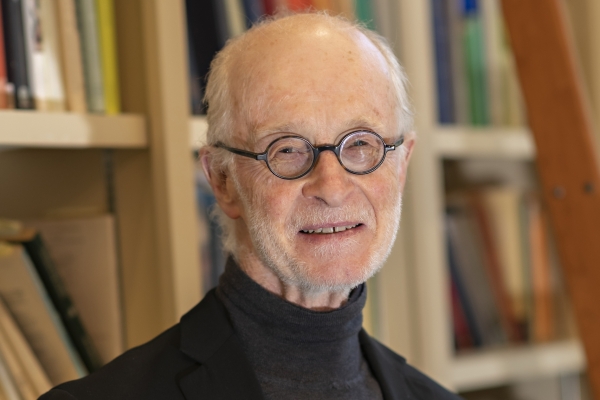
Kevin Crotty, professor of classics and the J. Donald Childress Professor in Foreign Languages at W&L, has been pleasantly surprised by the enormous popularity of the movie. Crotty’s research interests include myth and archaic Greek poetry, and he frequently teaches classes about classical myth and the epic tradition. Below, he discusses why Odysseus is a timeless character, common issues with adapting ancient works, what the film left out and why, if you liked the movie, you’ll love the richness and depth that comes from reading the full epic.
What makes an ancient epic like “The Odyssey” timeless and able to resonate with people after so many centuries?
Odysseus, the central character of “The Odyssey,” is one of the most fascinating of all Greek heroes. He resonates mainly because, as a trickster, he has so many different facets, any of which may appeal to a reader. For example, he is the restless wanderer, but he is also the sojourner longing to return home. He is a heroic warrior; a mythic slayer of monsters, as well as a heroic projection of an ordinary man who yearns for normal life among his family. His story appeals to people at every stage of their lives — as children, as adolescents and as adults. Also, he can be presented as a villain: His character is that elusive and ambiguous!
How might the popularity of “The Odyssey” encourage a renewed interest in the classics, and why is this important?
“The Odyssey” is a beloved text among classicists, but I think many of us have been taken aback by the enormous popularity of the movie. Even a three-hour movie cannot contain the wealth of incident in the epic original, however, and filmgoers will be interested to see how much more fascinating material the poem contains. What readers of the poem will discover is not only how clever the narrative is (a feature Christopher Nolan captures well in his movie), but also examinations of fate, responsibility and what values ought to animate a life. I think a return to the text of “The Odyssey” would prove an enriching experience for anyone.
It’s hard to believe that what has ended up in international movie theaters as a $250 million extravaganza began life some 3,000 years ago with a single singer, strumming his lyre and telling the ancient heroic tales of Odysseus.
~ Kevin Crotty, professor of classics and J. Donald Childress Professor in Foreign Languages
What themes from “The Odyssey” would you dive into with a class, and how do they compare to what the film highlighted?
The gods are an integral part of the action of the poem but, understandably, very difficult to do effectively in a film, and so they are mainly missing from this film version. But they are partly what makes Homeric poetry so distinctive. I would certainly want to explore their role and the questions they pose about fate and responsibility. Also, although the film takes an interest in the female characters, the original text is even richer: Penelope emerges as a master trickster herself, able to outfox even her arch-trickster husband, Odysseus. Finally, Odysseus’ visit to the underworld has enough material for a whole semester on myth — way too much to be included in the film. I was sorry, in particular, that Nolan omits Odysseus’ conversation with his mother’s shade. It is an intense moment in the underworld scene, not to be missed.
What are some common issues or concerns when dealing with ancient texts in translation/adaptation?
There are many excellent translations available in English of all the major texts that survive from the ancient world. Still, the worldview and value system of Greeks in the eighth century B.C.E. is very different from ours, and so they have words for concepts that don’t exist in English. Also, ancient words that do have English equivalents mean something a little different in Homeric Greek. Another common issue is the need to supply the cultural context for ancient works. It’s hard to believe that what has ended up in international movie theaters as a $250 million extravaganza began life some 3,000 years ago with a single singer, strumming his lyre and telling the ancient heroic tales of Odysseus. The story of how the Homeric poems came to be composed makes for a fascinating study in its own right.
How does Homer’s Odysseus differ from Nolan’s portrayal of the hero? Were there any editorial decisions that surprised you?
Nolan presents Odysseus largely as someone suffering from post-traumatic stress disorder after the Trojan War. It’s a fair way to present the story to modern audiences, but in the original, Odysseus is not only “much suffering” but “much daring” — and a single Greek word, “polutlas,” carries both these meanings. He is an insatiably curious adventurer, and a man renowned for his intelligence and sheer intellectual agility. He can be strikingly amoral and sometimes even villainous. Repeatedly in the poem, Odysseus hides his identity and effaces himself. Who, exactly, is Odysseus is a question that runs throughout the poem.
What is another classic text you would want to see adapted for the screen, or whose take on “The Odyssey” would you want to see?
One thought that occurred to me is that Nolan, or another director, could certainly revisit “The Odyssey” and make a rather different sort of movie. Think of Nolan’s several “Batman” movies — Odysseus is at least as rich a character as Batman! Also, “The Odyssey” simply has way too much material for a single film — one could make a very different movie just using some of those other materials.
For those seeking more adaptations of “The Odyssey,” what books or films do you recommend? Do you have a favorite adaptation?
I heartily recommend another recent film version of “The Odyssey” called “The Return” (2024), with Ralph Fiennes and Juliette Binoche. It’s a much smaller version than Nolan’s film, but far more moving and deeply insightful into the characters. I haven’t enjoyed the other film versions of “The Odyssey” I’ve seen, but the 1997 television series with Armand Assante as Odysseus is interesting because of its very different take on many of the most famous stories in the poem. People might enjoy “Troy” (2004), a version of Homer’s “The Iliad,” but I thought it was a real disappointment — couldn’t hold a candle to the original!



You must be logged in to post a comment.