Ryan Jones Co-Authors Article in The Journal of Biogeography The visiting assistant professor of biology examined the genetic differences, relationships and evolutionary history of camel spiders from the Baja California Peninsula.
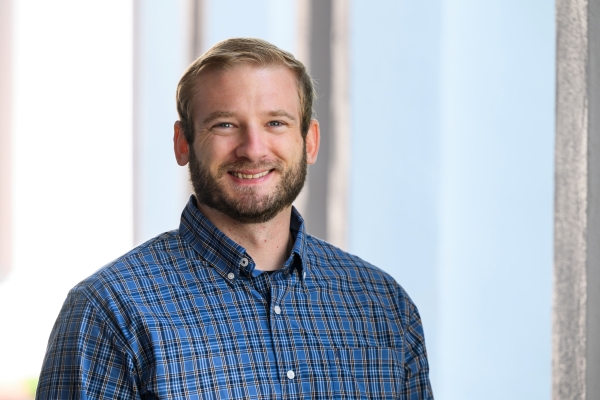 Ryan Jones, visiting assistant professor of biology
Ryan Jones, visiting assistant professor of biology at Washington and Lee University, recently co-authored an article in the Journal of Biogeography.
Jones worked with various other researchers for the paper titled, “Deep Phylogenomic Structure and Microendemism in Baja California Ammotrechidae (Arachnida: Solifugae) Support a Model of Distributed Diversification.” The article was published in the August 2026 edition of the journal.
The paper examines the genetic differences, relationships, and evolutionary history of camel spiders from the Baja California Peninsula. Researchers used mitochondrial COI DNA and genome-wide RADseq data to study how these spiders are related to each other and how their populations have changed and spread over time. This is the first study to examine the geographic genetic patterns of this species of camel spider.
Researchers discovered deep phylogenomic structure and extensive cryptic diversity, identifying at least 16 putative lineages, many restricted to single localities. The results suggest that the camel spiders’ genetic differences were not mainly caused by ancient seaways separating populations. Instead, their evolution was shaped by changes in the landscape, habitat differences, and past changes in climate. Limited genetic mixing among some closely related groups suggests that they only came into contact occasionally rather than remaining connected over long periods of time.
The authors conclude that Ammotrechid camel spiders retain detailed genetic patterns shaped by the history of the landscape in Baja California Sur and show higher levels of diversification than previously documented. These findings suggest that Ammotrechid camel spiders are promising but underused organisms for studying how desert landscapes and history have influenced biodiversity.
Jones joined the W&L faculty after nine years as a researcher at the Denver Museum of Nature & Science. He also served as a graduate teaching assistant at the University of Colorado Denver, earning a Master of Science and Ph.D. in integrative and systems biology. He also holds a Bachelor of Science in biology from Hope College. His teaching and research interests include evolutionary biology, systematics, arachnology and computational biology.

You must be logged in to post a comment.