October 16, 2026
Office Hours: Lasting Bonds
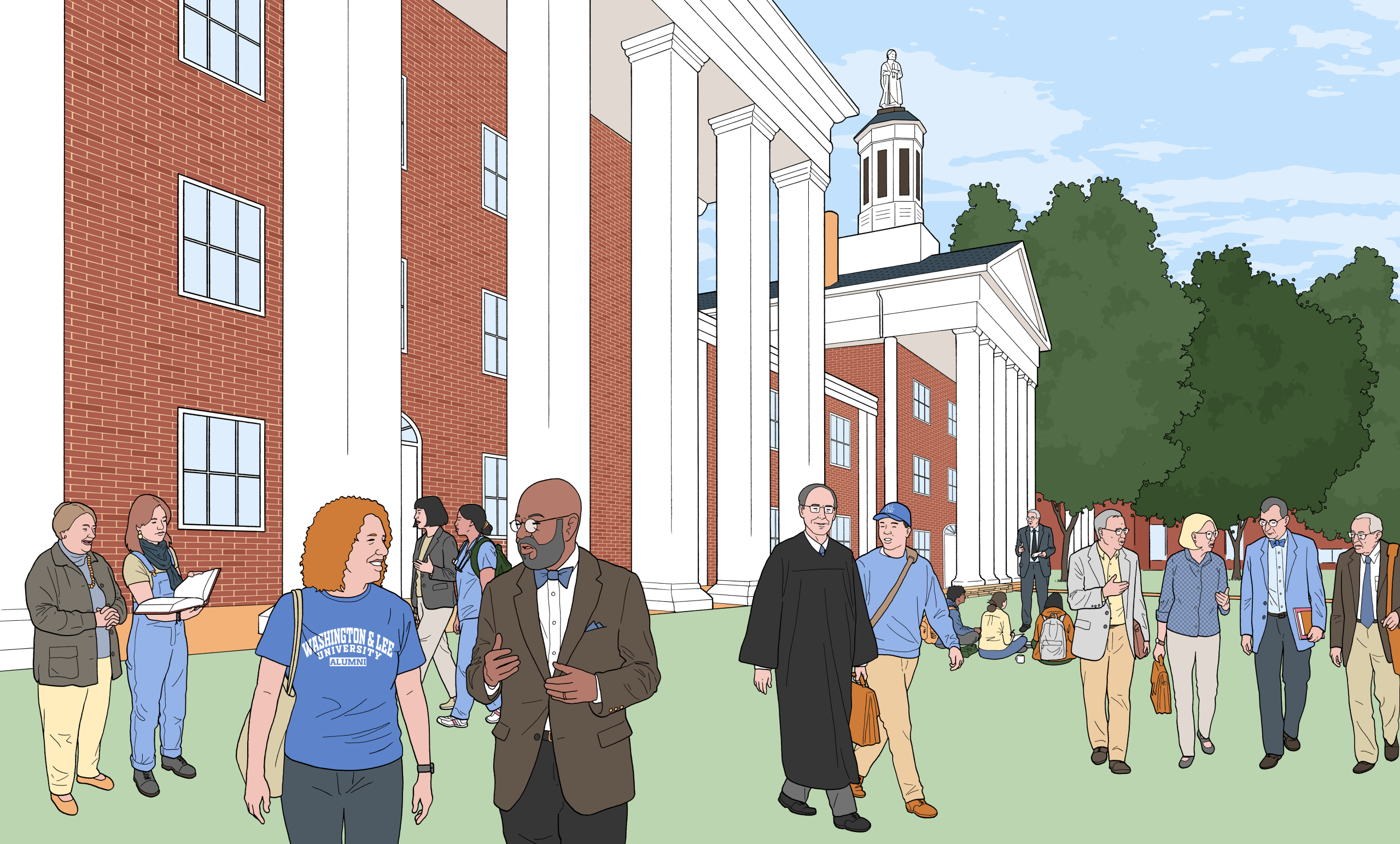 Illustrations by Kyle Ellingson
At W&L, the faculty-student relationship goes far beyond academic learning. Curiosity is the bedrock of mentorship here: There’s the fascination with the subject matter that initially brought you together but also interest in the person on the other end. And as the relationship deepens, it transforms over time from mentorship to friendship to even family.
Each conversation — during office hours, in a research lab, over dinner — adds another layer and richness to the shared experience. As a student, you gain all that you need to create the necessary foundation for you to blossom in the world. Growth is possible because of the sustainable support you receive through intentional and authentic relationships. Mentors see the potential in you — what you can do and what you can become — oftentimes before you see it in yourself.
For the Summer 2026 issue of W&L: The Washington and Lee Magazine, we asked members of the W&L community to share their memories of those iconic professors who embodied what it means to be a mentor. Alumni shared stories of continued connections throughout their lives, and faculty members told how senior faculty shined a light during their early years on campus.
This is in no way comprehensive list of the titans who have impacted — and continue to impact — our campus community, and these pages contain but a sampling (and often condensed version) of the many wonderful stories we received. If reading these tributes sparks your own mentorship memory, please email magazine@wlu.edu for inclusion.
Ted DeLaney ’85, P’03L | Joan Shaughnessy | B.S. Stephenson ’42 | Lamar Cecil P’04 | Lisa Alty | Lad Sessions | Shane Lynch | Karla Murdock | George Irwin (Class of 1917) | Alexandra Brown | John Evans | Henry Powell Porter Jr. ’54 | Richard Bidlack | Jefferson Davis Futch III | Harlan Beckley | Pamela Simpson | Robert de Maria | Roger Groot P’94, P’94L | Linda Hooks | Ed Craun | Dabney Stuart P’91 | John McDaniel ’64 | Pam Luecke | Jon Eastwood | Mohamed Kamara | Toni Locy | Hampden Smith | Bill Hamilton | Brian Murchison | Chuck Phillips | John Gunn ’45 | Larry Peppers P’90 | Elizabeth Oliver | Mikki Brock | J. Tyler Dickovick | Frederic Schwab | Edgar Spencer ’53 | Odell McGuire | Samuel Kozak | H. Robert Huntley | Dave Dickens | Andrew “Uncas” McThenia Jr. ’58, ’63L, P’88, P’00L | John Kelly Jennings ’56, P’93 | Romulus T. Weatherman| Tammy Futrell
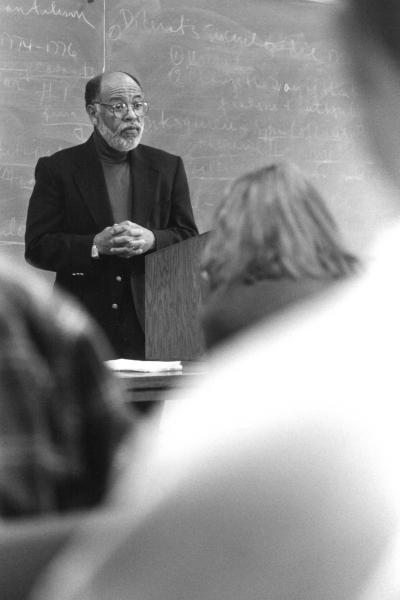
Ted DeLaney ’85, P’03L
The late Professor of History emeritus from 1995 to 2019
“When I think back on my years at Washington and Lee, I can trace my love of history to one person: Professor Ted DeLaney.
I took several of his courses on African American history and the civil rights movement, and they fundamentally changed the way I understood both the past and the present. With his warm smile and signature bow ties, he had a way of making the classroom feel both intellectually challenging and welcoming. History wasn’t simply a collection of dates and events to memorize; it was a conversation about power, resilience, injustice and possibility. He challenged us to ask difficult questions, to wrestle with uncomfortable truths and to recognize the people whose stories had too often been ignored or distorted. Long after graduation, those lessons have stayed with me.
What I remember just as vividly, though, is how invested he was in his students. He didn’t simply lecture and leave. He paid attention. He listened. He made students feel that their ideas mattered, and that they mattered.
I experienced that firsthand during a difficult moment as an undergraduate. I raised concerns about a workbook assigned in a journalism class that contained unnecessary and damaging stereotypes of Black people. Challenging someone in a position of authority felt intimidating, but as one of only two students of color in the class, it was even more unsettling to know my classmates were reading – and potentially internalizing – harmful tropes that could shape their perceptions of Black people. Professor DeLaney never dismissed my concerns or suggested I was overreacting. Instead, he listened, offered thoughtful guidance and supported me as I navigated the situation. His encouragement gave me the confidence to believe that speaking up in the face of injustice mattered, even when it was uncomfortable.
That experience reflected the kind of educator he was. Beyond his lesson plans, thoughtful and well-researched as they were, he modeled the values that meaningful scholarship demands: intellectual honesty, moral courage, empathy and a willingness to confront difficult realities. He demonstrated that education is not only about acquiring knowledge but also about developing the character to use that knowledge responsibly.
In the 20 years since I graduated from W&L, I have come to appreciate just how rare that kind of mentorship is. The facts from a class inevitably fade with time, but the professors who genuinely invest in their students leave a lasting imprint. Whenever I picture Professor DeLaney, I still see the warmth, dignity and quiet confidence he brought to every interaction. He helped cultivate a lifelong love of history, but, more importantly, he showed me what it looks like to lead with integrity and to believe that every student’s voice deserves to be heard.”
— Kristen Youngblood Archer ’06
Joan Shaughnessy
The late Roger D. Groot Professor of Law from 1983 to 2023
“As a non-traditional, first-year law student with school-age children at home and a daily round- trip commute of two hours, professor Joan Shaughnessy graciously opened her home to me during inclement weather. In fact, she insisted.
During her memorial service, I heard a number of stories about how she went out of her way to help her students and colleagues. For example, when women law students were in the vast minority, she made certain they felt welcome, hosting weekly lunches at her home. Professor Shaughnessy wanted these women to feel valued, to enjoy their time at W&L Law, to graduate and to succeed. She invested in their success just as she did for every one of her students.
Professor Shaughnessy was an excellent professor, gently but firmly pushing me to do my best. She was tough, fair and kind.
After graduation, we kept in touch. In 2015, I returned to W&L Law as an adjunct professor and later professor of practice and director of the Prosecution Externship program. Professor Shaughnessy was always happy to meet and discuss ideas or questions or just to ask how classes were going. We frequently attended admitted student functions, reunion weekends and other events. We took advantage of those opportunities to better know our students and alumni, to introduce our former students to each other and to discuss growth and changes at the law school.
After Professor Shaughnessy retired in 2023, I began teaching her former Child Abuse and Neglect seminar which includes undergraduate students from the Shepherd Poverty Program. Again, she welcomed me, frequently sharing teaching resources and thanking me for teaching so that the seminar would continue. I treasure the time we spent discussing seminar topics over lunches and exchanging frequent emails. At the end of the semester, I invited Professor Shaughnessy to attend the seminar student presentations, and she happily traveled from New York to participate.
When the Virginia General Assembly elected me to the Juvenile and Domestic Relations Court, she quickly sent a warm, congratulatory email. She was an encourager and took great joy in the accomplishments of all her students and colleagues.
“Shaun,” as she was known to her colleagues, was an excellent editor. Professor Shaughnessy was always happy to review my professional work (and that of many others) offering concise, thoughtful feedback. During faculty meetings, she had the ability to cut to the heart of a controversy and outline workable solutions.
Less than a year before she passed, Professor Shaughnessy expressed excitement about the recently completed renovations on her New York apartment and how much she was enjoying the art and culture the city offers. When I learned of her passing, my initial thought was she barely had time to enjoy her apartment and doing the things she loved in New York. I realize, though, that she spent her career at W&L Law doing what she loved most; helping all of us.”
— Lethia C. Hammond ’11L
B.S. Stephenson ’42
The late Professor of German emeritus from 1946 to 1991 and co-founder of the W&L Concert Guild in 1949, with student Bruce Woodruff Jr. ’50
“He ignited a lifelong passion for German language studies that has endured for 40 remarkable years since graduation. It is exhilarating and empowering for me to engage in conversations, albeit at a basic level, in a foreign language. Teachers and professors have a profound and lasting impact on their students, shaping their futures and inspiring their dreams. I am forever grateful for his transformative influence on my life.”
— David Lee Miller ’84
“I learned more from him, both as professor and friend, than I have from anyone else — but not just about German. He taught me about music, literature, art and life. He is everything you could ever want in a professor and friend.”
— Nick Leitch ’84, ’87L
Lamar Cecil P’04
The late William R. Kenan Jr. Professor of History emeritus from 1982 to 2000
“My housemates and I were the recipients of Lamar’s generous hospitality, and he invited us, like he did with many groups of students over the years, up to his house to play croquet (which few of us had done before), to drink martinis (which none of us had done before) and to eat a delicious supper. In the classroom of his home, he taught us how to be more mature and to grow closer toward our approaching adulthood.
Despite his brilliance, Lamar never used his intellect to intimidate students, and he was so welcoming to students of all types and abilities. His office was a place of lively discussion. If his door was open — so was he. Open to our ideas. Open to questions and discovery. Open to our problems. His open door was illustrative of his open heart.”
— Rev. William Jones ’92
(Above excerpt from his eulogy of Lamar Cecil)
Lisa Alty
John T. Herwick M.D. Professor of Chemistry from 1987 to present
“I met Professor Alty early in my college career as a science and pre-med student, and her mentorship had a lasting impact on me. She was devoted to her students with an open-door policy and consistently supported me through challenging classes while encouraging my interest in medicine. Importantly, she was the one who urged me to consider VCU School of Medicine — an option I likely would not have pursued otherwise, but where she had completed her doctorate and had shared her own experiences of a community in which she knew I would succeed.
Her influence extended beyond my decision to attend VCU. We remained in touch over the years, and seeing her again while I was a chief resident in dermatology at VCU was a meaningful reminder of how far that guidance had carried me. Walking into a patient room, I was surprised to find her there as a family friend of my patient. Instantly, she greeted me with the same warm and encouraging manner she had shown me as a student. In that moment, it felt like everything had come full circle.
Today, as a practicing dermatologist, still living in Richmond, Virginia, and a mother of two, I reflect on how she was the first woman I saw who balanced a demanding career in science with motherhood. And that image stayed with me long before I fully understood its significance. Without Dr. Alty’s mentorship, I would not have followed the same path to VCU and likely would not be where I am today. ”
— Dr. Patricia Williams O’Connor ’07
Lad Sessions
Jo M. and James M. Ballengee 250th Anniversary Professor of Philosophy emeritus from 1971 to 2011
“I was fortunate to be mentored by several wonderful professors, but none influenced me more than Lad Sessions, a philosophy professor. Professor Sessions – or Lad, as he asked me to call him after I graduated – had a tremendous impact on me both as an undergraduate from 1990 to 1994 and when I taught at W&L as a visiting instructor in the 2001–02 academic year.
Lad was not only a profoundly gifted teacher and writer but was also incredibly generous with his time and advice. Although I have many memories of seeking and being wisely guided by Lad’s counsel, there is one occasion that especially captures who he was as a mentor. In a conversation about a career-related decision, I asked him how he had navigated a similar crossroads in his own life. He shared his story but gently added that he didn’t want to present his own experience as “normative” for me. I still remember that exact word and the insight he wanted to share with me: good advice doesn’t mean steering another person toward a supposedly universally “right” answer. Instead, it involves helping them reflect on their own values and aspirations so that they can make the decision that is most fitting for them. And that is exactly the approach that Lad took: he didn’t just help me, and many other students, make better decisions; he helped us become the best versions of ourselves that we could be. ”
— Ben Eggleston ’94
Shane Lynch
Professor of Music and Director of Choral Activities from 2009 to present
Karla Murdock
Jo M. and James M. Ballengee Professor of Cognitive and Behavioral Science from 2005 to present
 “I had the great fortune to have several delightful mentors during my time at W&L. I double-majored in music and cognitive and behavioral science, and in each area of study there were professors who guided me both inside and outside of the classroom. Dr. Shane Lynch, the director of choral studies, was the most valuable mentor I had in my entire life of music learning. Not only was he incredibly insightful in identifying and addressing areas I could improve upon in musical study, but he helped me become the type of person who would do the same for others. He worked incredibly hard to give me and other music students the opportunity to conduct and teach the various W&L choirs, and he always knew when to give a little more personal support whenever I needed it. I don’t remember how many times I found myself sitting in his office talking about music, life and whatever other random topics happened to pop up. Dr. Lynch, most of all, is a master of fostering community, and every student he mentors comes to know it.
 Dr. Karla Murdock was a mentor to me from the moment I expressed interest in joining her research lab. From learning the ropes of doing academic research to helping me prepare for academic conferences, Dr. Murdock has been someone I knew I could go to during all my CBSC studies, and she really set the example for me of how a research lab ought to be run. One particularly impactful piece of advice from Dr. Murdock was advising me not to apply directly to a Ph.D. program from W&L and instead take a few years to pursue my interests and gain more research or clinical experience. This advice changed my perspective on my own career, and led me to applying for and embarking upon one of the greatest choices of my life, studying in Finland for a year on a Fulbright scholarship.”
— Matthew Flynn ’25
George Irwin (Class of 1917)
The late Professor of Romance Languages from 1925 to 1962
“George Junkin Irwin, native Lexingtonian, W&L graduate, Princeton post-graduate, World War I veteran, chain smoker, was, for me, a mentor when one was needed. There were others, but Professor Irwin came first. Here, 60 some odd years later, is the story.
I came to Lexington, a graduate of a large New York City high school and the beneficiary of life up to that point in Gotham in 1958. Of the 1,000-plus graduates in my high school class, I am pretty sure I was the only member who had applied to Washington and Lee, and I was pleased to be accepted. It was an exotic choice: small town, small school, unfamiliar culture; a social and cultural challenge I willingly sought. I also came with four years of French and quickly tested into a higher level French class.
Professor Irwin’s office was on the ground floor of [what is now Chavis Hall], and the door was always open; and so I encountered him frequently in passing. One class day, either he or I must have greeted the other — but it registered as more than a passive politeness. We started chatting — a little in French, mostly in English. And we laughed together. These unplanned meetings continued. Professor Irwin would ask me about aspects of my big city upbringing and gave me impromptu historic sketches of Lexington and W&L of yesteryear. I yet hear his laugh: a low rumble as he sucked on a cigarette.
One day in my sophomore year, in a class of just seven students in which Professor Irwin tried to enthuse us over 18th century French writing, I and one other were in attendance. Irwin, seeing the futility of the moment, canceled the class and invited me to take a historic tour of Rockbridge County, driving the backroads in his ’50 Chevy. That was George Irwin in high gear, naming places, anecdotes and history; I only wish Sally Mann was older then and along to document the journey.
Through George Irwin, an affable human being, I became comfortable and confident in a place I grew to love: its history, its characters, its sense of civility. I made a special trip to Lexington about six years after graduation, having been informed by a mutual friend that he was close to death. Even so, hospitalized in Stonewall Jackson Hospital, he immediately remembered me and we talked and laughed about our time together. He also gave me a self-published book, his letters home from the World War I front as a member of the Lexington-manned volunteer ambulance corps. It is somewhere shelved in my personal library.”
— Jim Applebaum ’62
 Alexandra Brown
Fletcher Otey Thomas Professor in Bible from 1987 to present
“Dr. Brown is a natural teacher. She is patient, kind and eager to share a wealth of knowledge with her students, and her counsel was invaluable to me as I was applying to graduate school. Dr. Brown’s guidance helped me choose a program where I could grow as a scholar and build on the foundation that classes with her at W&L had laid. After more than 30 years of teaching and guiding W&L students, I am immensely grateful to be one of many students who have benefited from her mentorship.”
— George Alford ’24
John Evans
Professor of English emeritus from 1964 to 2001
“John Evans was one of the giants of the English Department. At W&L, they don’t push professors to publish; they push them to have meaningful relationships with their students and be good teachers. John is extraordinarily unique in that every Tuesday night I would go to John’s with a couple of other guys, and we would sit for like three hours. He would pick two pieces of classical music and teach us about what an opera was, what a symphony was, what a concerto was and about all of the major composers. He would do the same thing with books.
I never even heard of a Fulbright scholarship until John Evans said, ‘You will apply.’ I did, and I got one. I went to school in Germany, and it’s completely changed the trajectory of my life.”
— Billy Webster ’79, P’20, P’22
“My college adviser was Professor John Evans. From the time I graduated until today, I’ve not gone more than a month or so without talking to him. From him, I learned how to hold myself to the highest performance standards, appreciate when others were doing the same and to work to be a better friend and citizen. He has been a lifelong mentor, in many respects, a member of our family.”
— Mike McAlevey ’86, P’17, P’20
“Without a doubt, one of the iconic mentors of W&L is Professor John M. Evans. John mentored hundreds, if not thousands, of students during his long career as a professor of English literature, and at least several hundred of those students (including me) have remained lifelong friends with John and his wife, Martha.
I was an English major, and I am pretty sure I took nearly every class he taught. In my junior year I wrote to my parents and included this report about my classes: “Dr. Evans (Chaucer) is just great. I’ve never had a more fascinating course. It meets twice a week for two hours, and he keeps me on the edge of my seat the entire time. Just great.”
John became my adviser, helping me choose classes to take as I completed the requirements for graduation. John and his wife, Martha, welcomed me and several other students to their house on many occasions. John would frequently have several students over to listen to classical music, which created for me a lifelong passion.
By graduation, John had become a good friend, and we have stayed friends ever since. We have stayed in touch for all of the 51 years since I graduated. We chat by email or by phone every few weeks. I think “mentor” is usually used in the context of career-related mentorship. But for me, John’s mentoring was not that – it was the offering of insights from a wise and close friend, which helped me understand, navigate or just live through the ups and downs of life.
I am hardly alone in that – from our many conversations over the years I knew that John has kept in close touch with many other students. In May of 2001, a large contingent of W&L alums gathered in Lexington to celebrate John’s retirement and our good fortune to have him as our friend and as a teacher. We created and funded a scholarship in John’s name that has enabled many students to participate in Spring Term trips abroad.
John’s impact on generations of students qualifies him to be recognized as an iconic mentor who left an indelible positive mark on countless students.”
— Kit Weitnauer ’74
“I owe my 30-year friendship with John Evans to friends on the football team and at Phi Delta Theta.
As a freshman, I heard about these legendary dinners. Evans lived on campus, front porch overlooking the Colonnade, and he would invite a few football players over on Friday nights before games. In the offseason, with training rules relaxed, the dinners became a regular gathering — cocktails, then the dining room, then back to the living room, where we fought to stay awake while Evans played classical music.
The conversations ranged from literature and history to our fledgling romances to endless teasing of one another, sometimes in the same breath. Evans held it all together with standards and humor, delivered in equal measure.
That cadence has continued for three decades — emails, phone calls, visits to see John and Martha in Washington. What Evans calls “the brotherhood” stretches back to his students from the ’60s and ’70s, and when I run into them and Evans comes up, it’s always the same: He walked all of us through nearly every major passage of adulthood.
He represents the very best of what W&L gives its students — not just in the classroom, but around the table, and long after graduation.”
— Brooks Fischer ’97
Henry Powell Porter Jr. ’54
Professor of History emeritus from 1970 to 2008
“Can’t omit Henry P. Porter Jr.; his list of mentored students over his nearly 40 years teaching at W&L is at least a mile long, myself included. He would be a fantastic alumni magazine feature. At 94, he is living at Kendal and still meandering through campus, well in touch with his former students!”
— Richard Spence ’91
“Dr. Porter is a wonderful person. I’ve been very lucky to know him. He’s continued to be a kind supporter of his fraternity, former students and current students.”
— Patrick France ’25, ’28L
“I had three courses with Dr. Porter — two on European imperialism in Africa. I liked him as a professor and as a person — he was available in his office for discussions late into evenings. I’m happy to hear that he’s still enjoying the campus.”
— David Lent Church ’80
Richard Bidlack
Martin and Brooke Stein Professor of History emeritus from 1987 to 2024
“He was the professor who inspired me to major in history rather than business. He gave me the advice to study what I truly enjoyed, not what other people told me to study. I am so glad that I did because it led me to some amazing memories and a period of great intellectual growth as an undergraduate at W&L.”
— Patrick France ’25, ’28L
Jefferson Davis Futch III
The late Professor of History emeritus from 1962 to 2008
“As a student in the latter years of Professor Futch, I learned something about dedication. What will
stick with me most is the picture of that elderly man, walking with two canes across W&L’s campus from his old automobile, to stand there for a few hours and teach. He enjoyed it so much.”
— Edward McAuliffe ’08
Harlan Beckley
The late Fletcher Otey Thomas Professor of Religion emeritus and Founding Director of the Shepherd Program for the Interdisciplinary Study of Poverty and Human Capability from 1974 to 2014
“My first week on campus, I learned that my work-study assignment would be with Professor Beckley and the Shepherd Program. I can’t remember most of the duties I had as his work-study, nor can I remember all of the many things we talked about. What I remember vividly, though, is how clear he seemed about my potential and how he was always encouraging me.
When I was skeptical about what a course on poverty would be like at W&L, he encouraged me to sign up for his 101 class. When he found out I had a hard time speaking up in large groups or classes, he invited me to Shepherd campus and donor events and encouraged me to talk with just one person. (He always told me who that one person should be.) When he found out that I liked to write, he encouraged me to be one of the editors for the Shepherd newsletter. And when my time at W&L was ending, he urged me to apply to the Elrod Fellowship. He said, “You have the heart for this work.”
I’m very grateful to Professor Beckley for all of his encouragement and guidance. But the truth is that from the time I took his intro 101 class and completed the Shepherd internship my freshman year, I knew public service would be the path for me — and it has remained my path for the past 20 years.
I heard an interview once from a very well-known Black Ivy League professor many, many years ago. He was giving advice to students of color who go to Ivy League and/or predominantly white, rich colleges. He said that it would be difficult, but that most of the time there will be something at that school that will be a balm, a light, an unexpected opportunity — something that will bring you joy. You just need to look for it.
Thank you, Professor Beckley, for making it so that I and countless other students didn’t have to look so hard.”
— Bethlehem Dammlash ’06
Pamela Simpson
The late Ernest Williams II Professor of Art History from 1973 to 2011
“I was an English major but I found art history classes early on in my time at Washington and Lee. I was interested in art and dabbled in some actual painting and drawing, but I found that art history was a perfect combination of my love of writing and storytelling and art. Essentially, I took every art history class I could fit into my schedule. By the time I graduated from W&L, I had enough credits to apply for graduate school in art history. The late Pamela Simpson, art historian and professor, had a significant impact on my studies and my experience at W&L. Simpson was the first female tenure-track professor at W&L and the first female professor to receive an endowed chair. She became the inaugural Ernest Williams II Professor of Art History in 1993, the year I graduated. She also played a critical role in the university’s transition to coeducation in the mid-1980s, so, without her, I may not have even had a chance for an education at W&L. Talk about an inspiring woman! Her classes were interesting and thought-provoking, and she had high standards. She taught me to always strive to do my best work. Her Spring Term class on African American artists was one of the best classes I ever took. We didn’t just study the art but also had discussions about current issues in social justice and racism.”
— Tricia Pond Miller ’93
“Though I can’t call Professor Simpson a mentor — otherwise, I might have followed a different vocational path — her courses fueled the fire of my love of visual art. One of my prized possessions still is the book, ‘American Realists: Homer to Hopper,’ the purchase of which was well beyond my paltry means at the time but which I had to have thanks to the insights and inspiration I took from her classroom. Every visit to a museum conjures memories of Professor Simpson.
— Charles Tucker Jr. ’81
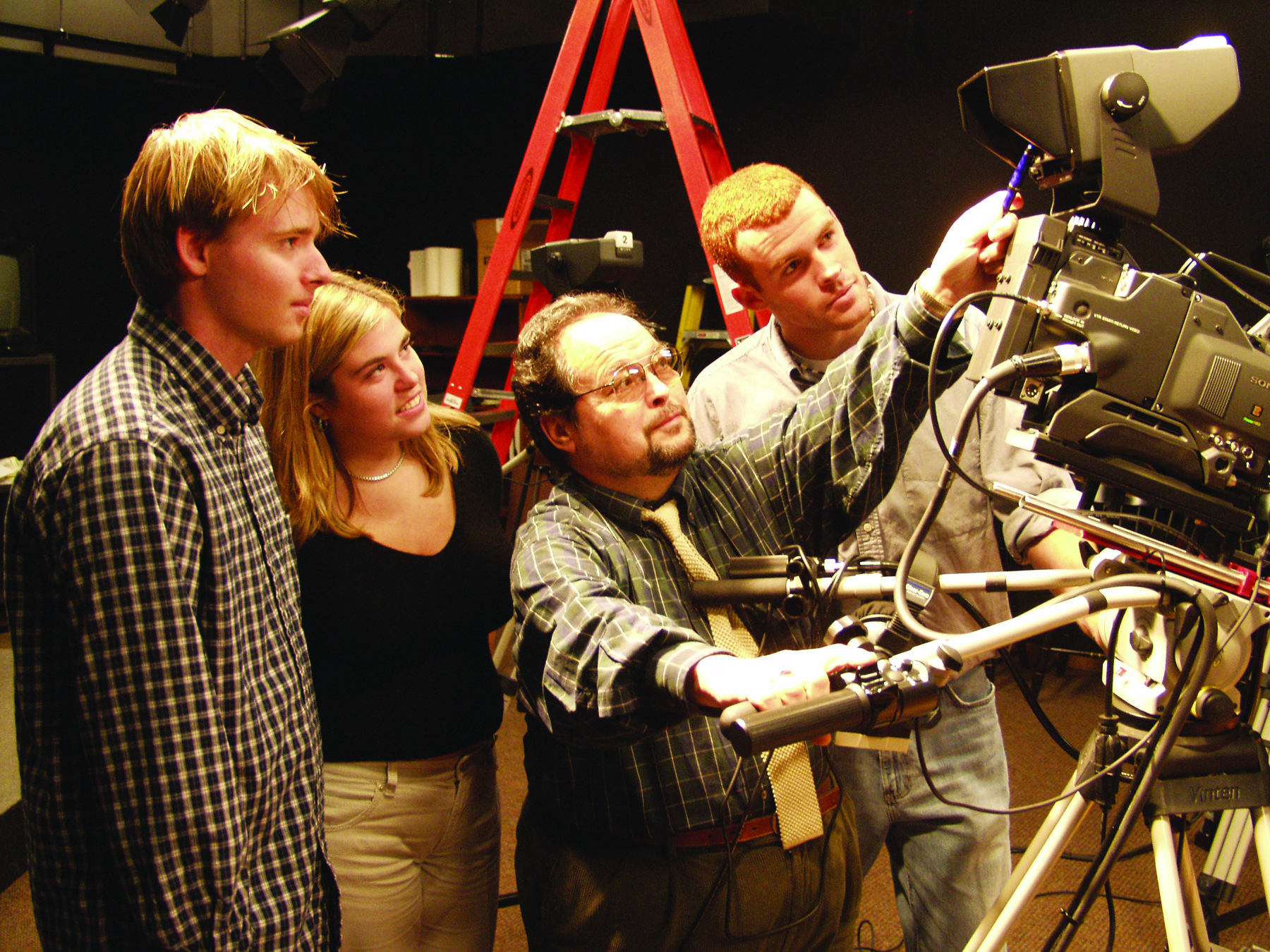
Robert de Maria
The late Professor of Journalism and Mass Communications from 1977 to 2013
“During my undergraduate and law school years at W&L, I was fortunate to have two icons serve as my mentors. For his part, Robert de Maria (or, ‘De’ as he was affectionately known), was almost like a surrogate parent to me in my early undergraduate years. I was 17 and over a thousand miles from home. He let me know that he had my back. Everything would work out just fine. In that regard, his mentoring of me extended well beyond the classroom.
As it relates to my studies, I’d selected mass communications as my major. My most valuable lesson came at De’s hand. In the spring of 1990, he sent me and a fellow mass communications major to Winchester, Virginia, to cover a town hall meeting. Unbeknownst to us was the fact the agenda featured a highly contentious issue, one that remains the source of division throughout our country even to this very day: the removal of Confederate monuments from public spaces.
So, there we were, two young black kids, pulling into a foreign town, which was overrun by people wearing Confederate regalia, waving Confederate flags and shouting unpleasantries. Being that I was from Louisiana, I’d encountered my fair share of Confederate flags. However, my classmate was from Brooklyn, New York, and she was terrified. I assured her that I wouldn’t let anything happen to her, and I advised her that I would take the issue up with De the following day.
Fortunately, we covered the meeting without incident. When I entered Professor DeMaria’s office the next morning, he saw the smoke coming out of my ears, and he headed me off at the pass. He stated that he would not apologize for sending us to the meeting. However, he admitted that he owed us an apology for not telling us about the hot-button issue on the agenda. More importantly, he used the opportunity as a teaching moment to stress the point that, as journalists, our duty was to find out what happened in the world on a certain day and to report it objectively to our readership or viewership and let them come to their own conclusions based on the facts. Lesson learned.
— Curtis Joseph Jr. ’93, ’96L
“Professor De was not just my journalism professor. He was also my treasured mentor and beloved friend. As an education professor, I tell my students to be a champion for their students, that one person who never gives up on them and believes in them no matter what. De was that for me. He saw me at my worst dealing with depression and anxiety and never gave up on me. He knew I could be successful even when I wasn’t sure. I will never forget him telling me, ‘You got this, kid!’ with one of his giant smiles. I was so blessed to have him my life not just while I was at W&L but for many more years as a huge support and mentor.”
— Ali Kappel ’98
Roger Groot P’94, P’94L
The late Professor of Law emeritus from 1973 to 2005
“I was a 1L, but I was effectively a fifth-year senior. I was spending far more time on the undergrad side of things. I was playing drums in a band and living my best life. I entered the law school one morning, prepared to enter Professor Roger Groot’s Criminal Procedure class. Groot had other plans. He was standing outside the classroom like a centurion, arms folded. As I approached the classroom, he looked me squarely in the eye and said, ‘Mr. Joseph, you can do better and you will do better.’ My sheepish response, ‘Yes, Sir.’ Groot: “Do we understand one another?” Me: ‘Yes, Sir.’ At that point, Groot stood aside and allowed me to enter the class.
By the end of the following school year, I found myself routinely in Groot’s presence. He’d selected me to join his Alderson Legal Practice Clinic, performing work for the female inmates at Alderson Federal Prison Camp in West Virginia. As we drove to the prison camp one afternoon, I asked Groot how it was that I came to be one of the students in his clinic. He looked at me and said that it was an all-women’s prison camp and I was a handsome fella. Wait, what? We drove a few miles and then he said, “You never want it to be said that you have a lot of potential.” We drove in silence for about 15 miles, and, then, it hit me like a wet rag.
A few years later, when I passed the Louisiana bar exam, I actually called Groot before I called my mother. He was the person I wanted to share the news with first. I asked him what it was that he’d seen in me. He said that he’d seen a boatload of talent with no direction. He told me that I’d be an amazing leader once I figured it out.
Consequently, the art of the mentor is to see that kernel embedded within the mentee and to draw it out. Throughout our lives, we will encounter varying types of mentors. Some will assist us in honing our craft. Some will champion our cause. Others will lend an ear in times of need. From time to time, the mentee may even assume the role of mentor. That said, the relationship presupposes a measure of reciprocity. Trust, however, that the relationships forged in the process will last a lifetime. To those of us who are now through the looking glass, I ask, ‘Who are you mentoring?’ And, to the would-be mentee, I ask, ‘Are you holding up your end of the bargain?’”
— Curtis Joseph Jr. ’93, ’96L
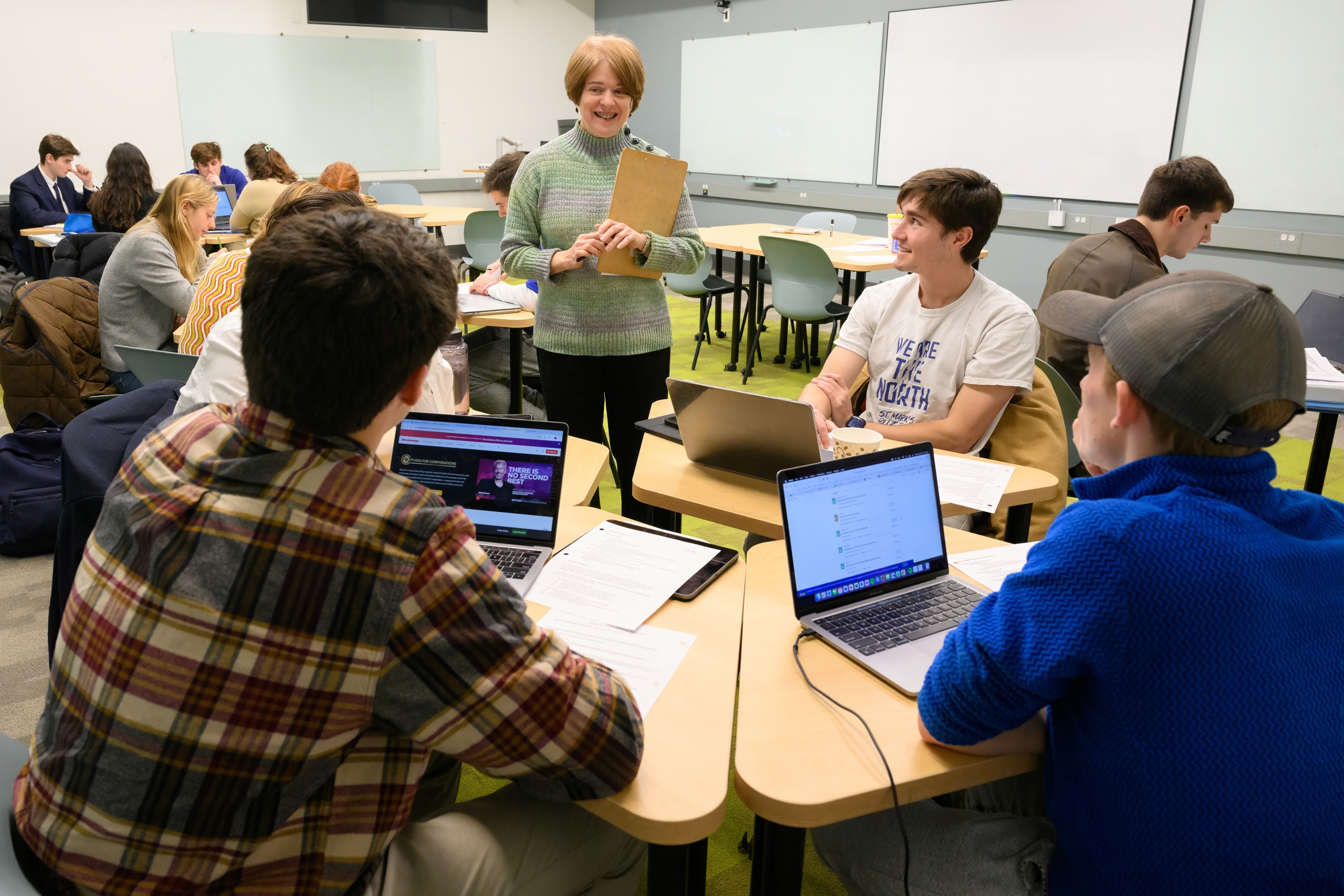
Linda Hooks
Professor of Economics from 1993 to present
“In her first year at W&L — fresh out of the Fed, Professor Linda Hooks taught me in a Money and Banking class in which students posed as Federal Reserve governors at a mock Federal Open Market Committee meeting to determine monetary policy actions. Then in my senior year Spring Term of 1995, Professor Hooks led a group of us students on a once-in-lifetime journey through central banks in Frankfurt, Brussels, Paris and London to study the development of the European Monetary Union and implementation of the planned euro currency.
These are examples of how she brought economics to life, transforming it from textbook theory into real-life application. She encouraged learning in novel ways and took a personal interest in students.
That first trip abroad changed my life perspective from a provincial to a global view, more than anything I have learned in a classroom. Professor Hooks inspired me with the curiosity, courage and confidence to pursue my childhood dream of living in diverse California, where I have been ever since graduation. In addition, that experience sparked my lifelong love of travel to explore and appreciate other cultures. I became a better, fulfilled person thanks to her.
Now Professor Hooks is the head of the Economics Department, an honor which validates her as a person, professor, leader and role model. She exemplifies the W&L ideal, and I am grateful for the transformative impression she left on me.”
— Todd Cloaninger ’95
Ed Craun
Henry S. Fox Jr. Professor of English emeritus from 1971 to 2011
“When I was a brand-new professor at W&L, I had an office across from Ed Craun, way up on the third floor of Payne Hall (before it was renovated!). I began to notice a pattern. Students would line up and enter his office to discuss their papers. Ed would always start with praise for what they had done well, and I was struck with the variety and length of his feedback. He had very specific things to say, showing the care he’d given to their work. I’d already learned in grad school to start with praise (‘the sandwich method of essay grading’), but it was another level. I watched and heard students relax and sit up, becoming more engaged with what he was saying. This would always lead to fruitful discussion of the weaknesses of their work and how to improve.
I have never forgotten this early introduction on how to interact with students, and how to speak to them about their writing. I am also lucky that Ed became one of my closest friends and mentors. He and his wife, Marlys, are godparents to my son, and at all the formative stages of my life, they have been my advisors and allies. They assisted me in countless ways — far beyond just being colleagues. This ‘total support’ attitude truly distinguishes Ed Craun. I learned so much from him professionally and personally.”
— Genelle Gertz, Associate Dean of Strategic Initiatives and Thomas H. Broadus Professor of English from 2003 to present
Dabney Stuart P’91
S. Blount Mason Jr. Professor of English emeritus from 1965 to 2003
“As a freshman I was assigned to English 101 with Dabney Stuart. In high school English classes, we focused on literature and literary interpretation. Professor Stuart was the first teacher who ever pushed me regarding writing and would not approve my work until it met his standards. While I did not enjoy this experience at the time, it has had a life long impact on my writing and my career over the last 49 years.”
— Harry Wright IV ’80
John McDaniel ’64
Professor of Anthropology emeritus from 1972 to 2004 and helped establish the Outing Club
“John McDaniel was a new professor when I think we were juniors or seniors. He was probably closer in age to us as seniors at the time than he was with fellow faculty members. So, some friends and I became good friends with John. We took his anthropology course; we hunted with him — he’s an accomplished turkey hunter and outdoorsman. That was really special to have a friend who was on the faculty. And that’s time the Outing Club started. It was just a handful of people, which Outing Club is a major institution now, but that was John’s idea. That’s kind of a secret — not a state secret — but people have kind of forgotten that. That was an example of a student-faculty relationship that I don’t think we see that any other any other place.”
— Bill Wallace ’74, ’77L, P’02, P’06, P’09
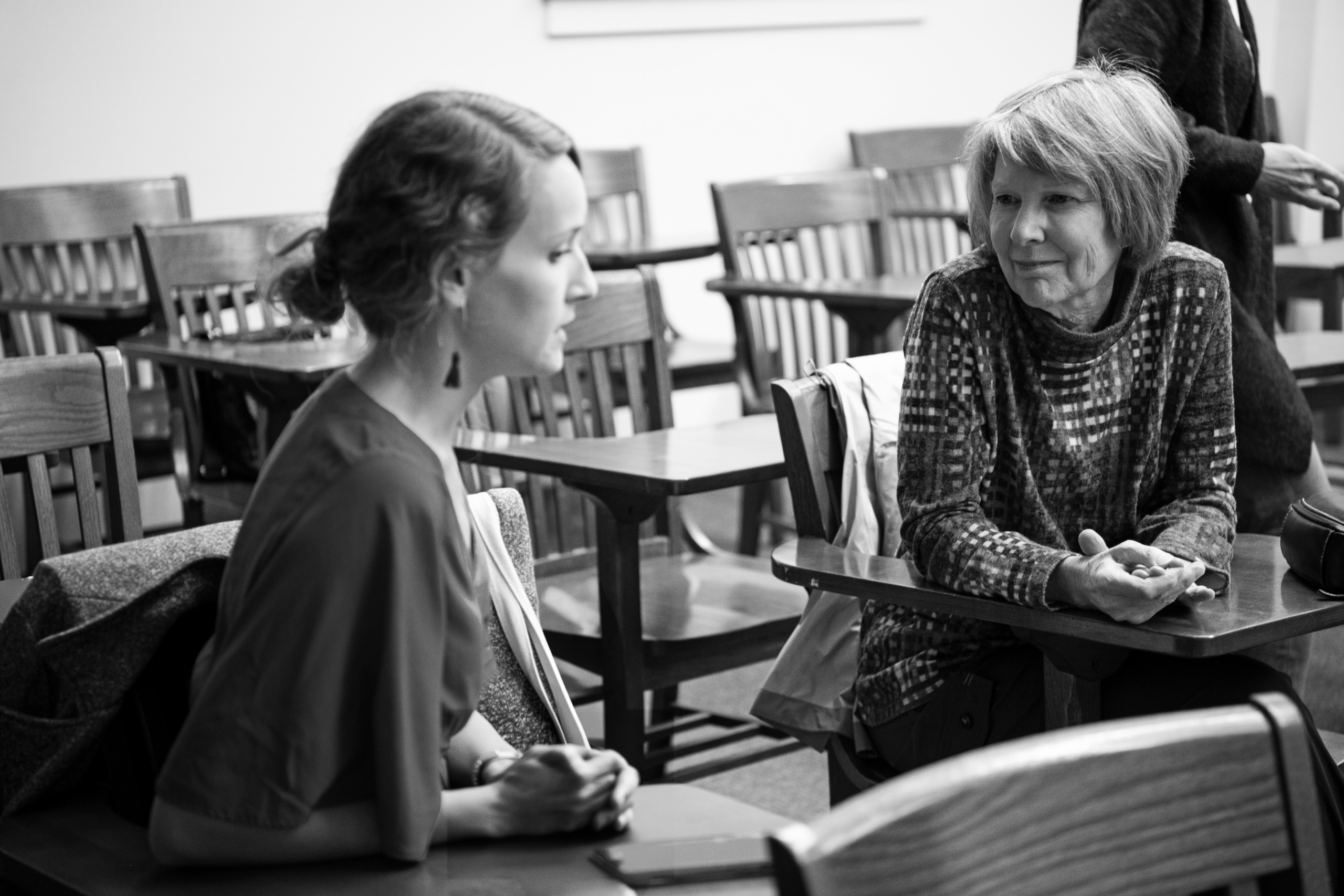
Pam Luecke
Professor of Journalism and Mass Communications emerita from 2001 to 2020
“Pam is one of those great mentors who teaches and advises you so calmly and subtly it is sometimes
only days (or years) later that you realize how much of her advice you’ve ingested.”
— Jacob Geiger ’09
 Jon Eastwood
Professor of Sociology from 2006 to present
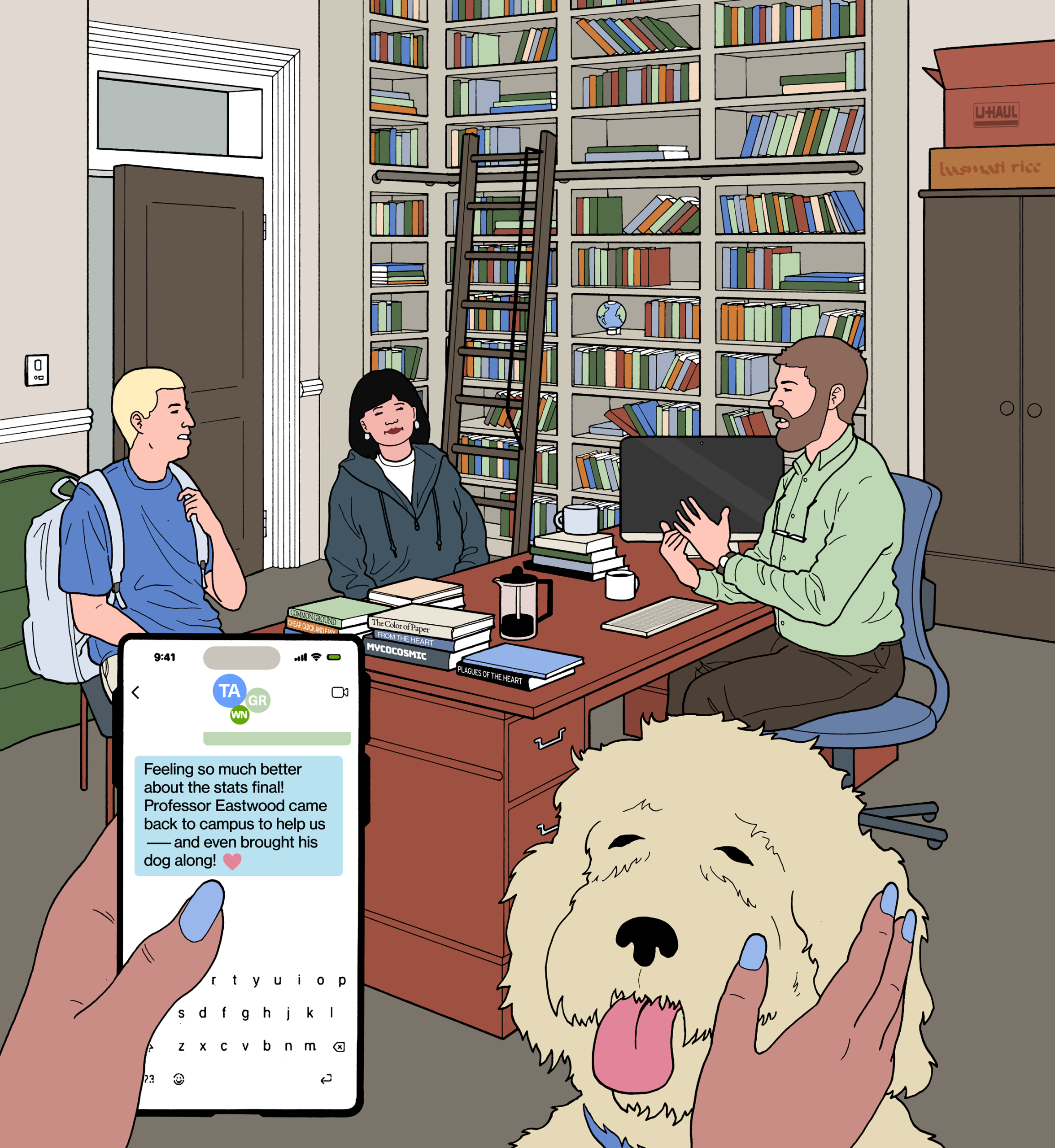
“Our class was working on a project on Bayesian statistics. Professor Eastwood started class and said, ‘You all don’t look too joyful,’ and he asked us to do a joy meter saying how we felt that day. That made him realize the project was stressing us a bit more than he anticipated. So, he offered to come to campus after putting his kids to bed.
He came back to campus at 9 p.m. to help us with questions and morale and brought his dog for cuddles. It meant the world to have a professor not only recognize our academic stress but also take steps to mitigate it. I think his approach speaks volumes to W&L’s mission. He could have called the project off (we wouldn’t have learned), or he could have simply told us to keep struggling (I’m getting a Ph.D., so I’ve been at several universities since then, and that is the usual approach). But he helped us fix it. I hope I can be half as good a professor one day.”
— Teresa Aires ’19
Mohamed Kamara
The H. Laurent Boetsch Jr. Term Professor of Romance Languages from 2001 to present
“Some of my favorite books were taught in his class — Professor Kamara changed the way I think about history and language.”
— Zineb Benchekroun ’14
 Toni Locy
Professor of Journalism from 2008 to present
“Any W&L journalism major has a long list of stories about the beast of a class that is Beat Reporting. A six-credit class that requires students to be real journalists covering real-life subjects for a public news outlet will naturally produce a lot of memories. But students who are lucky enough to take it with Professor Toni Locy can all attest to the rollercoaster of a semester she puts you through.
Professor Locy is the best ‘coach’ I’ve ever had. The best word to describe her is “relentless.” I got assigned to cover the city of Buena Vista for the semester, and I ended up learning the city like the back of my hand while chasing controversial stories at the library, the park, City Hall and so much more.
The singular reason I was able to do that was her tough love she gave. She has an incredibly high standard for all her students. It is a rite of passage to turn in what you thought was a good draft, only to have her strike through the whole thing and leave comments in bold underneath about what all was wrong. My classmates and I were shocked at the beginning of the term and then frustration would usually follow on a weekly basis.
But it is also a rite of passage for her to sit down with you for hours and improve your story, to get calls and texts at all hours of the day with questions and to be told that you needed to go back and do more reporting on your story. If the final draft of a story was due by Thursday at 3 p.m., she’d be working right to the hour with a student to squeeze some last-minute changes in.
The whole process of producing a story in her class was one of great refinement. What you turned in on Thursday afternoon often looked very different than what you started with. Any professor can have high standards or be tough on students. But it is rare to have a professor who cares so much about her students and always has their back. We always said that she would go to war for her students, and, to add on to that, I think she’d be on the front lines.
Her teaching style is really one of a coach. It was common for us to get annoyed, mad or stressed because of her, and she knew that. But there was a clear purpose to it. I came out on the other side with a collection of work I was truly proud of and became a better student, person and citizen from it. And she was there for us to help us get to that point.”
— Jack Hunter ’24
Hampden Smith
Professor of Journalism and Mass Communications emeritus from 1974 to 2007
“As an alum of Reid Hall, the foundation of all I know about fact-based, principled — not to mention tenacious — news reporting and writing was built in Professor Smith’s classroom. First test was conquering some considerable freshman fear. Ham Smith’s reputation as a tiger, an old-school, ink-stained, hard-boiled newsroom vet, preceded him. Though he would have cringed at the description, a softer side emerged in his teaching. Always evident was the integrity of a fair-minded, good-hearted journalist. Ham was also my adviser, and I do look back on him as a mentor whose lessons have served me well in a life spent working with words.”
— Charles Tucker Jr. ’81
Bill Hamilton
John T. Perry Jr. Professor of Biology and Research Science from 2001 to present
“Dr. Hamilton was an irreplaceable figure in my time at Washington and Lee, and his support continues into my post-grad life as well. He was not only a faculty and research adviser to me, but he was an inspiring teacher, helpful mentor and good friend. He helped me laugh my way through an ankle break, supported me through vet school applications and rigorous coursework and taught me a lot about research in field and applied setting, inspiring my passion for ecosystem health. He continues to support me, and I know I could always reach out if I needed anything. I am forever grateful for his mentorship and know I am not alone. Many of my peers who got the pleasure of working alongside Dr. Hamilton have often referred to him as an uncle-like figure, and that perfectly captures how approachable, kind and wisdom-sharing he is toward his students.”
— Marcie Bernard ’25
Brian Murchison
Charles S. Rowe Professor of Law from 1982 to 2026
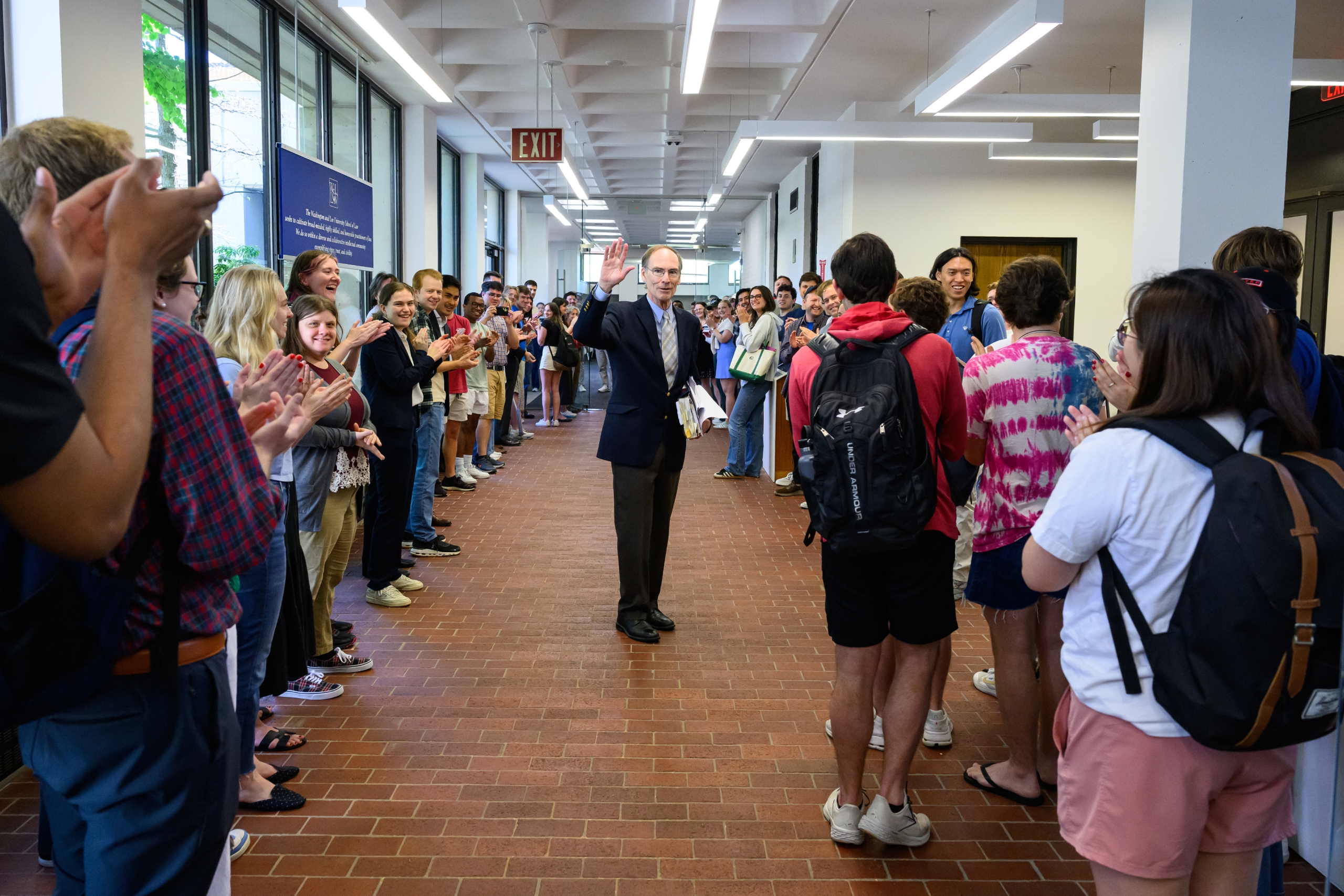
“Professor Brian Murchison perfectly exemplifies Stephen Covey’s definition of leadership — the ability to communicate a person’s worth and potential so clearly, they are inspired to see it in themselves. In the classroom, he sparked my interest in administrative and communications law.
Recognizing my passion for public service, he helped me secure employment with the Federal Communications Commission. Professor Murchison followed my FCC career over three decades, inviting me back to Lexington often to speak to his classes.
He inspired me and believed in me. His special brand of leadership led directly to my interesting and fulfilling career practicing administrative law, communications law and appellate advocacy at the FCC.
He will always have my gratitude, my respect and my friendship. It continues to be one of my life’s great privileges to have studied law under him at Washington and Lee University School of Law.”
— Richard K. Welch ’88L, P’11
Chuck Phillips
The late Professor of Economics from 1959 to 2003
John Gunn ’45
The late Lewis Whitaker Adams Professor of Economics emeritus from 1957 to 1994
Larry Peppers P’90
Dean of the Williams School emeritus and Professor of Economics from 1986 to 2017
Elizabeth Oliver
Associate Dean of the Williams School and Lewis Whitaker Adams Professor in Commerce from 1991 to present
“We talk frequently about the mentoring of students, but faculty mentor each other as well. For me, that mentoring established an early sense of belonging and a vision for how my career might evolve.
Some mentoring is informal. In my early years at W&L, such mentoring came from many lunches with the late Professor Chuck Phillips or casual conversations with Professor John Gunn ’45. Conversations with Chuck, John and others helped me understand W&L’s culture and history.
While those informal moments were valuable, Larry Peppers and Elizabeth Oliver are the two most impactful formal mentors in my time at W&L. When I arrived, Larry was dean of the Williams School, and Elizabeth was the associate dean. Both were consequential leaders who saw something in me early in my time here and opened opportunities for me that changed the trajectory of my career.
Elizabeth invited me to join her as co-sponsor of W&L Student Consulting. I saw how she mentored students in a way that resulted in lifelong connections. I learned from her the value of community-based engagement. From that, we ultimately developed courses that we co-taught in Denmark for 15 years, the best teaching moments of my career. After all that we have done together, we laugh about our tendency to arrive at the same conclusion with little or no debate.
Larry believed in me and asked me to serve as associate dean as Elizabeth moved on to head the Accounting Department. I spent 12 years in that role, and the opportunity to talk through challenging issues at all levels with Larry helped me understand the complexities of W&L and the Williams School. One lesson that I think of often is the need to take the responsibilities of the job seriously but not let them define me. This was not something that Larry explicitly said. Rather, it was something that I observed working alongside him for so many years. He also created a culture that gave faculty enormous agency to innovate and reinvent themselves, which I have tried to model in my years as dean. It remains an enormous honor to follow Larry as dean of the Williams School.
For all the beautiful buildings that comprise our campus, we are in the people business. I have been truly fortunate to have so many colleagues to learn from through the years. ”
— Rob Straughan, Crawford Family Dean of the Williams School and Professor of Business Administration from 2000 to present.
John Gunn ’45
The late Lewis Whitaker Adams Professor of Economics emeritus from 1957 to 1994
“Professor Gunn was instrumental in my higher education experience and in preparing for my future. He made time for dozens of one-on-one sessions to discuss economics, business, activities at the Zeta chapter of Sigma Chi, our shared Georgia roots and how an aspiring business leader should assess the different post-graduate choices available. I came away from our sessions feeling more confident in myself and clear-eyed about the future. He was generous with his time as well as his legendary “Gunn Network.” He was an incredible listener and was genuinely interested in his students and helping in any way he could. I will never forget visiting him at his beautiful home high atop a mountain outside Lexington and seeing what true happiness and life satisfaction looked like in a man who spent his life teaching, inspiring, supporting and lifting up others.”
— Jason Ward ’96
 Mikki Brock
Professor of History from 2014 to present
“I’ve audited probably all of her classes. She’s been out to Kendal to do a Kendal College program, and John Gunn said, after she had been there to do her lecture, ‘Mikki Brock lectures with her whole body.’ She’s excited; she’s on her tiptoes. She bounces.”
— Hardin Marion ’55, ’58L, P’85, P’93L
J. Tyler Dickovick
The late Grigsby Term Professor of Politics from 2004 to 2018
“Tyler Dickovick wore many hats — teacher, friend, brilliant colleague, expert heckler. To me, he was ‘Koffi.’ Koffi was my mentor and academic adviser at W&L. He had an authentic desire to understand who people are and where they’re coming from. He built relationships with and mentored students whenever they reached out, even if they were never in his class. He asked to meet with students after semesters ended to help students like me understand our own motivations. Through informal Monday evening office hours at Macado’s and meetings at LexCo, his questions fundamentally altered how I understood myself and what drove me. In one conversation, he mentioned how the death penalty was something he was vehemently opposed to. It was something I had not considered. Now, as a professor myself, I primarily study incarceration as a public health crisis and teach incarcerated students. I wish more than anything I could have part two of that LexCo conversation with him. I too, vehemently oppose the death penalty, and my work has taught me that life without parole is almost equally as damning. I know he would push my views, assumptions, and judgments in this space – and how I teach these topics. Koffi said what a privilege it was to teach, mentor and walk alongside me and all of his students. It was a privilege to have walked alongside him and to be able to aspire to live a life that justly carries him forward. ”
— Kate LeMasters ’15
Frederic Schwab
The late Professor of Geology emeritus from 1967 to 2003
Edgar Spencer ’53
The late Ruth Parmly Professor of Geology emeritus from 1957 to 2001
Odell McGuire
The late Professor of Geology emeritus from 1962 to 1994
Samuel Kozak
The late Professor of Geology from 1961 to 1997
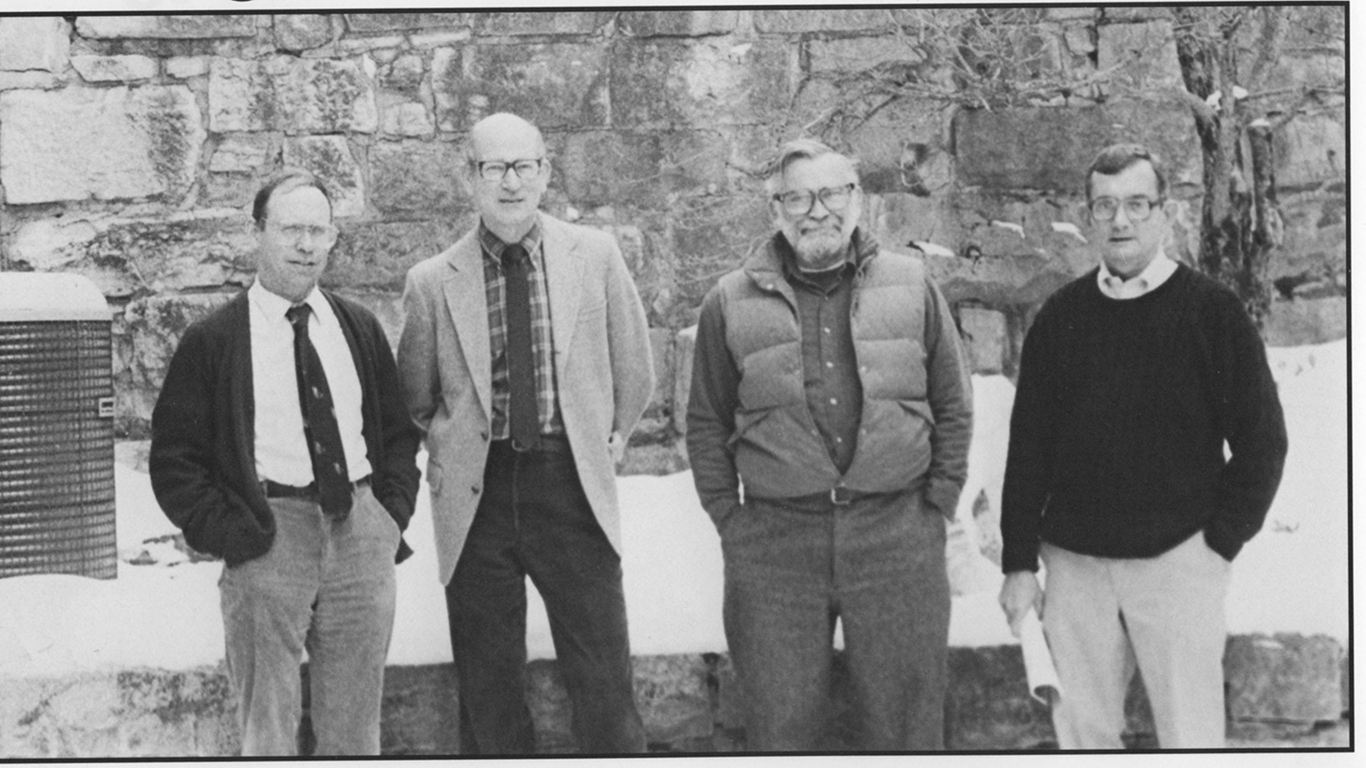
“The Fab Four right here! What an amazing experience to learn so much about Rockbridge County and the planet from these gents!”
— Susan Reil Bria ’91
H. Robert Huntley
The late Professor of English emeritus from 1962 to 1994
“As a senior English major during the 1986-87 academic year, I undertook an honors thesis on Graham Swift’s novel “Waterland.” English professor and Dean of Freshmen Robert Huntley agreed to serve as my thesis director. I was enrolled in Dean Huntley’s course in the Modern British Novel, having taken both the Early British Novel and the Victorian Novel from him, and he added “Waterland” to the syllabus as the most contemporary novel of the course. Dean Huntley was a superb, though self-deprecating and often overlooked, teacher in a department full of legendary teachers.
As I worked on my thesis over the course of the year, Dean Huntley was helpful and supportive but careful to refrain from over-direction of my research or analysis. He wanted my work and thinking to be my own, and it was. During a meeting late in the semester, a week or so before discussion of “Waterland” should begin in class, Dean Huntley looked at me and said, “Chris, I think you know far more about this book than I do, so why don’t you teach it to the class?” I was frankly stunned but incredibly proud that he thought I had both the literary understanding and presence to teach my peers. I gratefully accepted his offer, promising to do my best.
Naturally, I prepared and prepared and was unbelievably nervous about standing up for two days in front of my classmates to “teach” them. I had pages and pages of notes. On the first day, we had departed from my careful notes within 10 minutes, and the class period flew by, with the Washington Hall class bell ringing before I had imagined possible. At the end of the second day, my classmates stood up and began to applaud. I still think that was one of the best weeks of my four years in Lexington.
I had been contemplating the possibility of going into teaching, but those two class periods, generously offered by a master teacher to a student who didn’t really know what he was doing, confirmed that sense and led to a 34-year career as an independent school teacher, administrator and head. Teaching remains at the core of my being and self-understanding, and I attribute that in huge measure to the generosity and guidance of Bob Huntley. I will be forever grateful.”
— Chris Carter ’87
“Sixty years have passed since I took Dr. Robert Huntley’s English Romantic poetry class at W&L, and the intervening time has helped me to realize the profound effect ‘English Bob’ had on me and my career. I distinctly remember meeting him in his office, where he showed me his dissertation on Ford Maddox Ford. In that work Dr. Huntley used the word ‘protracted.’ I had no idea what the term meant (was it related to the geometric tool, the protractor?), but I learned that day not only its definition but also the importance of words, especially le seul mot juste (I double-majored in French). Because of his taking a personal interest in me, I added an English major, and, when it came time for grad school, he helped me narrow down my choices to Georgia and Florida State. Had he not been there for me on a random afternoon and afterwards, I doubt I would have had a successful career as a writer, scholar and college English professor. And in every class I taught, I tried to show a personal interest in each student just as my role model had done with me.”
— Charlie Sweet ’65
Dave Dickens
The late Professor of German emeritus from 1960 to 2007
“An incredible mentor to me was Dr. David Dickens, but to our family he was ‘Dave.’ Professor Dickens was my dad’s (Ken Holda ’76) mentor when he was a student at W&L in the ’70s. We reconnected with the Dickens family while they were on a cross-country trip in the summer of 1995, stopping at our home outside of Chicago. There, my sister and I befriended his two daughters, and a lifetime friendship was born. The following spring, I visited Lexington for the first time and came to know their home on McLaughlin Street, the bright blue house named “Flag Corner” for Dave’s passion for vexillology. That summer, his daughters accompanied my family on our vacation to Door County, Wisconsin, for two weeks. Much hilarity ensued, and we created memories we still talk about. Over the years, we would return to Lexington for visits, and I grew to know the house as a cozy haven in the city. Later, when we attended my father’s 25th reunion, I attended Rockbridge High School’s afterprom with Dave’s daughters. That summer, I attended W&L’s Summer Scholars program and spent the summer in Lexington, bookended by a visit with the Dickens family. Later that fall, I applied Early Decision, and was accepted to enroll at W&L. My freshman year, the circle was completed when I had Dr. Dickens in German III, and the family continued to be an important stalwart in my college career. When Dave passed away, my parents and I made the whirlwind trip from Ohio over a cold January weekend to attend his memorial and pay our last respects.
Without a doubt, Dave is the reason why Lexington always felt like home to me. If it were not for my father’s relationship with him, I would not have attended W&L and had the experiences that I count so lucky to be mine. Today, my daughter is named for the city of Lexington, and my brother-in-law has picked up my dad’s passion for vexillology and fine wine that was passed from Dave to him. The ways in which he has influenced our lives reaches far beyond the classroom — in fact, I only had him for one non-major course in my first year of my college career. Still, I recognize echoes of his influence on me, both directly and through his influence on my father, which was passed on to me. This spring, we plan to attend my father’s 50th and my 20th reunion, again bringing it full circle where I am bringing my daughter, Lexie, to Lexington for her first visit at the same age that I was when I arrived on W&L’s campus for the first time and declared that I would someday be a student there. Unfortunate as it is that Dave will not be here to meet her, I am absolutely looking forward to introducing her to his grandchildren, the daughters of Dave’s daughter, Barbara, who is one of my dearest and cherished friends from my childhood. The legacy of friendship and influence will hopefully continue into the next generation, and I can’t wait to see where it takes us next.”
– Kristine Holda Gilbert ’06
Andrew “Uncas” McThenia Jr. ’58, ’63L, P’88, P’00L
James P. Morefield Professor of Law emeritus from 1967 to 2001
“Uncas was the master of the colorful expression, many of which were indecipherable to us. He once gave up on explaining a complex concept and announced that getting us to understand was like nailing jelly to a wall. I think he also once said, similarly, ‘I can explain it to you, but I can’t understand it for you.’
He was a double General and was someone who built up some faith in me that I don’t think I really had earned during my third year of law school. Because I was a self-funded student, I ran out of money, and I was delinquent on my tuition payment for the final semester. The treasurer was after me about that and, unbeknownst to me, Uncas walked across the ravine to the treasurer’s office and said, ‘You’ll give her time to pay. She will be good for it. She’s somebody we have confidence in.’ He never told me that he did that; I’d learn that story 20 years later. The idea that a professor would advocate for me personally just tells you about the personal connections that make Washington and Lee special.
Uncas was the heart of the Law School, and he is chief among those whom I will never forget.
— Lizanne Thomas ’82L
John Kelly Jennings ’56, P’93
Professor of Journalism and Mass Communications emeritus from 1973 to 2004
“We in the department of journalism had many excellent professors (I could name the whole department!) who helped guide us. For me, I owe the most to John K. Jennings and Bob de Maria. They shared their knowledge and love for the profession while building lifelong friendships with their students. Will never forget my time learning from them. Tremendous.”
– James Linza Jr. ’89
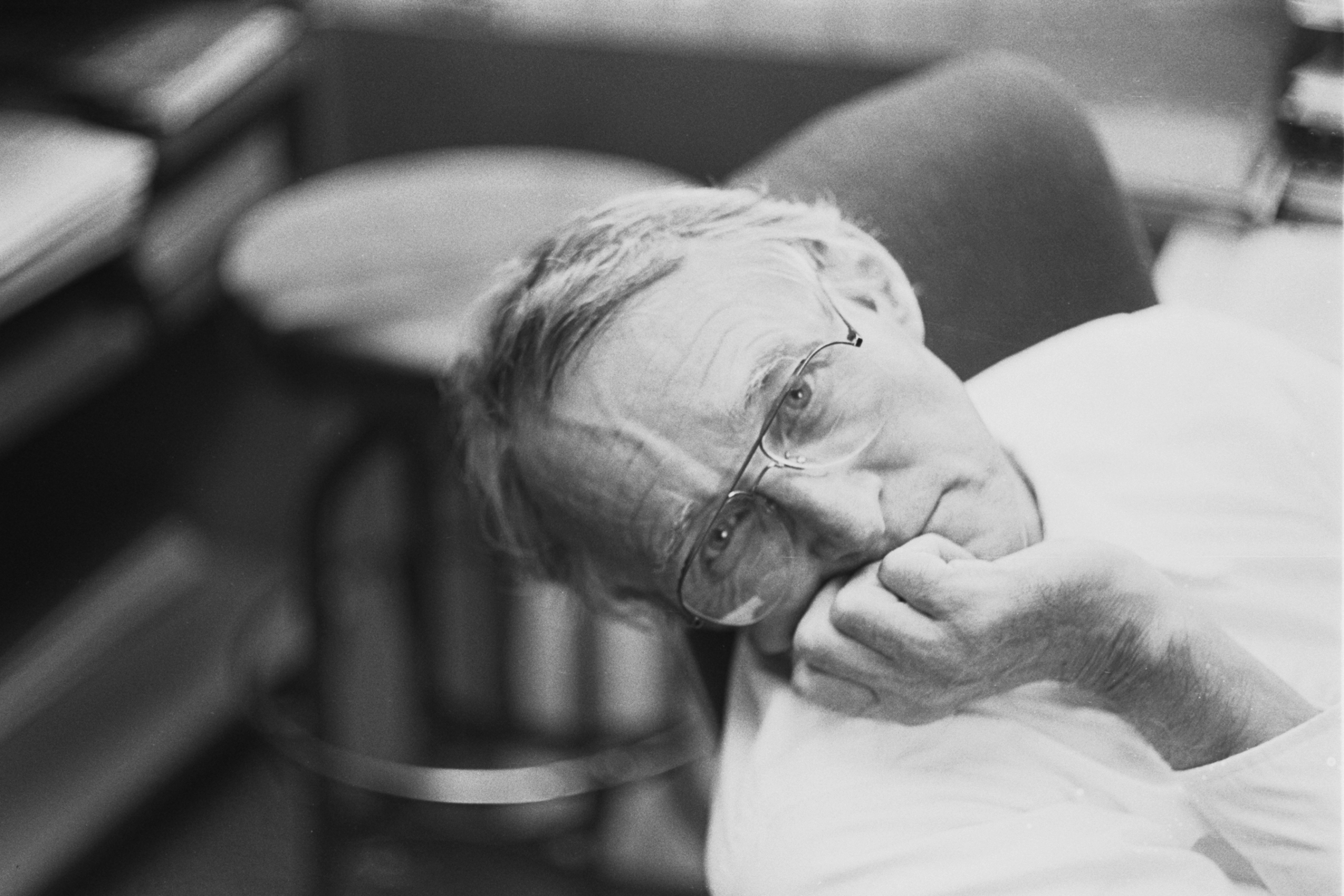 By Patrick Hinley
Romulus T. Weatherman
The late director of publications and editor of W&L Magazine
“Though he was not among my classroom professors, many were the lessons I learned from Rom Weatherman. Of the four bosses I reported to when I began working as a photographer for W&L in 1973, he was the most insightful and supportive.
He loved to be surprised. When I brought in new contact sheets (as proofs were known in the days of film), he was like a kid in a candy store, delighting in finding things that caught his eye and downright gleeful when he spotted the shot, which was instructive since it wasn’t often the same one I would have chosen.
Rom could see things I couldn’t, for instance in what became my first alumni magazine cover (for the November 1973 issue), depicting the Colonnade on a misty Saturday morning, topped by Old George’s faint but unmistakable silhouette, framed by trees and, down the hill, well below the columns of Washington Hall, two of the white Adirondack chairs which in those days speckled the front lawn. I’d shot it in passing, en route to an early-morning homecoming assignment, primarily as a reminder to come back and shoot that view again when there were people in those chairs. I thought no more of it, but when Rom saw it on the contact sheet, he practically jumped for joy, exclaiming ‘This is perfect — I won’t even need to crop it!’ I said, ‘But the chairs are empty,’ to which he replied, ‘Oh no they’re not: there’s an alumnus back for homecoming sitting in one and a classmate he hasn’t seen for years in the other. I can just hear them getting caught up.’
Rom was that rarity among editors, one who encouraged me to have a sense of adventure and follow my instincts. Rather than telling me how to shoot something, he simply said to shoot anything and everything relevant that looked interesting, we could pick and choose later.
He was a designer as well as an editor. While also overseeing the university’s seemingly endless other printed needs, Rom also promulgated and championed a durable template comprising clean lines and its own simple elegance for the Annual Fund’s engagement calendar. Aesthetics counted for something.
Rom believed in my work before I did. He was generous in nurturing my creative spirit. Looking back on it, I see how important his guidance, approval and friendship were at that early stage in my career. I’ll never be able to thank him enough.”
— Patrick Hinely ’73
Tammy Futrell
Dean for Student Engagement and Leadership from 2003 to present
Dean Tammy Futrell influences generations of Washington and Lee students. Tammy is involved in the sensitive moments, sudden tragedies and joyful celebrations that influence student life. She has been a steady and trusted presence for students, alumni, faculty and staff alike, bringing skillful professionalism, grace and genuine care to every corner of the university.
What stands out most is her ability to make people feel seen, valued and connected. Whether she is supporting a student organization, helping a community navigate a difficult moment or celebrating achievement, Tammy approaches each person with sincerity and respect. She builds students up not only as members of affinity groups, teams and organizations, but as Generals and as people.
When our community weathered the loss of a classmate, Tammy was there. During moments when students needed guidance, compassion and stability, she showed up. That quiet consistency has shaped the experiences of countless students, often in ways that may never appear on a résumé or university report but are remembered for years afterward.
One unsung tradition that reflects her impact: her graduation photo shoot. Tammy attends graduation events with the enthusiasm of a proud parent, taking photos of the procession just because. Those photos are just another example of her ability to create moments of recognition, accomplishment and belonging.
Her influence also extends far beyond any single office. Tammy has a remarkable ability to connect people across campus and to build relationships that strengthen the university as a whole. You’ll find trustees, alums, faculty and staff checking in with her. She engages thoughtfully with colleagues throughout Washington and Lee.
As an alumnus, I often find myself telling friends at other colleges about Tammy. She has helped shape the character of the student experience for decades, and her legacy can be found in the countless students, alumni, faculty and staff whose lives she has touched.
— Jessica Jones ’11

You must be logged in to post a comment.