W&L Economics Professor Co-Authors Paper in Science Cal Bryan and colleagues from the University of California, Davis studied the costs and benefits of using fuel treatments as a land management practice in the Western U.S.
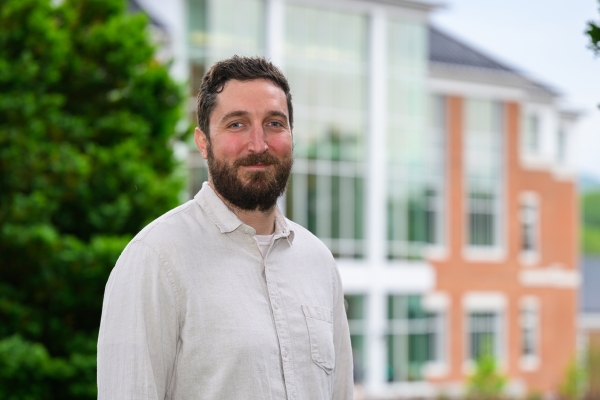 Cal Bryan, assistant professor of economics
Cal Bryan, assistant professor of economics at Washington and Lee University, recently co-authored a paper that appeared in the May 7 edition of Science.
The article, “Wildfire Damages and the Cost-Effective Role of Forest Fuel Treatments,” was co-written with Frederik Strabo and Matthew Reimer, both from the University of California, Davis.
Fuel treatments are best described as land management practices designed to reduce the amount of flammable vegetation in a forest or wildland area. The authors used data on fuel treatments as well as data on wildfires, suppression efforts and damages across the Western U.S. to assess the cost-effectiveness of fuel treatments. They contend that the use of fuel treatments remains underutilized because of a lack of evidence documenting their economic value. Through their research, Bryan and his colleagues found that fuel treatments reduced wildfire spread and severity, avoiding an estimated $2.8 billion in damages from large wildfires. The researchers concluded that every dollar invested in fuel treatments yields $3.73 in expected benefits, demonstrating the value of fuel treatments and offering guidance for maximizing effectiveness.
Bryan is in his first year as a member of the W&L faculty after earning a Doctor of Philosophy in natural resource economics and serving as a postdoctoral researcher at Colorado State University. Prior to Colorado State, he spent more than three years with the U.S. Forest Service as a recreation technician and interpretive ranger, earning Type 2 wildland firefighter certification and assisting with several large wildland fires across multiple states. Bryan also holds a Bachelor of Science in bioenvironmental science from Texas A&M University and a Master of Arts in economics from San Diego State University. His research and teaching are focused on sustainable natural resource management and behavioral responses to climate change.
If you know a W&L faculty member who has done great, accolade-worthy things, tell us about them! Nominate them for an accolade.

You must be logged in to post a comment.