
May 12, 2026
Alumni Spotlight: Steve Halpin ’15L
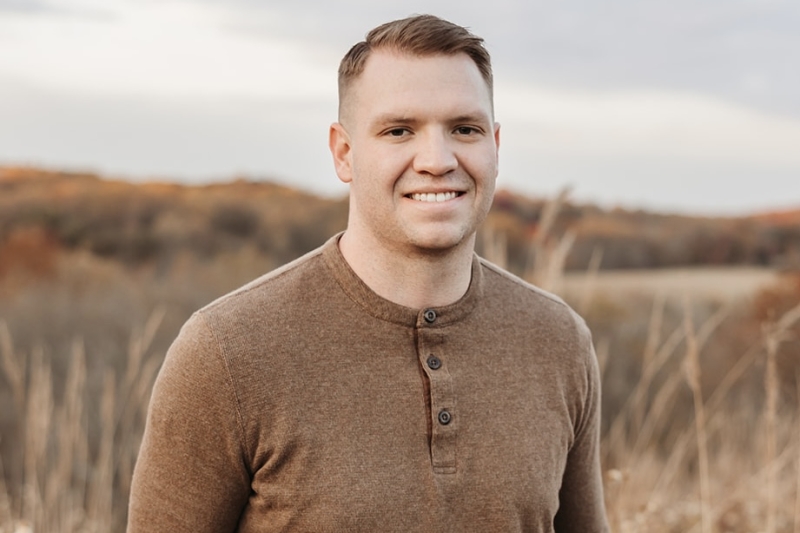 Hayden Driscoll ’22L
Hayden Driscoll ‘22L grew up in the small town of Aberdeen, Idaho. After earning his Bachelor of Science in finance from Utah Valley University in 2018, he worked as an accountant at Purple Innovation before attending W&L Law. He now clerks for Vice Chancellor Nathan A. Cook on the Delaware Court of Chancery. Outside of work, Hayden is busy with his wife and three boys (ages 6, 4, and 2) and enjoys lifting weights and playing basketball.
Discuss your career path and how it led you to the Delaware Court of Chancery.
Before my clerkship, I practiced corporate and commercial litigation in Wilmington, Delaware for four years, first at Potter Anderson & Corroon, LLP and then, after about a year and a half, at Quinn Emanuel Urquhart & Sullivan, LLP. While I was at Quinn Emanuel, a friend who had clerked for Vice Chancellor Cook asked if he could recommend me for an open clerkship position. I had always been interested in clerking, but with a young family, it just hadn’t been in the cards for me financially. I had rejected at least two other recent similar opportunities for that reason. But this one felt different. After running the numbers (many times) and discussing the opportunity with my wife, I went with my gut. I interviewed, got the offer, and here I am. It has been a great experience so far, and I’m glad I went for it.
What sort of legal issues do you handle on a day-to-day basis?
The Delaware Court of Chancery is known around the world as the premier forum for corporate litigation (over two-thirds of the Fortune 500 are incorporated here). This means we see a lot of high-profile litigation, including breach-of-fiduciary-duty actions alleging wrongdoing by a corporation’s directors or officers (like when McDonald’s stockholders sued an executive for ignoring toxic workplace behavior); busted deal litigation (think Twitter v. Musk); disputes over board composition (i.e., whether a director was properly removed); and proxy fights (think HBO’s Succession).
I also see a lot of contract disputes. One frequent type arises from earnouts: the buyer and seller disagree about what a business is worth (shocker), so they agree, for example, that instead of paying $1 million up front, the buyer will pay $600,000 up front and up to $400,000 later if the business hits agreed targets. Then, predictably, they fight about whether it did.
What do you like about your current job?
Clerking is a front-row seat to how judges think. My favorite part of this experience has been the discussions I have with my judge throughout the decision-writing process. I’ve learned invaluable lessons about what good (and bad) advocacy looks like. And having a few years of practice under my belt has allowed me to come to those discussions with more to contribute. I would highly recommend law students consider practicing before clerking if possible.
A highlight from the past year: before transitioning from Quinn Emanuel to my clerkship, I got to take my first direct and cross examinations at trial. The morning I showed up to the courtroom to take my direct, I got hit with a curveball—the witness I was supposed to cross would be moved up in the order, so I would have less than 24 hours to prepare when I thought I’d have the entire weekend. After I finished with my direct examination, I raced back to the trial suite to triage. I spent all night combing the deposition transcript, drafting my outline, and gathering the documents I needed. By the time I finished the cross the next day, I was exhausted. I learned a lot from that experience, but one of my main takeaways was that I love being a trial lawyer, and I’m itching for my next opportunity post-clerkship.
What are some practices you have in your daily life as an attorney to maintain wellness?
It might be the most basic answer, but exercise is a big one for me. I strength train three to four times a week with one or two basketball sessions mixed in. As a busy attorney (now clerk) with a young family, my evenings can be unpredictable, so I get my exercise in first thing—around 5:30 a.m. It’s a great way to start the day. Recently, I’ve also started to do short runs in the evenings. A 10- or 15-minute run helps me think more clearly. I’ve had more than one light-bulb moment while running.
I also prioritize family dinner and my kids’ bedtime. It’s easy in this profession to let work become all-consuming. Even if I’m not actively working at my laptop, the stress of the to-do list in my mind can be distracting. It’s necessary to set boundaries and put aside specific time for family, friends, and even for myself. Without any boundaries, work has no issue taking over, and burnout is inevitable.
Looking back, what do you think is the most formative experience you had in law school?
The most formative experience I had in law school was welcoming our first son into the world during the summer after my 1L year. It was 2020, the COVID-19 pandemic was in its early days, and my internship fell through right when we desperately needed the income for impending medical bills. Thankfully, I was able to get the internship back. Many people assume a baby during law school is a setback. For me it was the opposite. It sharpened my focus, and my grades improved afterward. I could not have been as successful as I was without my wife, who has always been the most supportive partner.
Which W&L classes and/or experiences do you think were most helpful in preparing you for this job?
Both litigation immersion and the civil litigation practicum gave me a sense of the life of a case—from complaint through discovery to trial. They also gave me the opportunity to try my hand at some simulated litigation tasks, which made me excited to be a litigator.
Professor King’s evidence class was phenomenal, and it paid off when I was preparing for my first direct and cross examinations. My thoughts kept returning to that class as I planned which documents to introduce through each witness, anticipated objections, and outlined responses.
What advice do you have for prospective law students?
Trust your gut, even (maybe especially) when it leads you off the well-worn path. I’m religious and believe in divine guidance. Some might consider it instinct or intuition. Either way, pay attention to those feelings when making decisions—big or small. Listening to mine led me to W&L Law, to both firms I worked for after graduation, and to my clerkship.
If you know any W&L alumni who would be great profile subjects, tell us about them! Nominate them for a web profile.


You must be logged in to post a comment.