
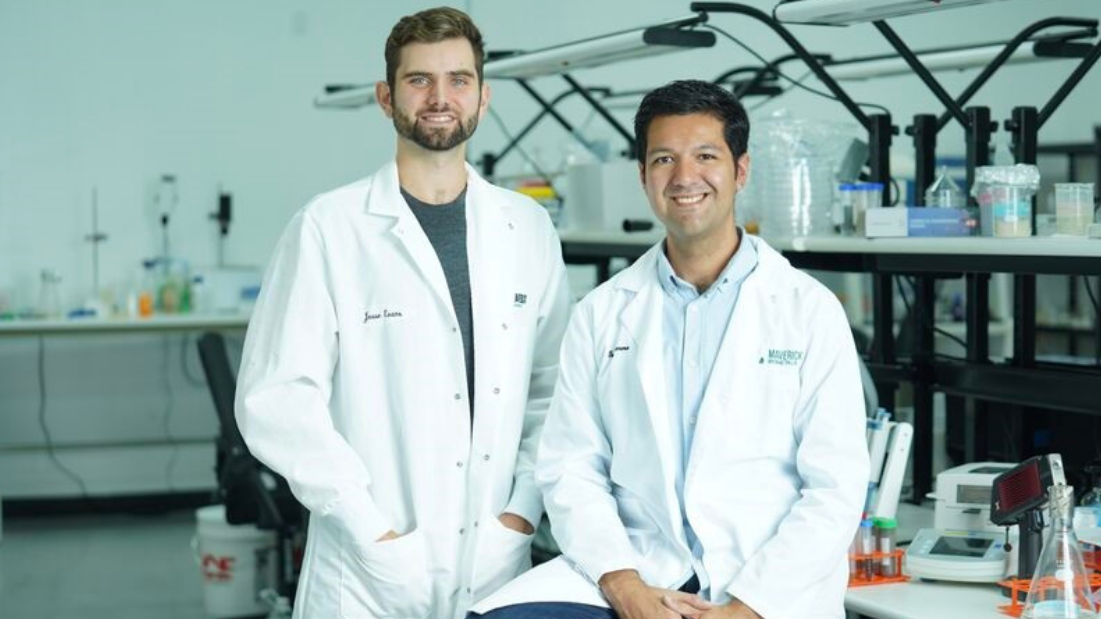
Refining an Industry Eric Herrera ’20 was recently named to the 2026 Forbes 30 Under 30 list for his work with chemical manufacturing startup MaverickX, which he cofounded with Jesse Evans ’20.
Pristine white snow and the tops of two skis appear on the Zoom screen before Eric Herrera ’20 successfully reverses his phone camera to reveal his face. In the distance, Adelaide penguins huddle near a giant Explorers Club ship.
“We’re Nordic skiing because the ice was too thin for snowmobiling,” Herrera explains.
Antarctica may be an unconventional locale for a Zoom call, but Herrera, cofounder and CEO of MaverickX, a startup that uses biochemicals for natural resource extraction, is here on business – just another day at the “office.”
A longtime member of the Explorers Club, an international professional society dedicated to promoting scientific research, Herrera was traveling on their December 2025 expedition to the icy southern tundra to collect samples and research organisms in the extreme ecosystem. He wasn’t sure what he was going to find – but that was part of the excitement.
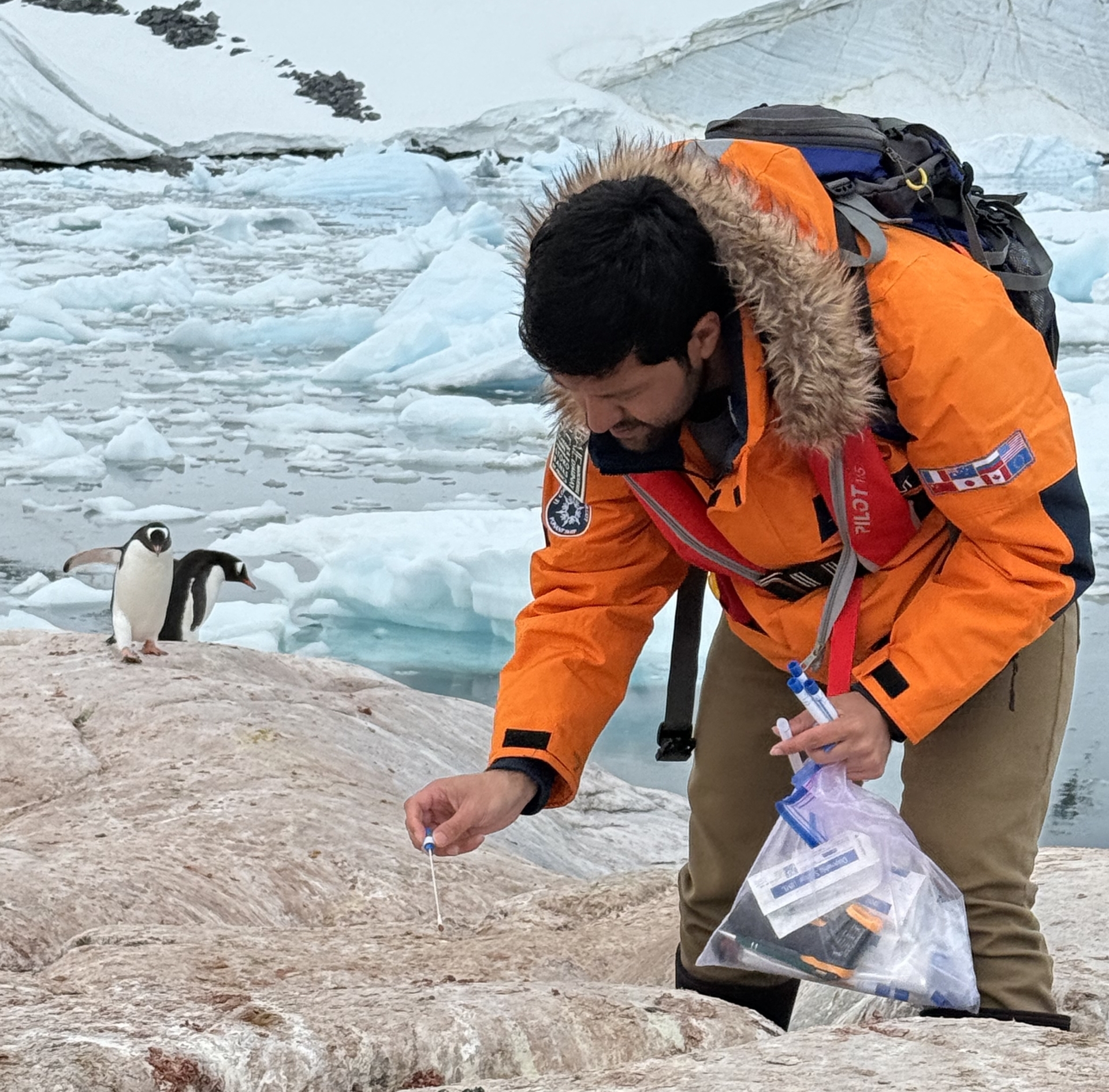 Eric Herrera ’20 collects samples from Antarctica on an Explorers Club trip.
“We just collected samples from the bottom of the sea yesterday with some divers. So, today, we are probably going to deploy the submarine,” Herrera says. “We’re going to go about a kilometer below the surface, under the ice, and actually take the first samples at that depth ever.”
That curiosity for understanding the unknown transformed MaverickX into its current form after Herrera embarked on a similar expedition to the Artic Circle in 2022. There, he crossed paths with an iron-eating bacteria that survives in the polar zone by secreting enzymes to break down minerals to release metals. By using mRNA science, similar to what created the COVID-19 vaccines, Herrera created a bio-based chemical that could extract precious metals and oil, much like the Arctic bacteria, in a more cost efficient and safe way, for both the workers and the environment. He produced the chemical on the Explorers Club ship and called MaverickX cofounder and COO Jesse Evans ’20 about his discovery; the following week, the pair raised $2 million – and by the end of the year, that total rose to $4 million. Herrera was recently named to the 2026 Forbes 30 Under 30 list in the energy and green tech category, with Evans and MaverickX also featured.
“Honestly, I don’t think about the Forbes 30 Under 30 thing as a personal milestone as much as a signal that the work itself is resonating,” says Herrera. “It really reflects a lot of effort from people around me – mentors, collaborators and teammates – who’ve helped shape the ideas and keep them grounded in reality. The response has been nice but also a little surreal. It’s mostly led to more conversations than anything else, which has been the best part. People reach out because they’re curious about the science or the problem we’re trying to solve, not the list. If anything, it’s just added some pressure, in a good way, to keep learning, keep improving and make sure the work actually lives up to the attention.”
The Scientist and the Entrepreneur
Ever since their days at Washington and Lee University as Sigma Nu fraternity brothers, Herrera and Evans used their different backgrounds to explore biotech entrepreneurial avenues. Herrera, a neuroscience major from Eagle Pass, Texas, provided the scientific creativity and lab expertise; Evans, a business administration major and environmental studies minor from Jacksonville, Florida, handled marketing, financials and business innovation. And before the start of their senior year, they created their first startup.
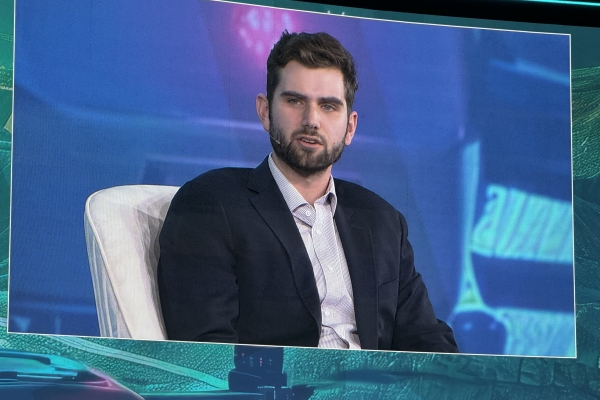 Jesse Evans ’20 spoke at the Future Mineral Forum in Riyadh, Saudi Arabia, in January 2024.
“Eric’s always been a mad scientist, working on things in the lab,” says Evans. “He called me up when I was driving to W&L right before senior year. He goes, ‘I got this idea: this blood cancer risk assessment diagnostic company.’ As a C-school major, I needed to write a business plan and do the whole capstone. I didn’t have an idea, and I thought it sounded pretty cool. So, we wrote the whole business plan for the capstone.”
The company, which used genetic markers to detect blood cancers like leukemia and lymphoma, won the student pitch competition at the Entrepreneurship Summit (Evans will be speaking at the 2026 Entrepreneurship Summit).
After graduation, Evans started working at Bikky, a restaurant software company founded by Abhinav Kapur ’08, and Herrera was recruited by the Department of Defense to work on creating antidotes for classified chemical weapons. They kept in close contact, with Herrera bringing Evans to Explorer Club events. At one, they met a diver who invited them to Honduras for a couple weeks, and while there, they collected some of the first samples for what would eventually lead them to create their MaverickX startup. The company has gone through some iterations, and the original science was focused on other industrial applications where new chemicals could provide value, such as creating biochemicals to break down plastic to make recycling more efficient. After that trip to Honduras, the pair decided to quit their jobs (by then, Herrera was in medical school) and head to Silicon Valley. In May 2022, they got into Y Combinator (YC), a startup accelerator program and venture capital firm that has helped launch companies like Airbnb, Drobox and DoorDash.
“That’s something I’ve always wanted to do since I was a kid,” says Evans. “So, we started to pitch investors, and then we got into YC maybe six months later. Basically, we had two weeks set aside for if we were going to do YC or not, and then we made the decision, quit our jobs, packed up our cars and both of us drove out to California.
“You definitely have to be risk-seeking to do something like this,” he adds. “But if you’re passionate about it, and you work hard, and you’re excited about it, then the risk is worth it. … The fallback is just go get a job somewhere else. Especially coming out of like a school like W&L, you certainly have the skill set, knowledge and aptitude to do something else.”
Focusing Their Energy
While a student at W&L, Herrera traveled to Ghana and Mexico through a Johnson Opportunity Grant and the James G. Leyburn Scholars Program to talk to agricultural producers and understand how chemicals affected their well-being. That research stayed with him in the years since as he saw firsthand how detrimental the misuse of chemicals can be to communities.
“The chemicals, when used incorrectly, are very terrible,” says Herrera. “In one incident, it was like a 60% higher cancer rate in that specific area than pretty much every other area around them because of the chemicals they use. The statistics of that was really impactful. And W&L gave me the opportunity to actually see it.”
When creating the bio-based chemical – which would become MaverickX’s leading products, PetroX and LithX – Herrera and Evans wanted it to be safe for the workers and for the environment.
“If you look at these industries that we work in, they’re very hazardous for workers,” says Evans. “In the oil field, 10% of workers die from just toxic chemicals. We pretty much have one of the only non-toxic chemicals in the industry. You stick your hand in it, you’ll be fine. And so, it’s safer for workers. You can have better extraction, and then you better utilize the resources that we have to then reduce the impact of future natural resource extraction.”
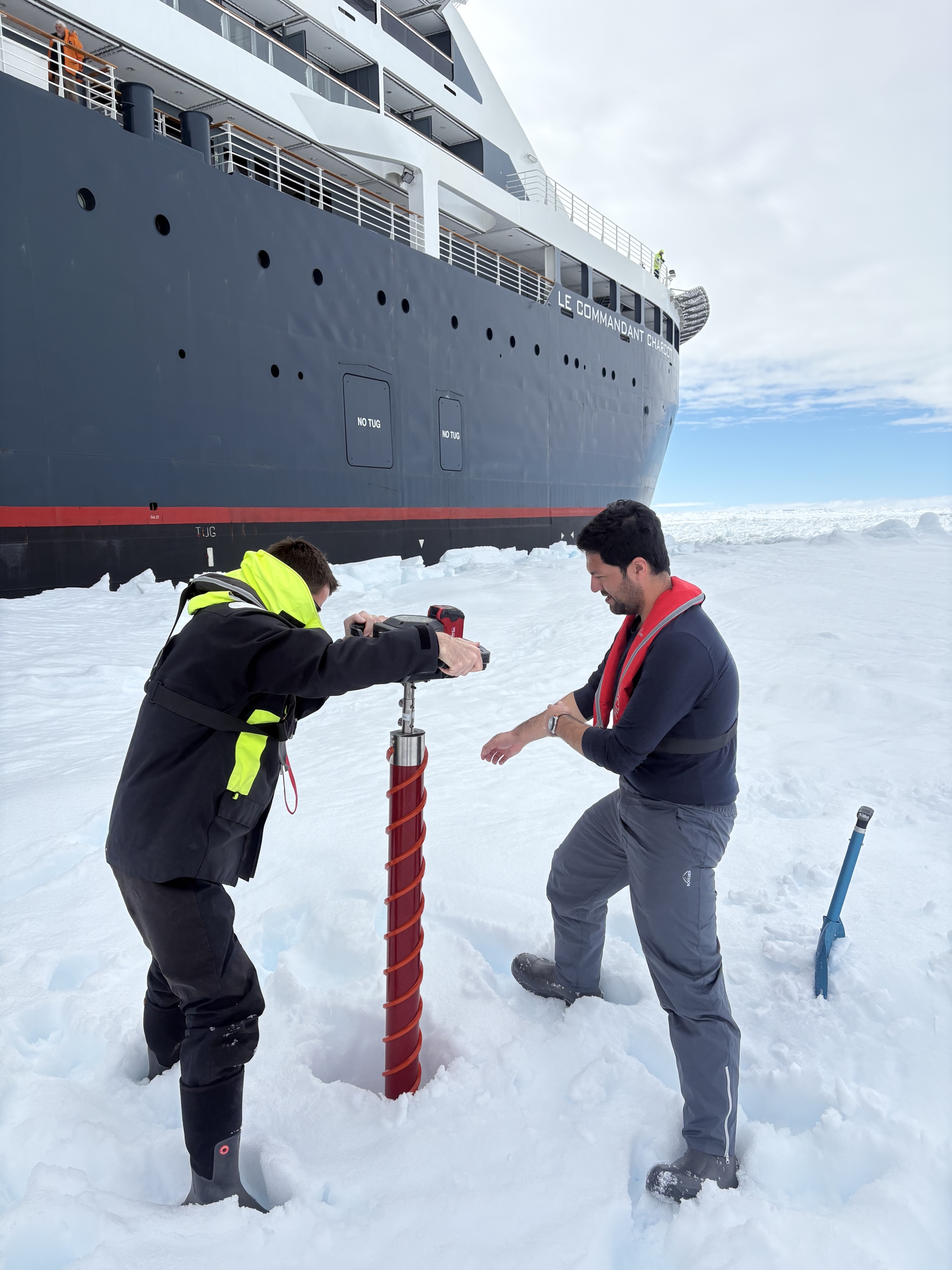 Eric Herrera ’20, right, conducts research in Antarctica.
Their chemicals can be applied in a number of ways and through a number of industries. For example, PetroX can be pumped into an existing oil well, which then turns all the critical elements into a soup of sorts which they then extract and separate out.
“On the mining side, you can actually do the same process,” Evans explains. “You could drill wells down into the formation … but without digging a big hole in the ground. So, the same way that you take out oil, you can take out copper, and that’s called in situ mining.”
Not only do the chemicals extract the desired elements, like oil and copper, they also pull out other metals in the rock, which can then be resourcefully used in different energy fields. The remaining metals that aren’t valuable, such as magnesium and calcium, are mixed with another MaverickX enzyme that is pumped back into the Earth’s cavity for carbon sequestration to create a carbonate rock. And in a recent trial, Evans and Herrera used their chemical in an oil well that was no longer commercially viable (only producing five barrels over 15 months and zero in the last three months) to now generate 23 barrels a week. MaverickX works with legacy industries to create safer conditions for the workers, a cleaner environment and savings for the companies.
“If I had to boil it down to one takeaway, it’s that MaverickX is really about doing hard, unglamorous science to solve real industrial problems,” says Herrera. “We’re not trying to reinvent everything or chase buzzwords; we’re focused on understanding the chemistry and geology well enough to unlock value where people usually assume there isn’t any. At its core, MaverickX is about turning overlooked or difficult systems into something useful, in a way that actually works outside the lab.”
While the current iteration of MaverickX stemmed from that Arctic Circle trip, the pair continue to collect samples, explore and discover other solutions nature already has answered. The learning, for them, is never over.
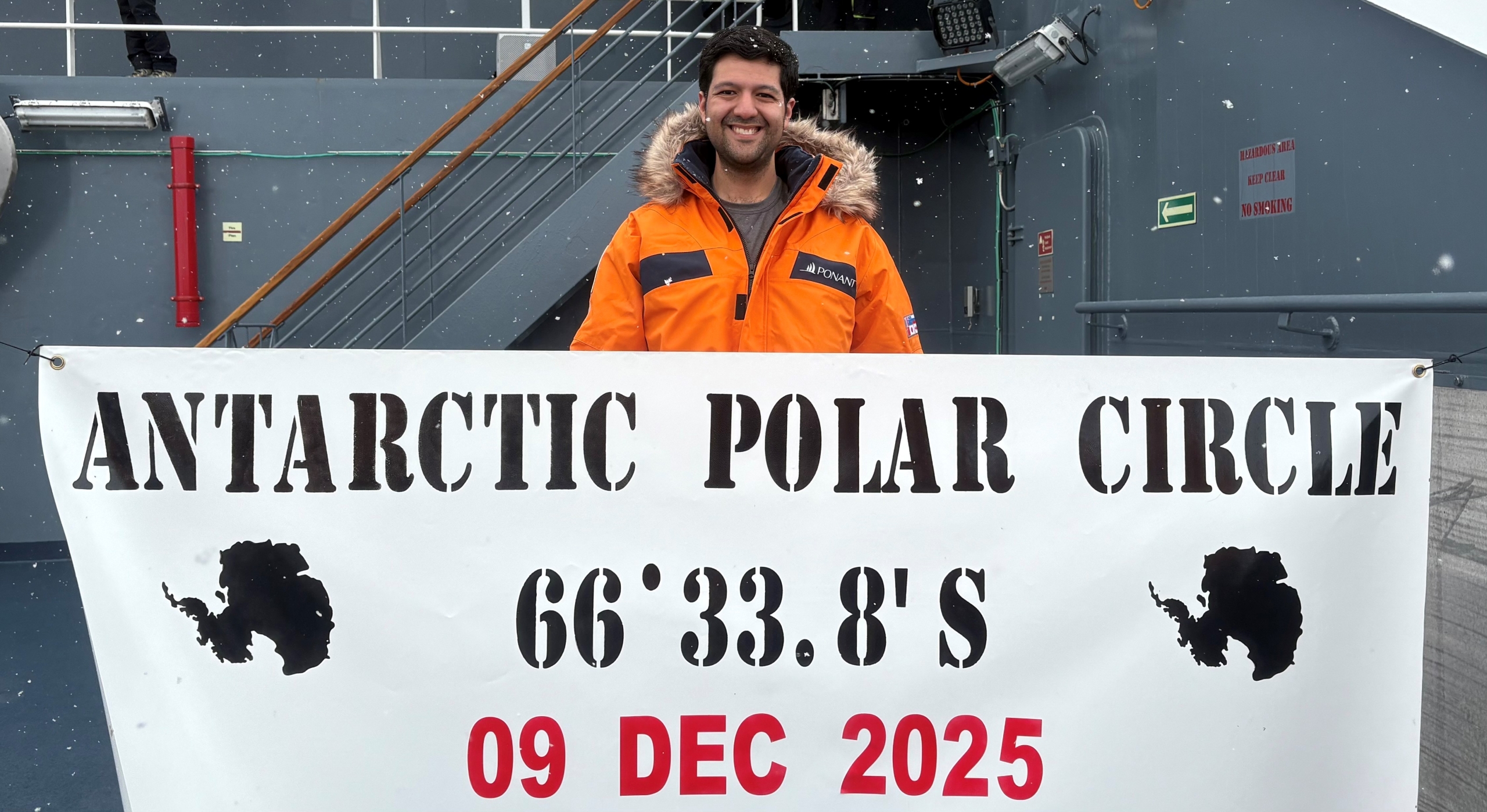 “We’re not trying to reinvent everything or chase buzzwords; we’re focused on understanding the chemistry and geology well enough to unlock value where people usually assume there isn’t any,” said Eric Herrera ’20.
“I think lifelong learning shows up naturally when you work on problems that don’t have clean answers,” Herrera says. “A lot of what I’ve worked on sits at the intersection of different fields — chemistry, geology, biology, engineering — and no single background really prepares you for that. You’re constantly running into things you don’t know, and the only option is to stay curious and keep learning.
“Being a continual student of the world matters because reality doesn’t stay neatly within disciplines,” he says. “The most useful insights often come from paying attention, asking basic questions and being willing to admit when you’re wrong or missing something. For me, learning isn’t just formal education: It’s observing how systems behave in the field, listening to people who’ve been doing the work for decades and staying open to unexpected ideas. That mindset has probably been more valuable than any single technical skill.”
If you know any W&L alumni who would be great profile subjects, tell us about them! Nominate them for a web profile.
Related Stories

September 24, 2025
2025 Five-Star Distinguished Alumni Awards

You must be logged in to post a comment.