
April 13, 2026
Student Organization Spotlight: Around the Globe
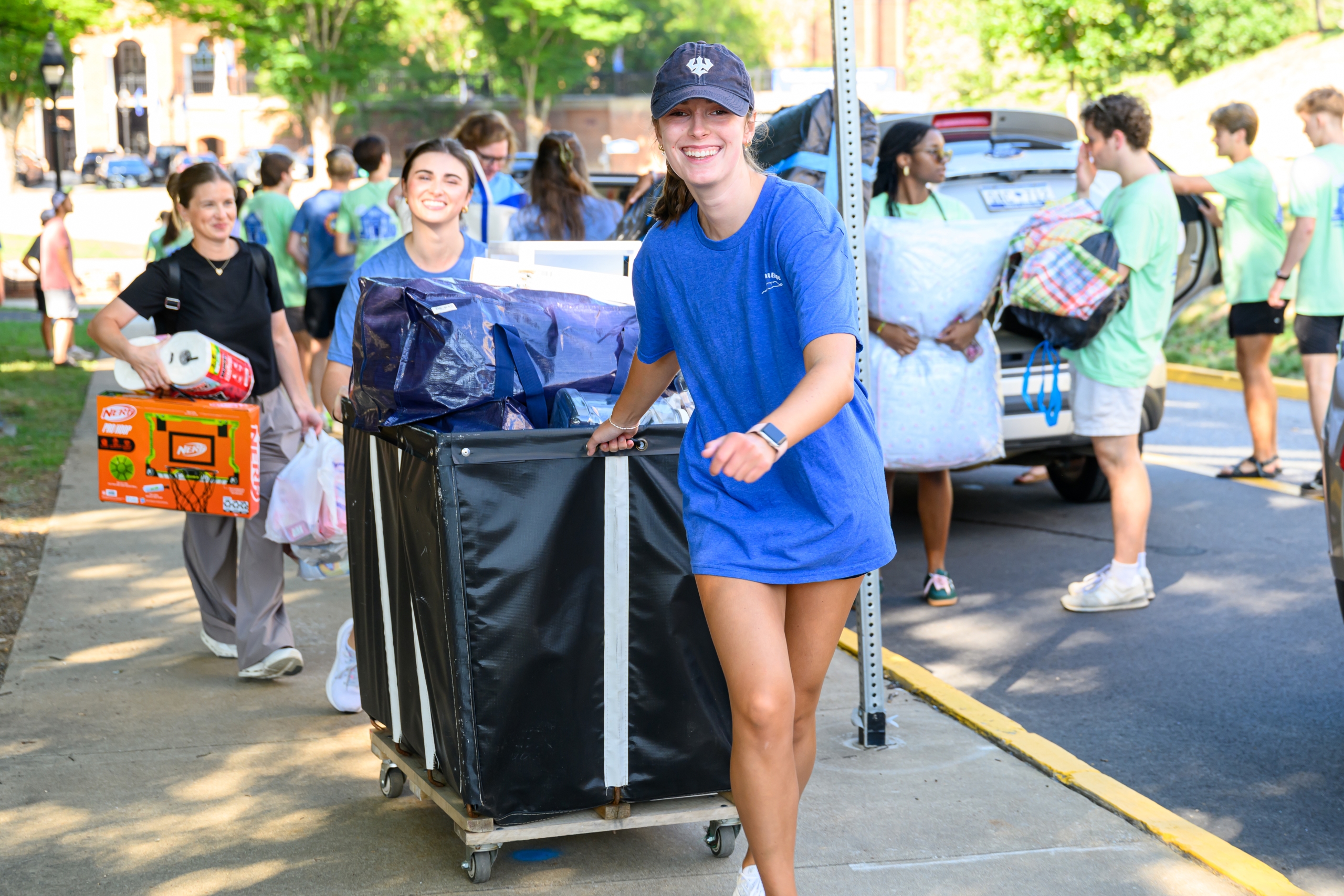 First-year move-in day gets underway.
“It took many offices across campus collaborating to play their unique role in ensuring all students felt welcomed, which is the best part of working on orientation. It’s really a collection of a lot of different people’s talents and ideas coming together.”
~ Nathan Graves, associate dean of students and dean of first-year experience
Washington and Lee’s orientation process for new students weaves fun and community building into an in-depth introduction to the university’s culture and values. Leading Edge, W&L’s signature program that invites students to choose their own adventure, and the week of orientation programming that follows it layer in interactions with new mentors, upper-division students, traditions and a few new activities this year, all of which add up to a cohesive introduction to the W&L experience. Nathan Graves, associate dean of students and dean of first-year experience, says that his goal in introducing new students to W&L’s campus is to have them come away from their first couple of weeks at W&L with relationships they can lean on as they head into the Fall Term.
The day after move-in, students begin their Leading Edge experiences, which ran this year from Tuesday, Aug. 25, through Saturday, Aug. 29, and allow students to explore topics that include service, leadership, archaeology, well-being, the arts or outdoor adventure with their classmates and upper-division student leaders. Access to the long-running program was expanded in 2024 to incorporate the entire incoming first-year class at no additional cost to students, providing a personalized introduction to the W&L experience for all students. Leading Edge also gives upper-division students an opportunity to give back to the university by leading trips and guiding new students through the process.
Kelcie Comisac ’27, who served as a leader for the Beyond Leadership experience, an on-campus program focused on leadership development, describes Leading Edge as a distinctive part of W&L’s orientation because it gives new students an immediate support system through an intentional, student-led welcome, and it provides upper-division students with the chance to develop leadership skills and empathy that will serve them well in whatever career they choose.
 Appalachian Adventure students settle into camp for the evening along the Appalachian Trail.
“Being on both sides of the onboarding process translates into learning how to start anything new in other aspects of life, like a new job or moving to a new place or, eventually, being in my career and welcoming new employees into my organization,” Comisac says. “I now know that I have training in how to acclimate new people to a new environment effectively.”
Melody Wang ’29 served as a leader on the Making Meaning trip, which she also participated in as a first-year student. The trip invites students to explore themes related to spirituality, faith and community. Wang says that Leading Edge and W&L’s entire onboarding process for new students exemplifies the qualities that make W&L’s campus unique.
“Most other college campuses don’t send their students out on a whole week trip just for the purposes of having fun and making new relationships,” Wang says. “I think having these trips as a part of the onboarding experience is what makes our university stand out and allows new faces to start becoming familiar with the community early on. Further, I love how many hands help out with move-in day! It is honestly a whole community experience.”
First-year participants in this year’s Leading Edge programming saw the value in their experience.
“The fact that the trips are being led by upperclassmen really sets you up for success,” says Cayce Nelson ’30, who participated in the Well-Being Retreat, a Leading Edge experience that combined workshops on self-care and wellness with yoga, ziplining and other group activities. “You are able to make connections right off the bat and gain valuable advice. It was comforting to know that my orientation and trip leaders were in my same position not long ago, and that created such a welcoming environment in my first days on campus. I’m excited to get involved on campus with all the activities and opportunities I’ve been dreaming about since I committed here.”
 First-year students explore downtown Lexington.
“My trip leaders were extremely open about their experiences at W&L,” says Marina Williams ’30, who participated in a Leading Edge that introduces students to W&L’s research program in historical archaeology. “There was no sense of superiority or frustration that we as first-years were nervous, and I am very grateful to my trip leaders for introducing the W&L spirit of friendliness.”
Once students return to campus from their Leading Edge experiences, the orientation schedule is designed around introducing them to the W&L policies, resources and need-to-know information that comes with navigating their college experience. Graves says that new additions to the schedule this year brought depth to the introduction first-year students were given to campus.
“We worked with the Harte Center for Teaching and Learning this year on a new session in which our orientation leaders led a peer-to-peer conversation about how incoming students may have engaged with academics before and what they expect might be different this year, and then the Harte Center staff talked directly with students about the resources available there and got them into the actual space so that they have some familiarity with it before classes start,” Graves says.
Another new piece involved adding more discussions for students to engage with the first-year read, “Klara and the Sun,” by Kazuo Ishiguro.
“Students had a chance to talk about being human in an age of AI and technology — how you keep real connections between people when it’s so easy to do all of that engagement from behind a screen,” Graves says.
This year, the First-Year Orientation Committee tapped the leadership expertise of a core team of student leaders to execute orientation programming and work alongside 42 orientation leaders who led small groups of first-year students through the weekly schedule. The orientation leaders met with students each day to answer questions, facilitate peer-led discussions and help first-years navigate campus.
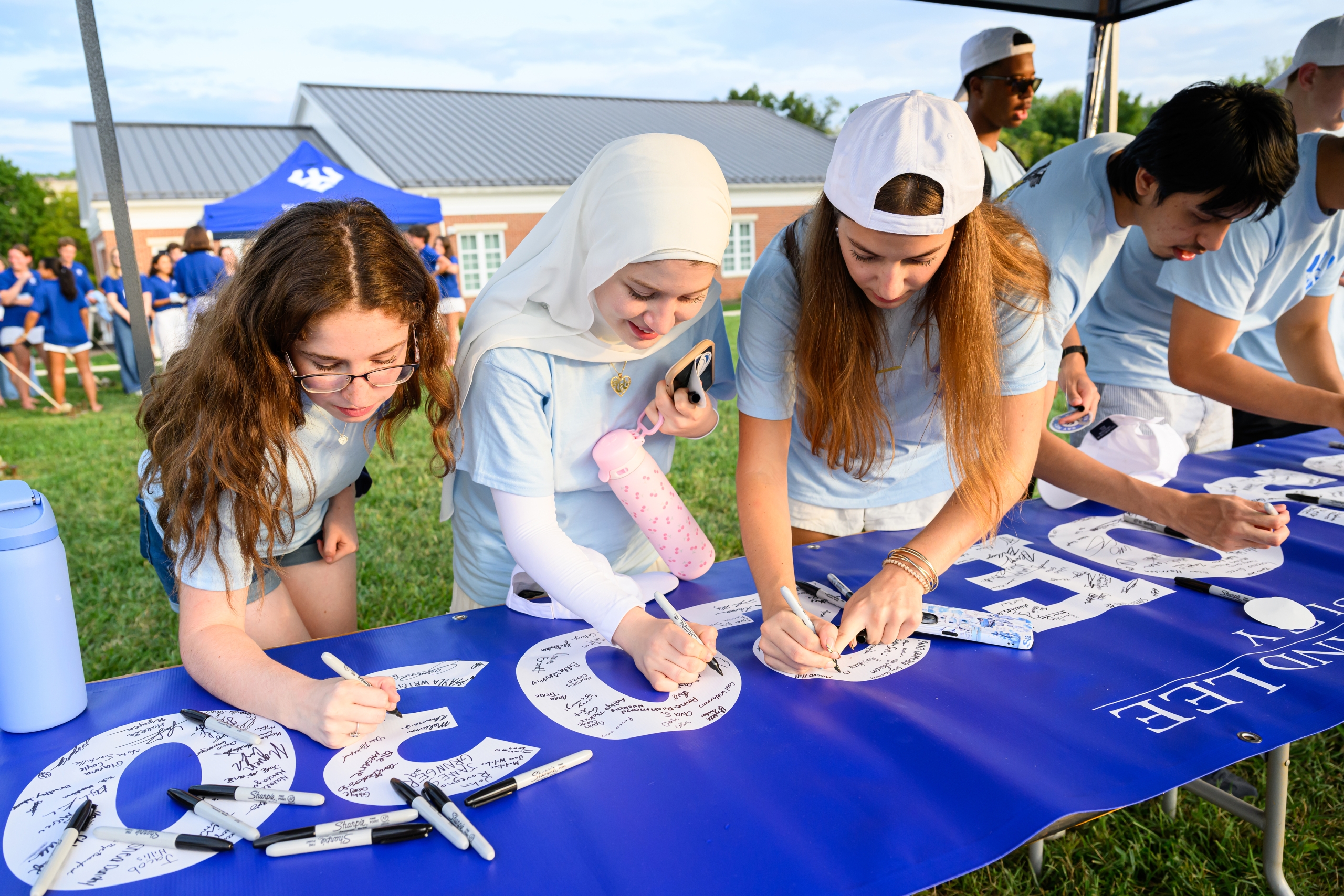 First-year students gather on the Law School Lawn for a barbecue hosted by the W&L Alumni Association.
“It is really important to me that first-years have spaces where they can meet one another, build friendships and begin finding their community at W&L,” FYOC President Gaby White ’27 says. “That was a big part of what drew me to W&L when I was touring colleges, and it continues to be something I value about the university. In my role with FYOC, I want to make sure that students have the opportunity to have that same sense of connection and community that made such an impression on me my first year.”
Graves says that student leadership during Leading Edge and orientation is mission critical.
“The First-Year Orientation Committee has been an instrumental part of the orientation process for many years, and this year they navigated a shift from one large general body of student leaders to working within a smaller orientation team that managed the day-to-day schedule,” Graves says. “These changes allowed for FYOC to think more creatively about the programming they designed and executed for new students.”
The committee invited a hypnotist for one of the evening programs and worked with Generals Activities Board to bring a DJ to campus, finishing off the evening with an on-campus fireworks show. Graves says that he was appreciative of the multiple students, faculty and administrators on campus who devoted their time and energy to making orientation successful.
“It took many offices across campus collaborating to play their unique role in ensuring all students felt welcomed, which is the best part of working on orientation,” Graves says. “It’s really a collection of a lot of different people’s talents and ideas coming together.”


You must be logged in to post a comment.