January 20, 2026
Making Space for Makerspaces
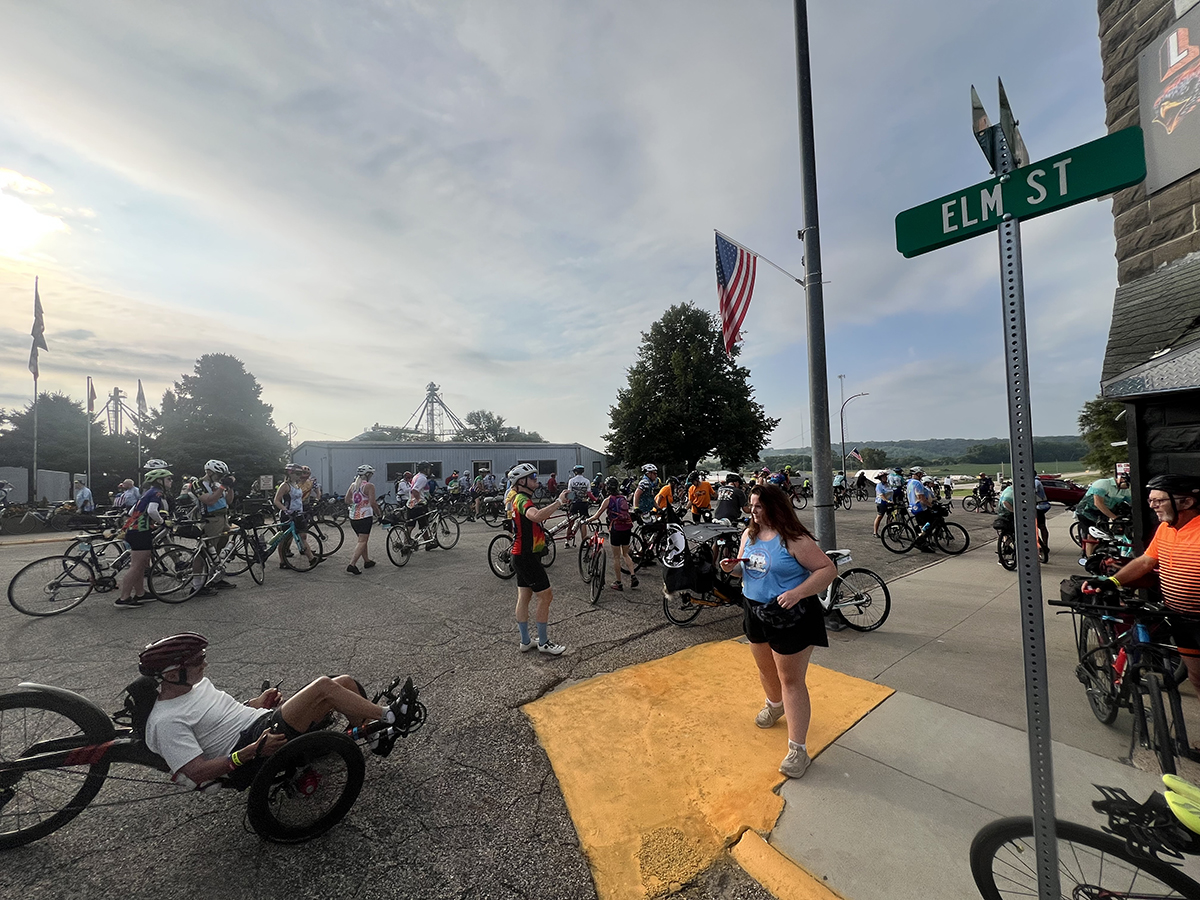 Participants in the 2026 RAGBRAI bike ride across Iowa gear up for a long day on the road. (Photos courtesy of Jay Margalus)
Jay Margalus, Johnson Professor of Entrepreneurship and Leadership and Director of the Connolly Center for Entrepreneurship, has ridden RAGBRAI (Register’s Annual Great Bicycle Ride Across Iowa) four of the last five summers. The approximately 400-mile event, first held in 1973, is the largest bike-touring event in the world. This summer, he brought his wife and four children along to experience the ride and documented the journey on his blog. As another Fall Term begins at W&L, Margalus chats with us about making the classroom experience a marathon, not a sprint.
The blog posts about your family’s experience with RAGBRAI this year were a joy to read. As we get into the full swing of Fall Term, I’m curious if the “before, during and after” of doing a big ride like this translates into how you approach preparing for a classroom full of new students.
In broad terms, it’s about making sure you’ve left the house with everything you want to bring with you – like your bike, for example. With something like RAGBRAI that I’ve done before, there is a lot of joy in getting ready for it because you know what to expect and that it will be super fun. There’s also a little apprehension in expecting the unexpected. I think that joy and apprehension apply when getting ready to teach a class, too.
How did you prepare your children for this experience?
I rode with my oldest daughter a little bit before we left, and my younger daughter did a camp this summer where the campers did some bike riding, so those experiences mentally prepared them for doing a little bit more riding than what they are used to. What’s cool about RAGBRAI is that it’s a learning experience you can’t teach. I wanted them to have to experience doing something that’s a little more challenging, a little out of their comfort zones, for them to step into whatever that next phase is that is within themselves. They were nervous about doing it, and I definitely made sure they were set up for success as much as possible, but also that it was still hard for them.
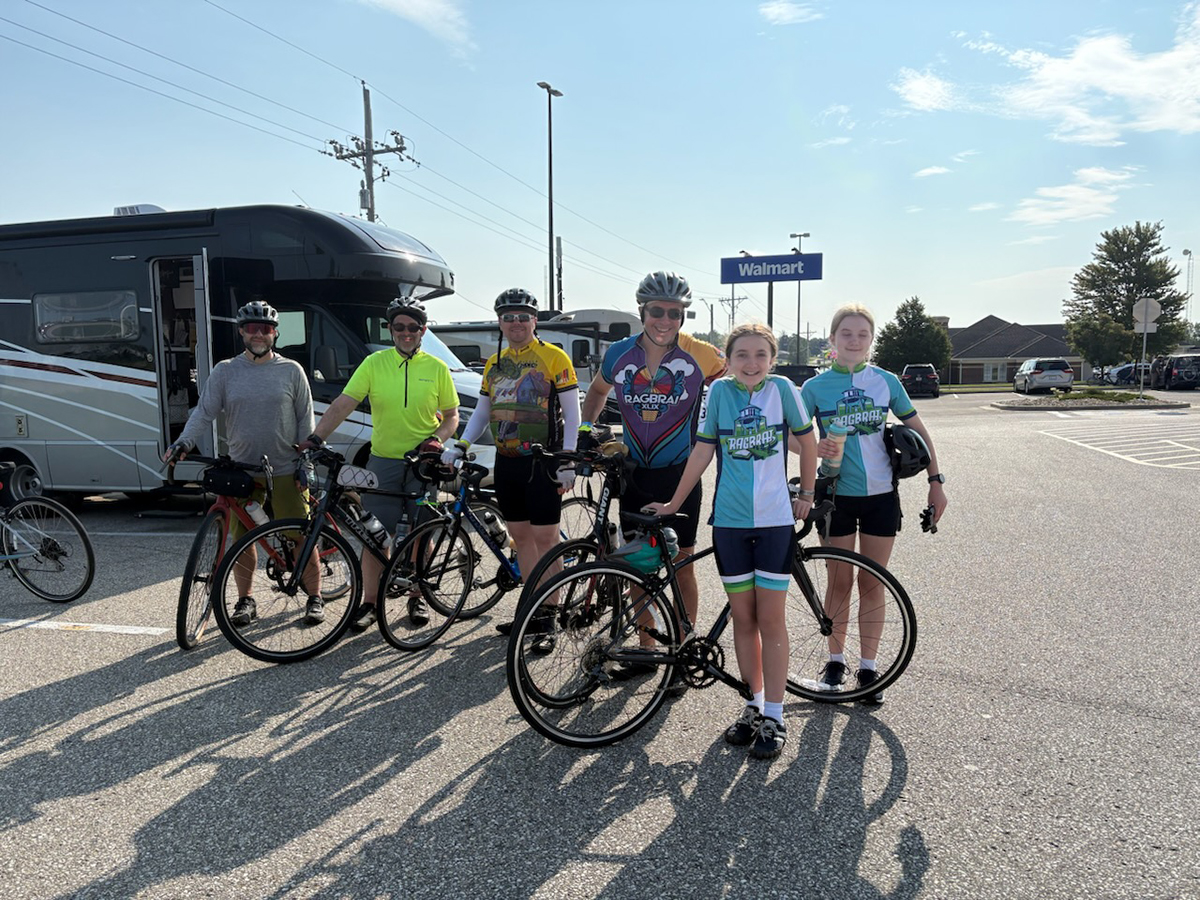 Jay Margalus (third from right) and his daughters gather with friends for a quick photo before departing for the day’s ride.
What do you think those kinds of challenges teach us that other experiences don’t in the same way?
A colleague of mine pointed something out that really stuck with me – that experiences like camping and hiking, basically the kinds of experiences students can get through programs like Appalachian Adventure during Leading Edge, are some of the only times we have the opportunity to have students step into something experientially. So, in my classroom, I try to find ways to work in little micro-sessions of that idea. I think they need to get out of taking-tests-and-doing-homework mode and into the other ways that you learn.
I think these kinds of experiences can fall into different categories of “fun.” Type one fun is fun while you’re doing it and when you reflect on it; for example, a pickup game of basketball with your friends is type one fun. Type two is the kind that is miserable while you’re doing it, but when you look back at it, you remember it as fun. I like type two fun, because it isn’t comfortable, and I think a lot of our students have had to go through a lot of type two fun because a lot of their time both in and out of the classroom has been so regimented.
Do you see that show up in how people tend to adjust to their college experience?
Yes, and I think it is more acute at a place like W&L. Students here tend to be very focused on what grades they need to make and the path they need to follow to succeed. The way I look at it is that we serve as a halfway point between the K-12 experience, where they learn to take tests, and the working world, where there are no grades, just feedback. We’re in the middle, and we have to get them comfortable with the mix they’re about to walk into, which involves removing some of the structure they’ve become accustomed to and comfortable with.
What keeps you excited about teaching? Any parallels with the excitement that keeps you biking across Iowa each summer?
I was working on a project with folks at the University of Chicago a while back, and someone asked me, “What’s the purpose of what you’re doing?” with regard to RAGBRAI. And I said, “There actually is no purpose. You just get on your bike. The purpose is the thing. The goal is in the process, and you find something out about yourself in the process, not through a medal or an award or an accolade, which don’t really mean anything on your deathbed anyway.” I gave a talk recently to the Williams School about teaching experiential learning courses, which I have taught a lot of, and I look at it like improv. I want to take students and put them in a situation where there is uncertainty and some discomfort and ask, “How are you going to react?”
If you know any W&L faculty who would be great profile subjects, tell us about them! Nominate them for a web profile.

You must be logged in to post a comment.